
Hokkaido Soup Curry does not sit heavily on the plate. It arrives open.
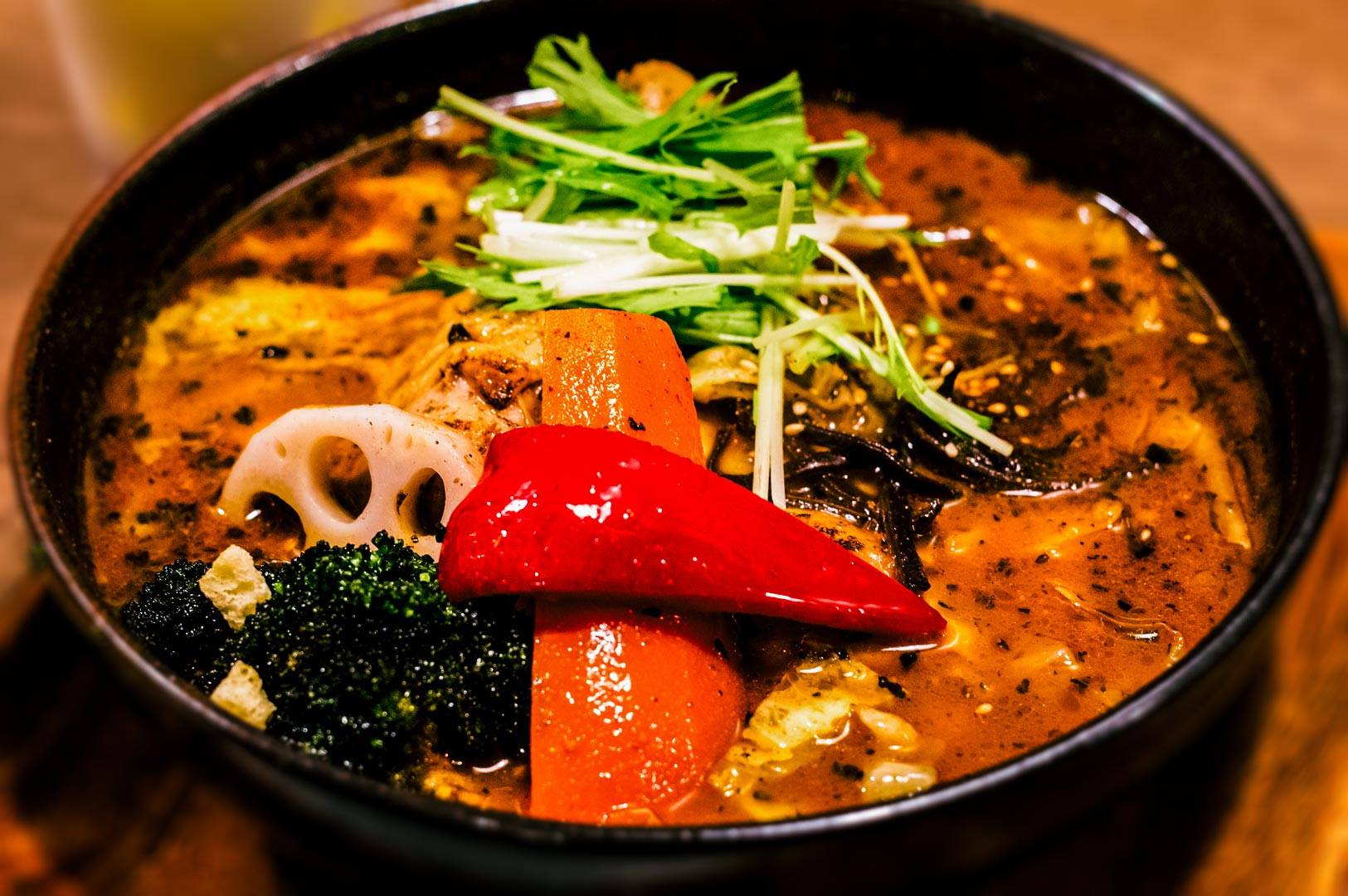
Where thicker Japanese curries settle into density, soup curry breathes. The bowl feels wider. The surface shimmers. Vegetables rise above the broth in deliberate arrangement, as if placed to be seen before tasted.
Originating from Hokkaido, Japan’s northern island known for long winters and clean air, this style of curry carries climate within it. It is lighter in texture but layered in spice. The broth is thinner than roux-based curry, yet deeper in complexity, built from slow-simmered stock infused with toasted spices and aromatics.
In Singapore, its presence feels both distinct and quietly fitting.
Circulation — The Bowl as Landscape
At lunchtime, a bowl of Hokkaido Soup Curry draws attention not through noise but through structure.
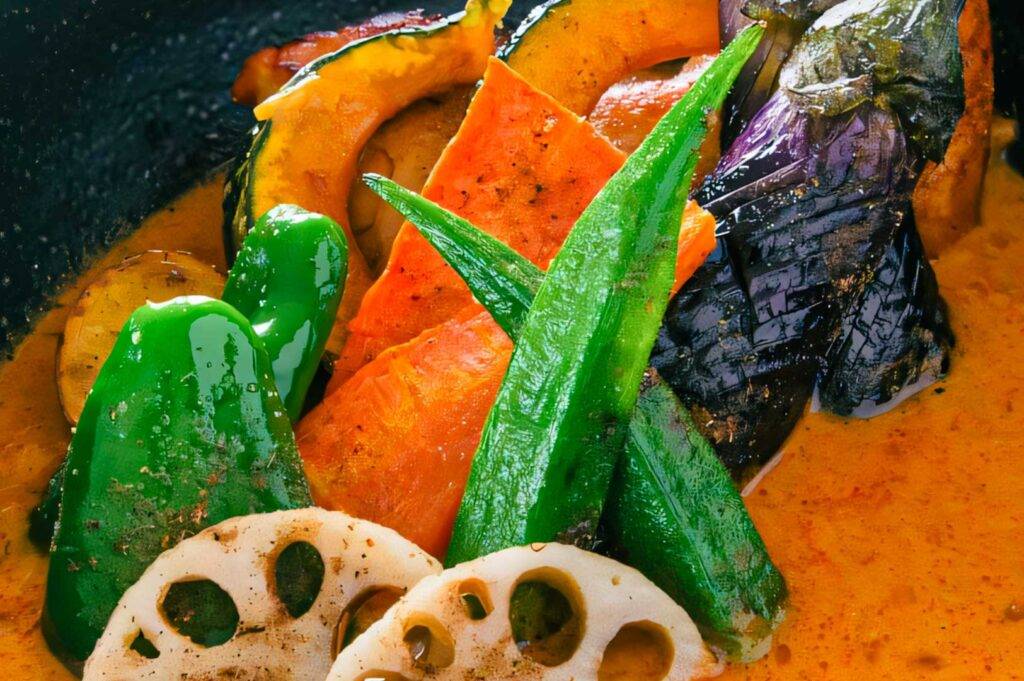
A whole carrot, softened but intact. A wedge of pumpkin, edges caramelised. Okra, eggplant, lotus root. A chicken leg resting partly submerged. Rice served separately, sometimes mounded neatly, sometimes shaped into a small dome.
There is space between elements.
Unlike compact curry rice plates, soup curry encourages movement. Spoon to rice. Rice to broth. Broth alone. Each combination alters the experience slightly. The diner composes each bite.
The spice level is often adjustable. Mild warmth for some. A sharper, lingering heat for others. But even at higher levels, the burn does not overwhelm. It builds gradually, rising with the steam.
For those curious about how this northern Japanese specialty fits into Singapore’s evolving food landscape, guides such as where to find authentic Hokkaido Soup Curry in Singapore and other Japanese comfort dishes explore its growing presence across the city.
Pause — Lightness Within Depth
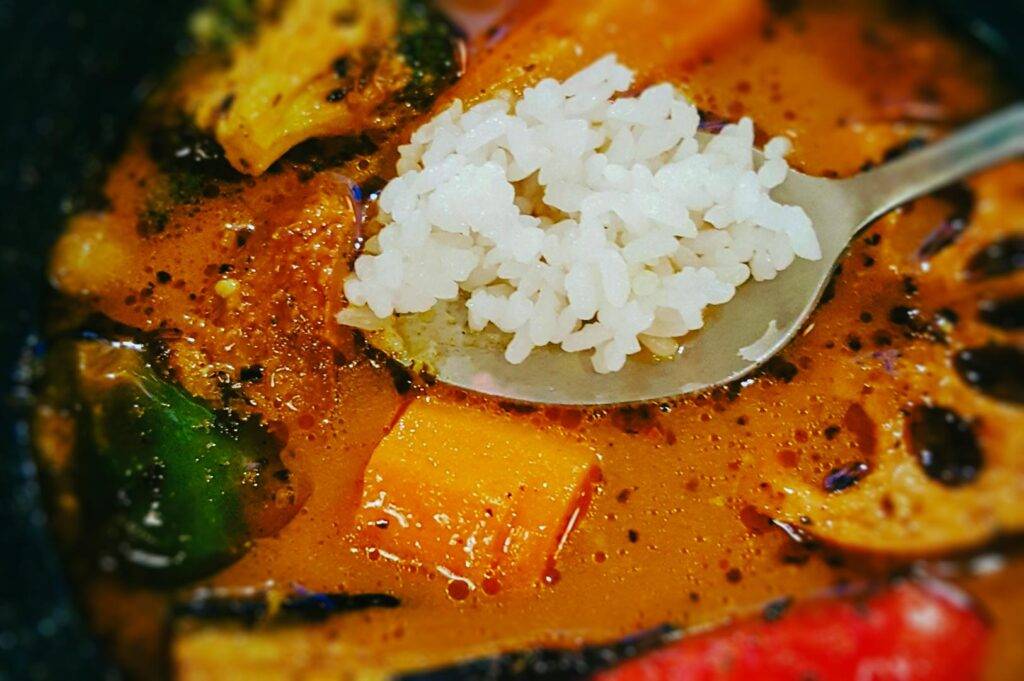
The first sip surprises those expecting thickness. The broth is clear yet bold. It carries turmeric, cumin, coriander, perhaps a trace of garam masala, but the texture remains fluid.
Vegetables matter here.
They are not side notes but pillars of the dish. Roasted until edges blister, boiled until just tender, or flash-fried for texture, they retain individuality inside the spiced liquid. The curry does not conceal them. It frames them.
In a city where many meals are fast and compact, Hokkaido Soup Curry stretches time slightly. The act of eating slows. Steam rises continuously. The bowl remains warm until the final spoonful.
It is less about heaviness and more about sustained comfort.
Seen Slowly
Midway through the meal, the broth level lowers. Colours deepen. The rice mound shrinks. What began as a composed landscape becomes a quiet integration of flavours.
Hokkaido Soup Curry carries memory differently from standard curry rice. It feels seasonal. Weather-responsive. Something sought on rainy afternoons or in over-air-conditioned spaces.
In Singapore, it occupies a niche that rewards return visits. Not flashy. Not dominant. But steady.
A bowl that opens rather than settles.
A warmth that expands instead of weighs down.
A rhythm of steam, spice, and space.
For another reflection on Singapore’s food rhythms, read Lau Pa Sat Daylight Hawker Centre.