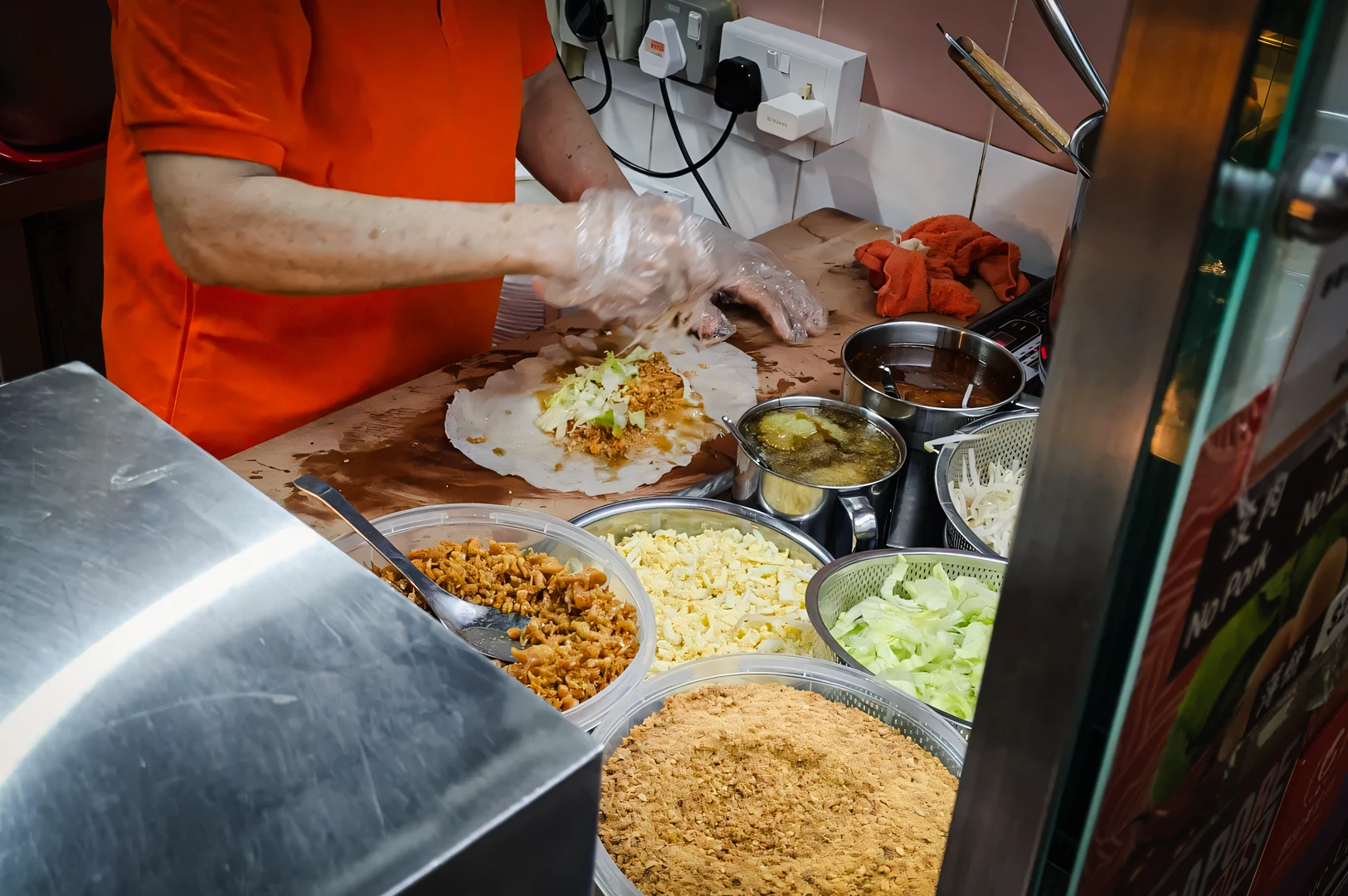

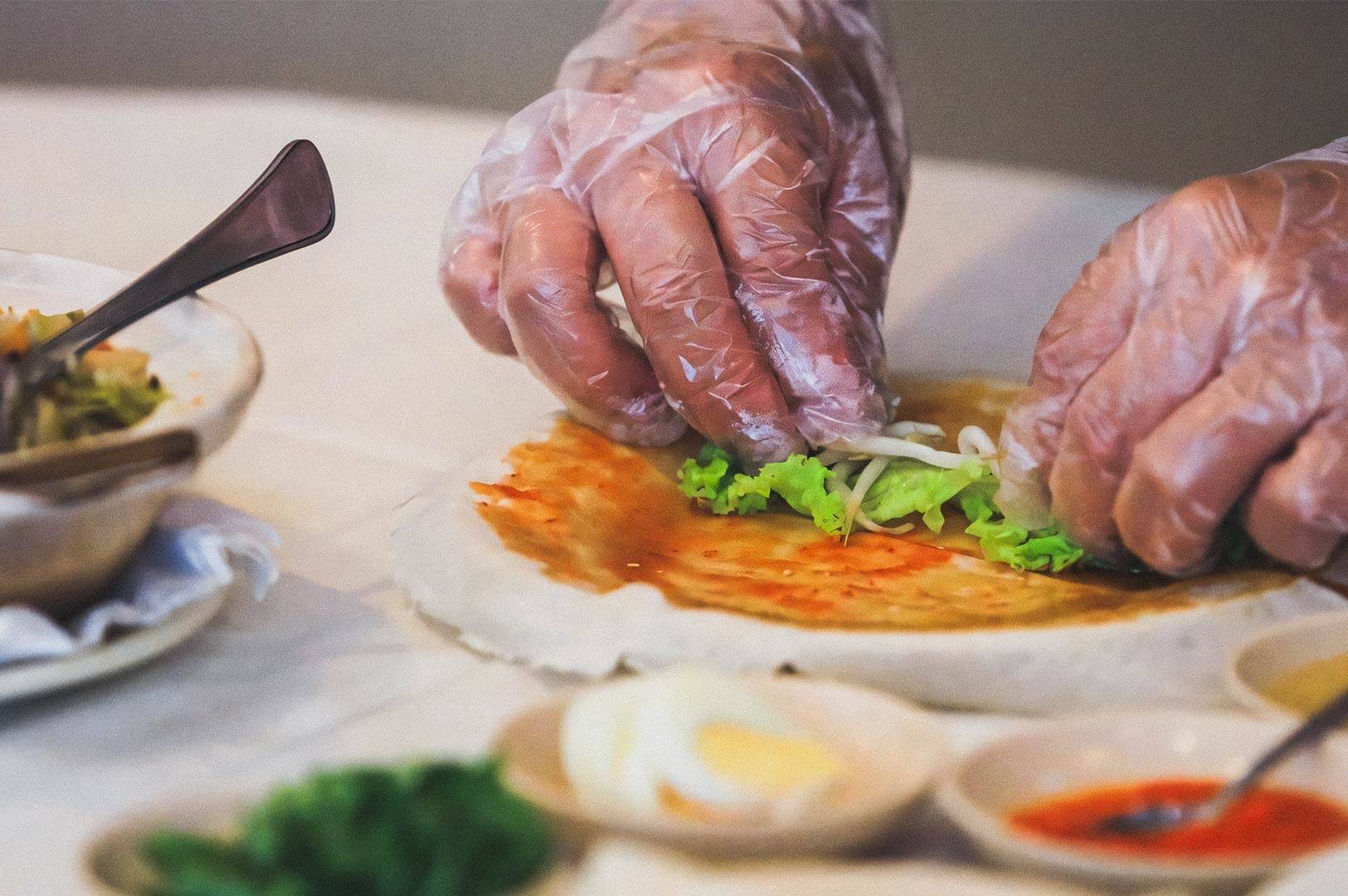
The sequence begins flat. A thin wrapper is spread across the counter, edges squared by habit. Ingredients are added in a fixed order, portions judged by sight rather than measure. Hands move without pause: place, adjust, fold. The roll tightens, holds, then is set aside. The motion repeats, unchanged, bowl after bowl.
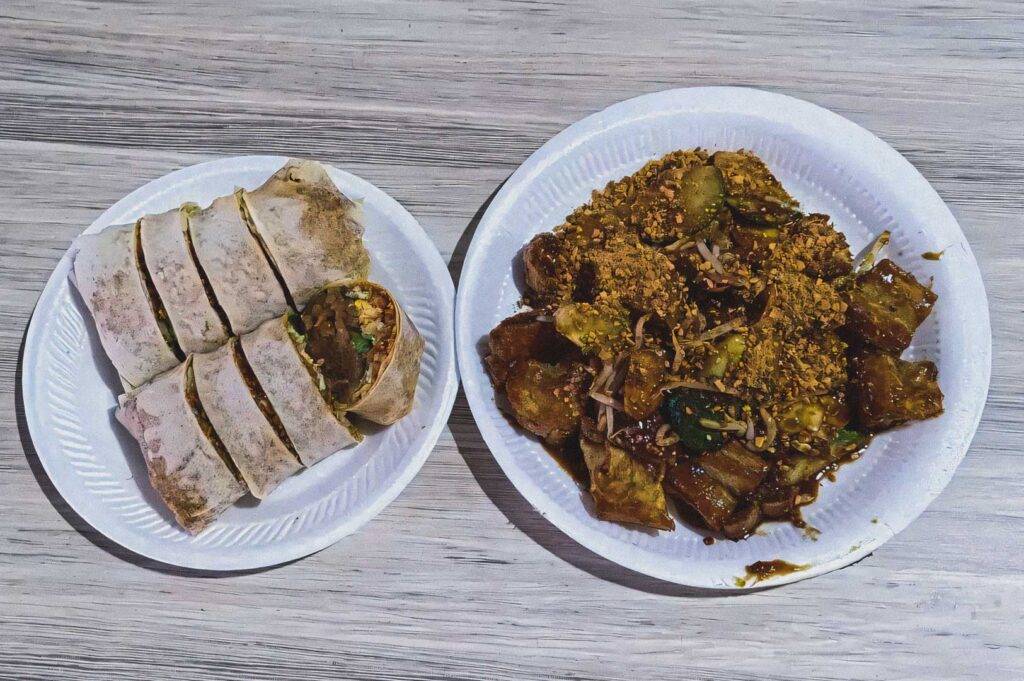
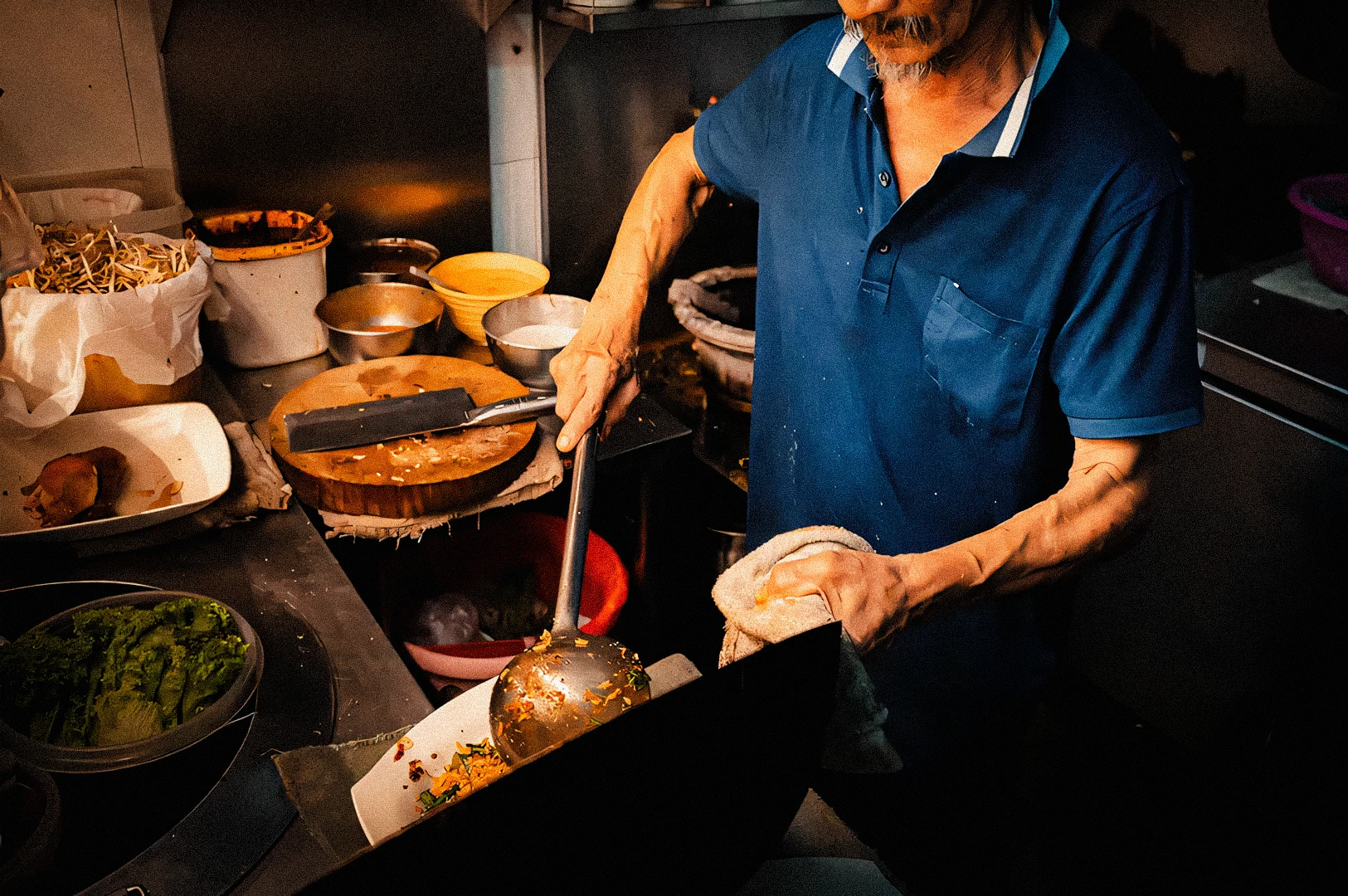
Rojak enters the frame differently. Ingredients arrive already cut, already waiting. Sauce is added last, mixed through with short, efficient turns. Texture matters here; crunch against softness, resistance against give. The mixing stops as soon as coverage is even. No excess movement.
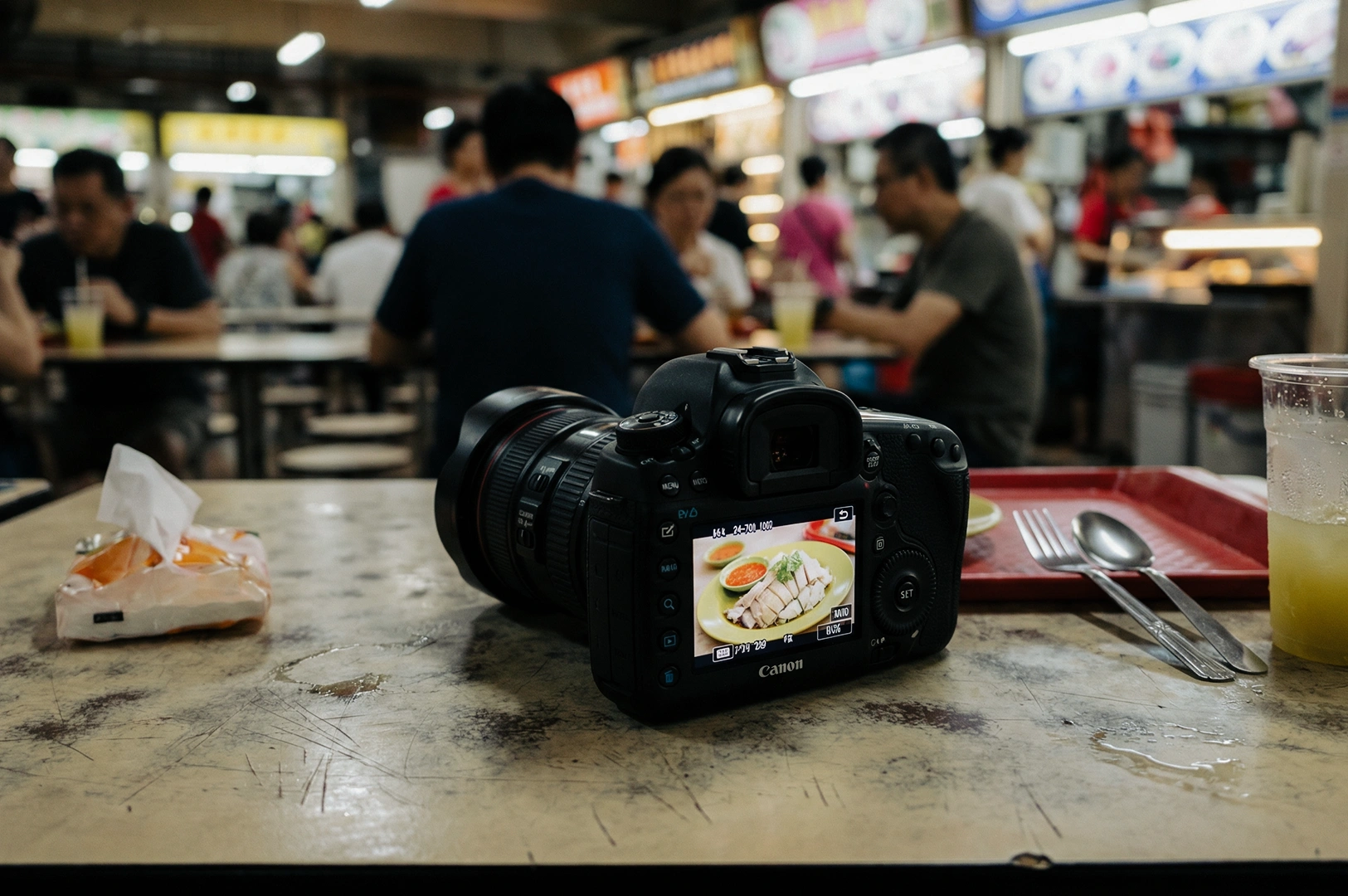
Both dishes share the same counter space at Chomp Chomp Food Centre. Orders overlap. One is wrapped while the other rests. Utensils are reused without ceremony. Surfaces are wiped between cycles, not spotless, just ready.

On the table, the contrast settles. Popiah is lifted cleanly, held with both hands. Rojak stays communal, reached into from multiple angles. Eating begins immediately. There is no adjustment period. The food arrives as expected and is used as such.
Around it, the centre continues its pace. Plates stack and clear. Drinks arrive late, sometimes after the first bites. Nothing waits for everything to be ready.
Popiah and rojak function well here because their preparation tolerates interruption. Each step can pause and resume without loss. The system holds.