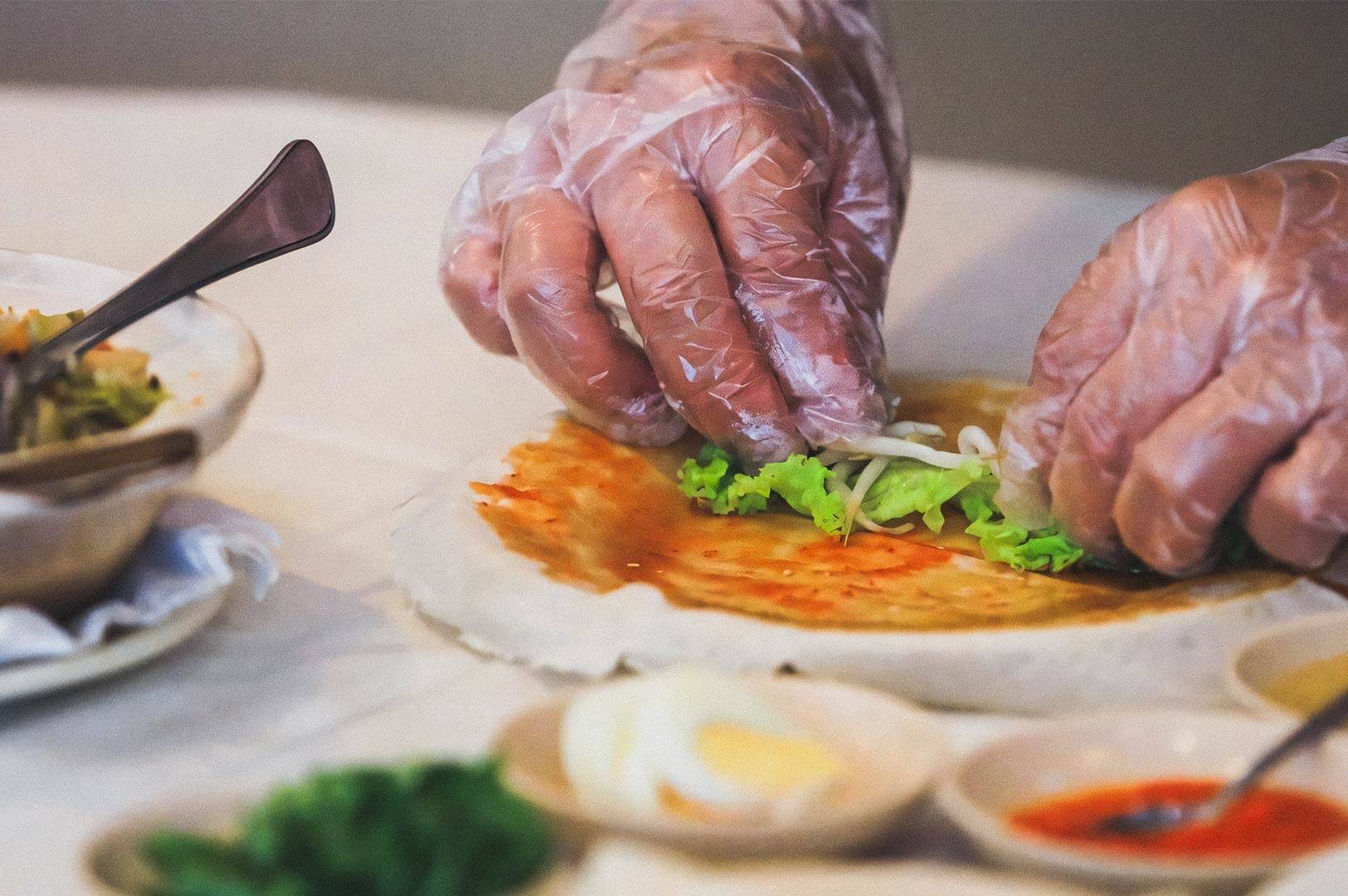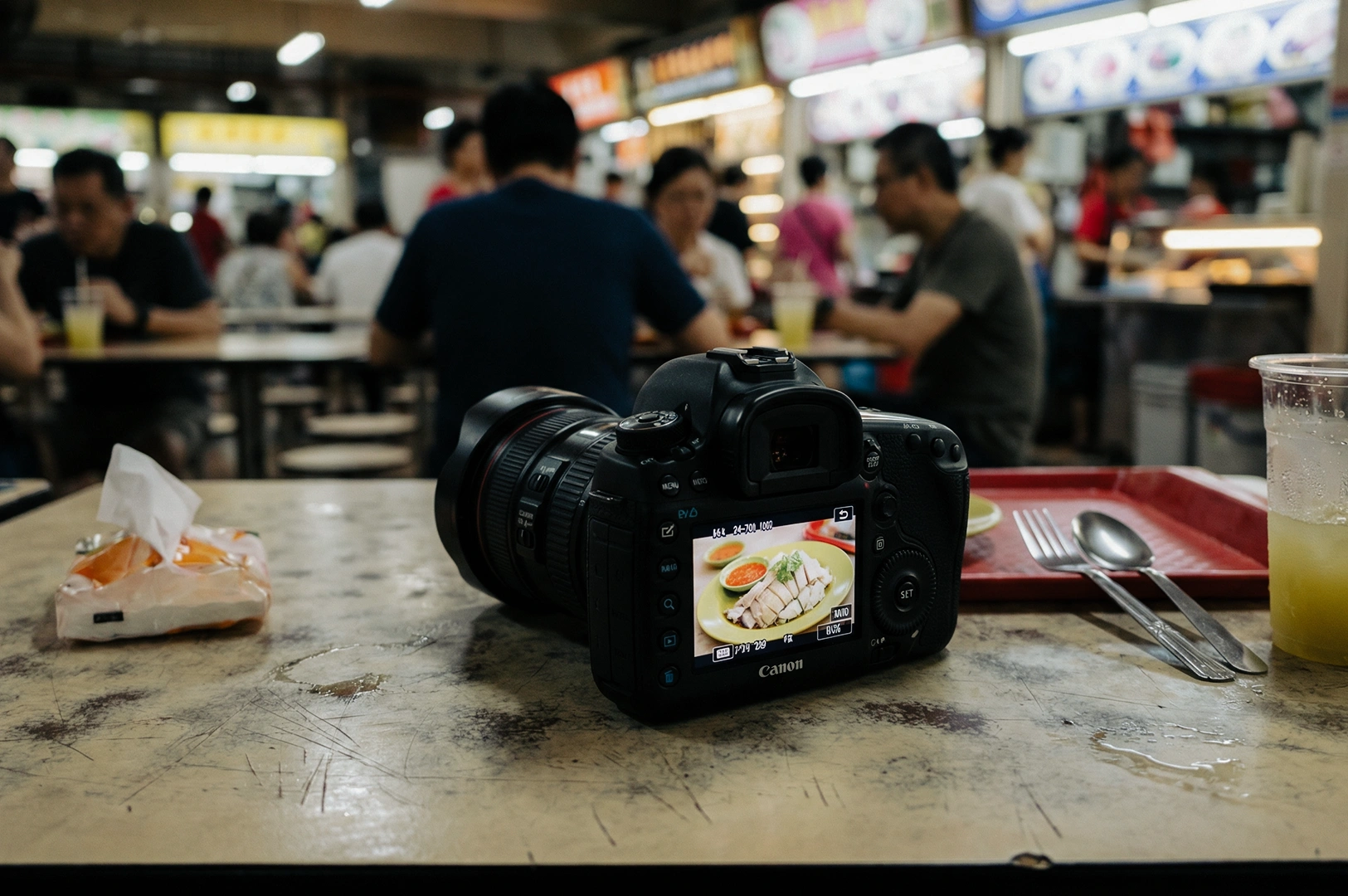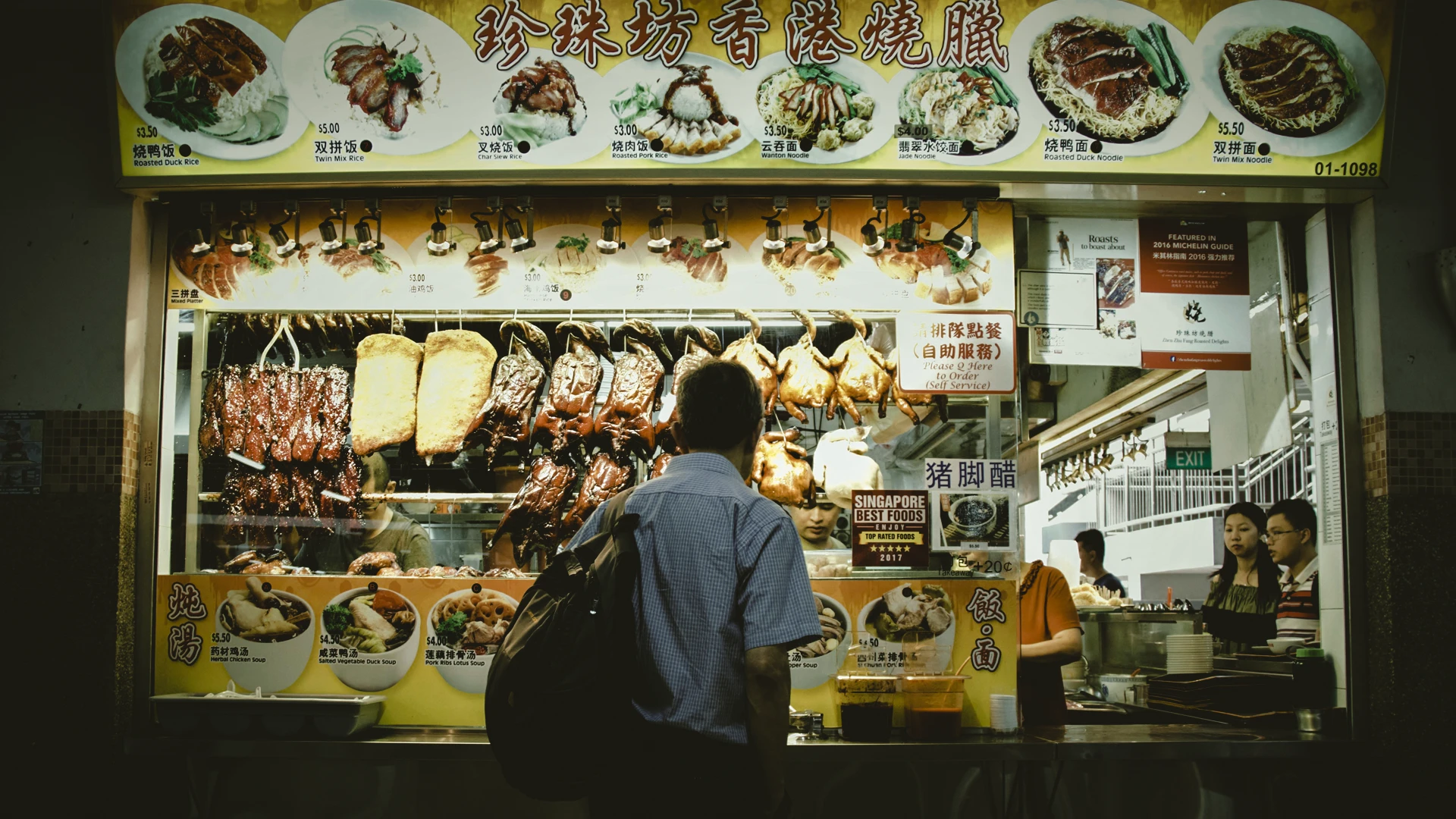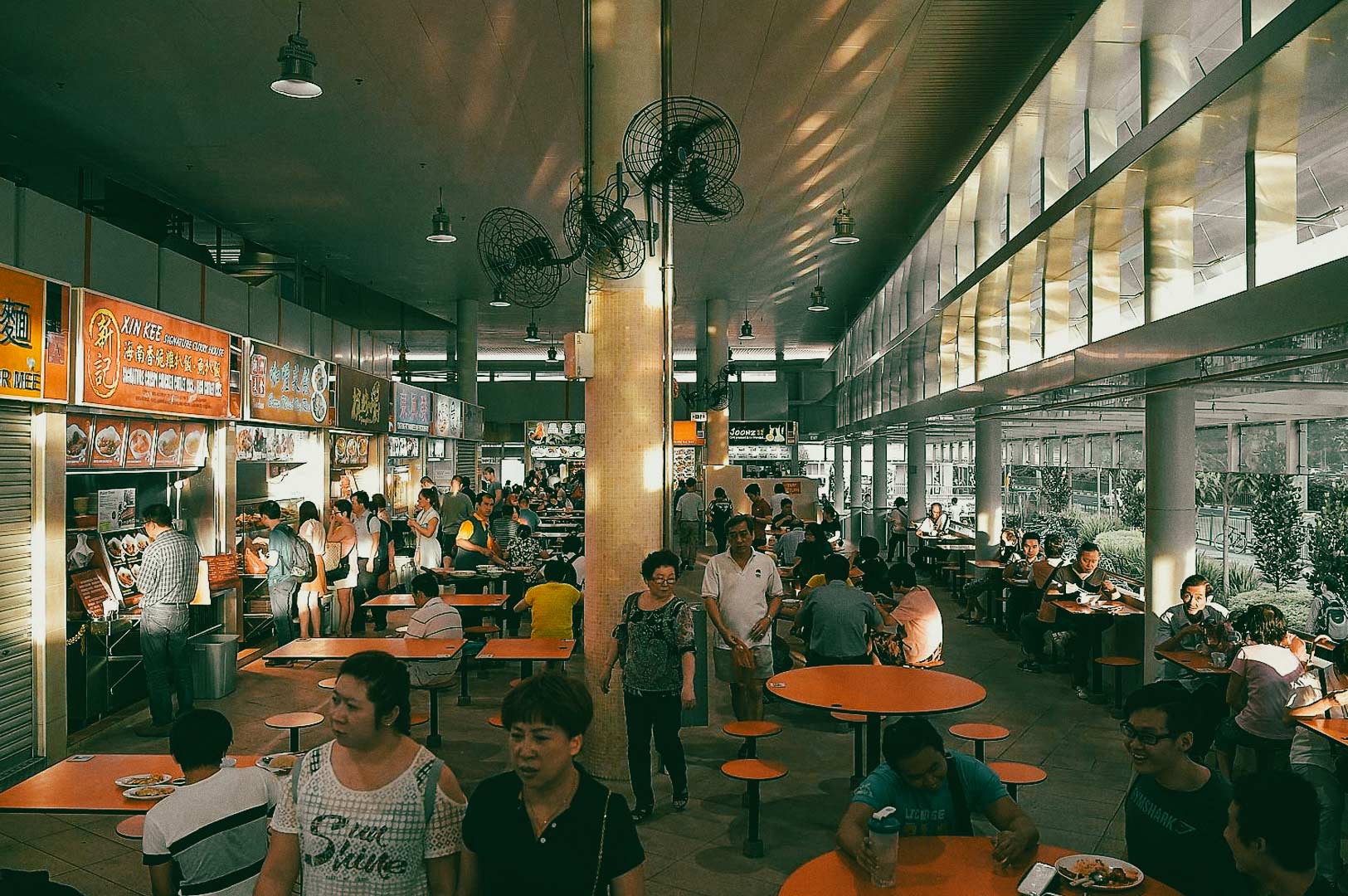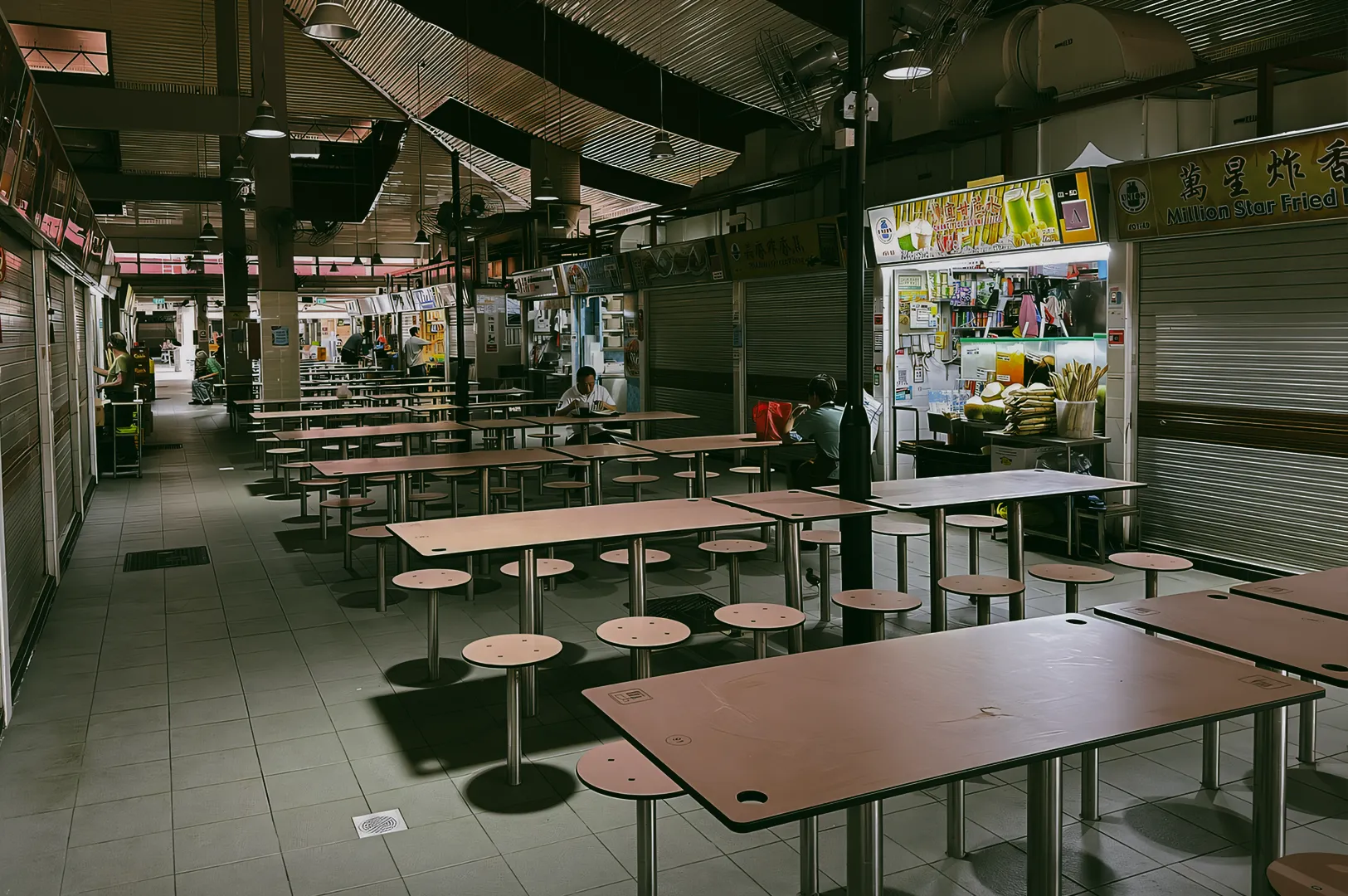

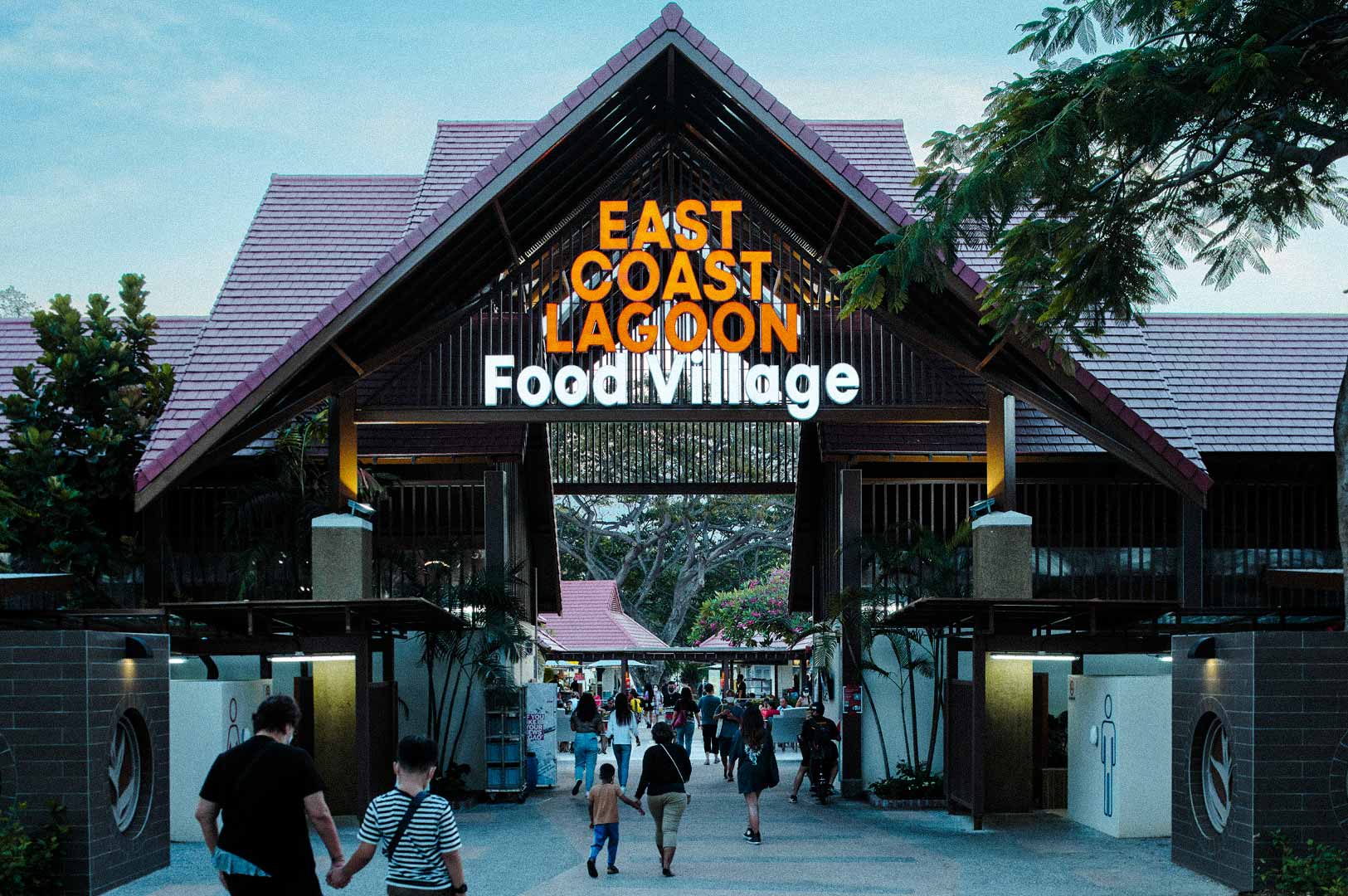
The air arrives first. Salt, heat, a trace of smoke that drifts before there is anything to see. The path opens slowly, bordered by trees and parked bicycles. People walk without hurry. Some stop, then continue, as if timing matters. A visual note from Hawker Photography.
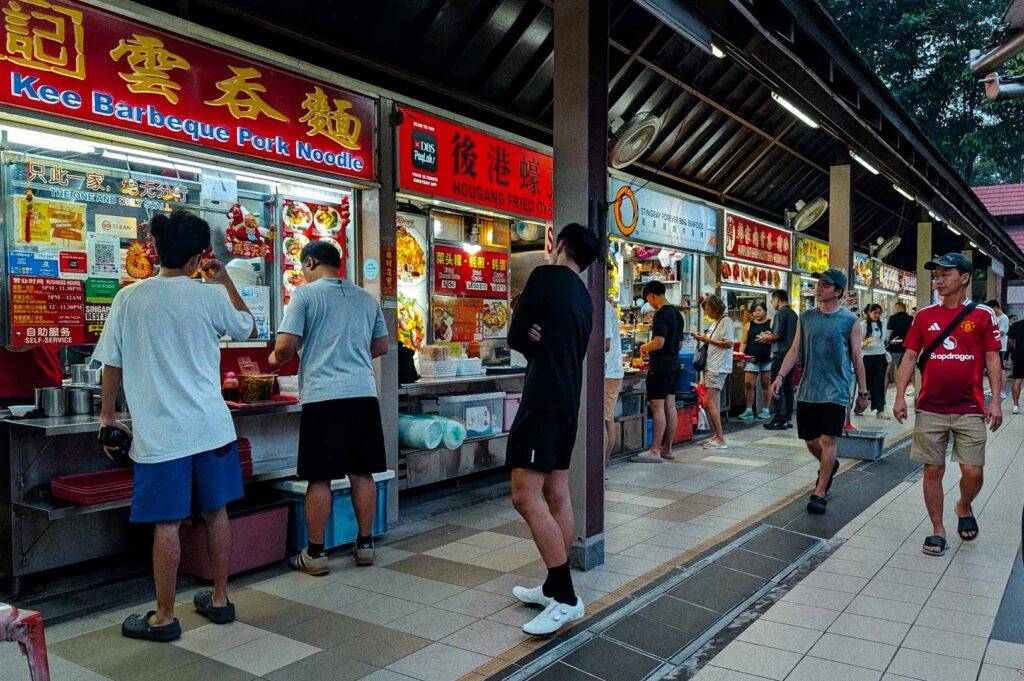
Inside, nothing feels enclosed. Stalls line the edge, open to wind and light. Flames rise and fall in short bursts. Between them, there are pauses—hands resting, tongs set down, a moment where nothing moves. Smoke gathers, thins, then returns. Satay appears and disappears in this rhythm, skewers lifted, turned, set aside.
The sea is not always visible, but it is present. Sound carries differently here. Conversations stretch. Plates stay longer on tables. Trays are stacked, unstacked, then forgotten again.
Seating faces outward where possible. Some diners sit with their backs to the stalls, watching the water instead. Others lean forward, elbows on tables, listening more than speaking. The light shifts as evening approaches, softening edges, lengthening shadows across concrete floors.
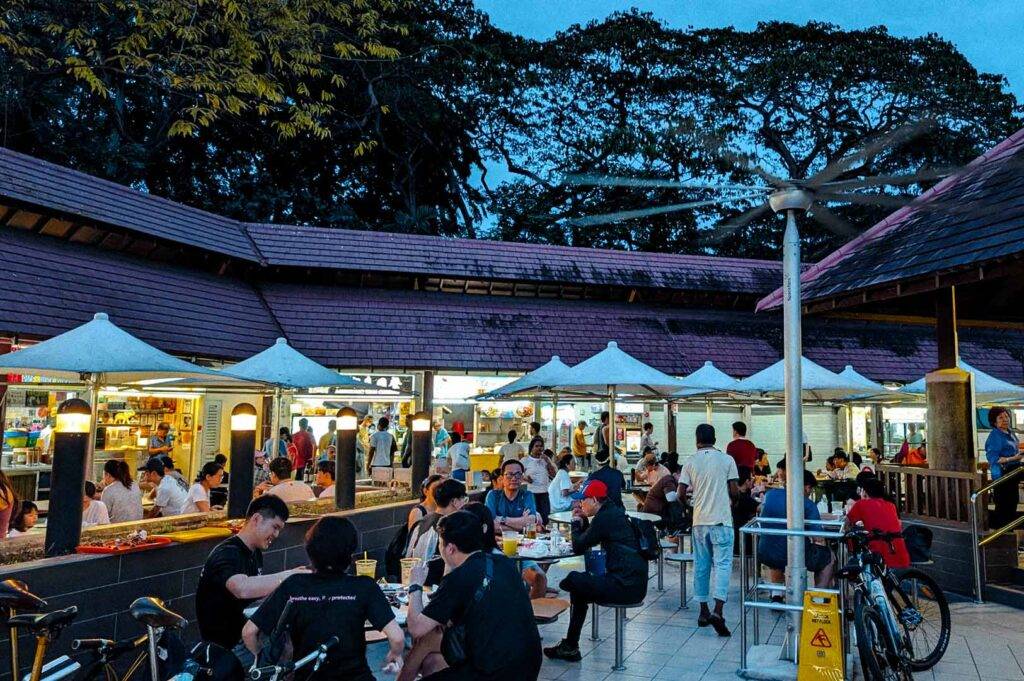
Only later does the name surface—East Coast Lagoon Food Village—almost as an afterthought. By then, the place has already settled into its pattern: fire, smoke, breeze; arrival and lingering; the quiet work of waiting.
Nothing asks to be concluded. The grills keep going. The sea keeps moving. People finish, stand, and leave space behind them.