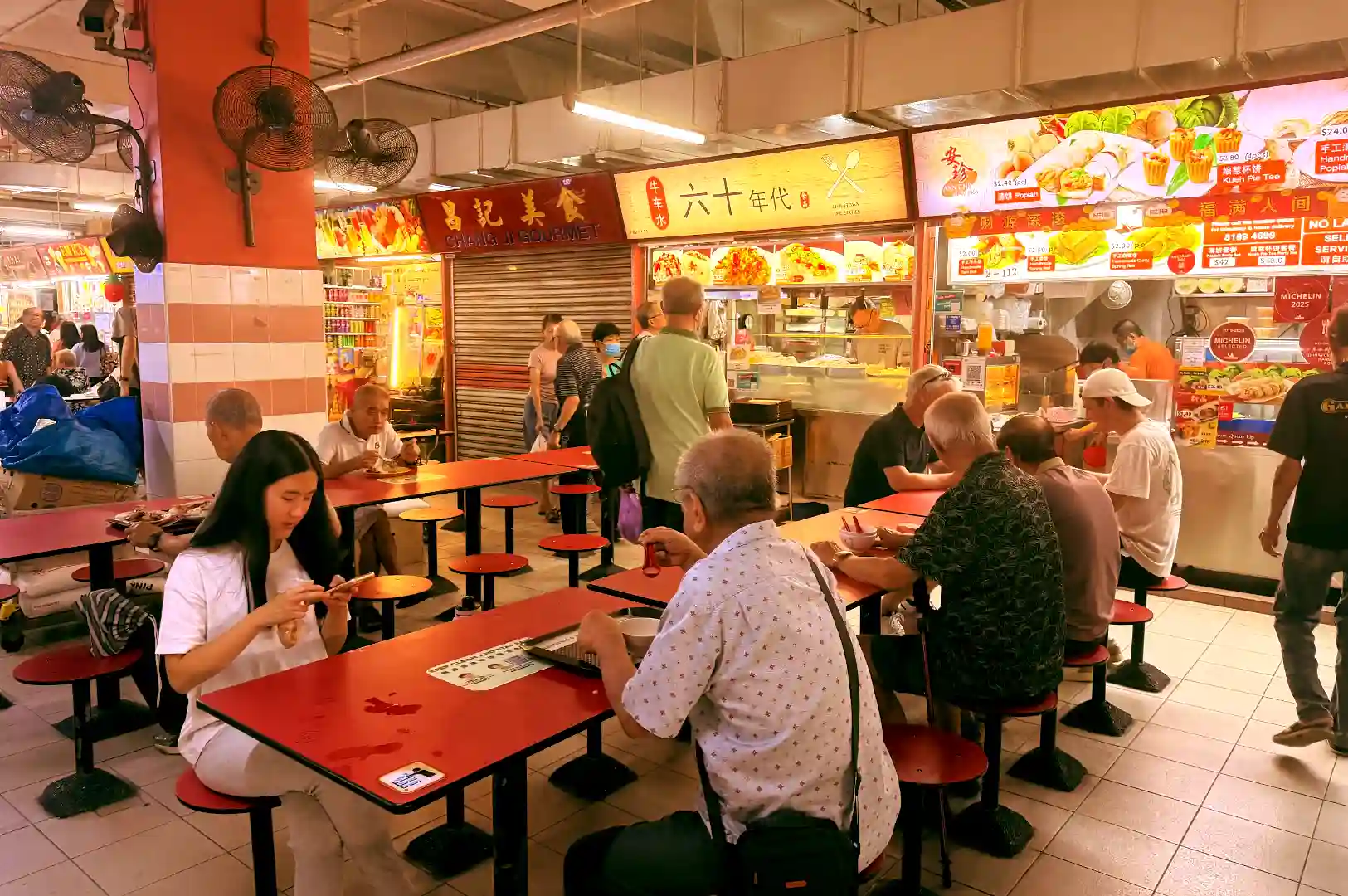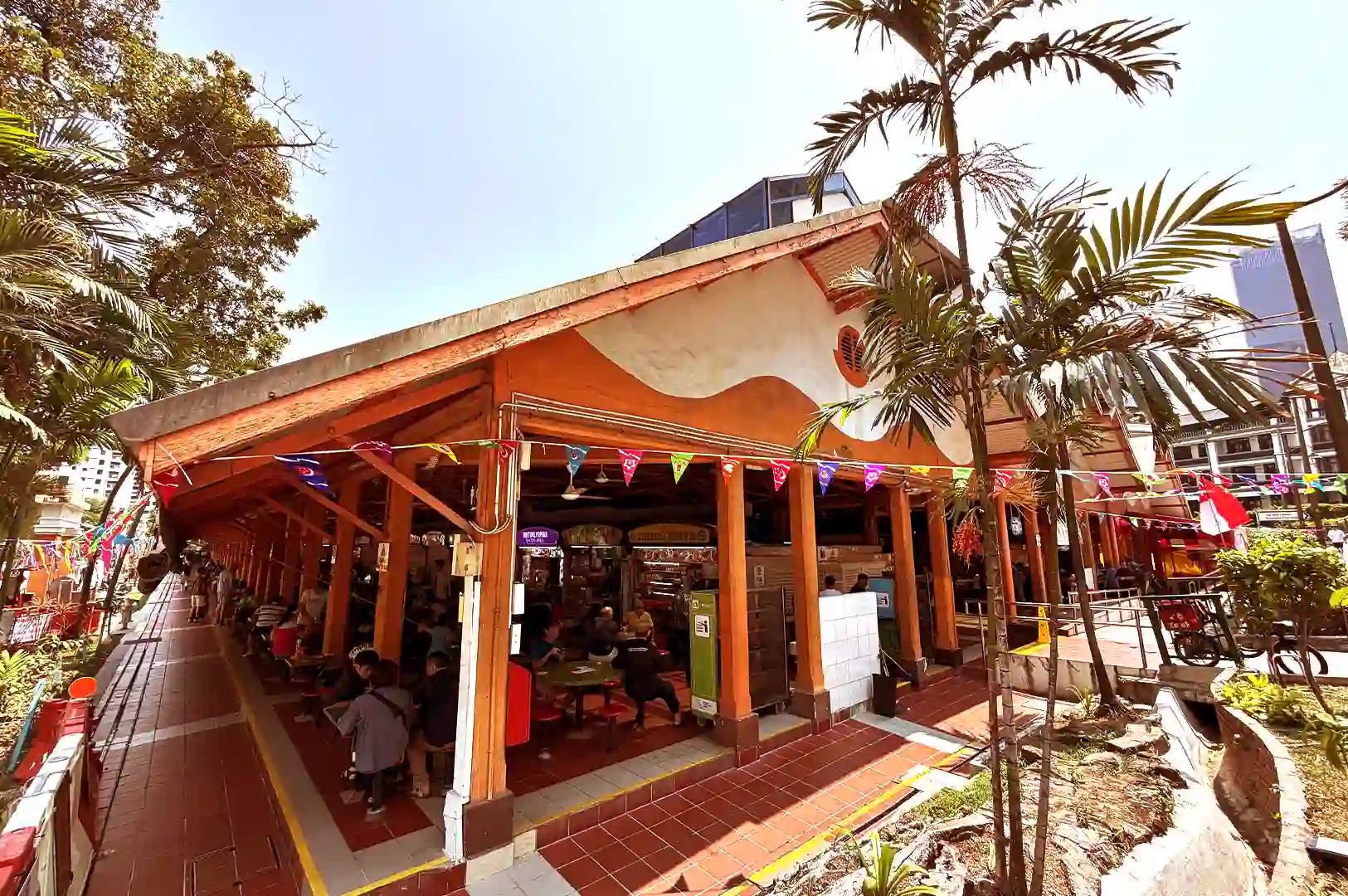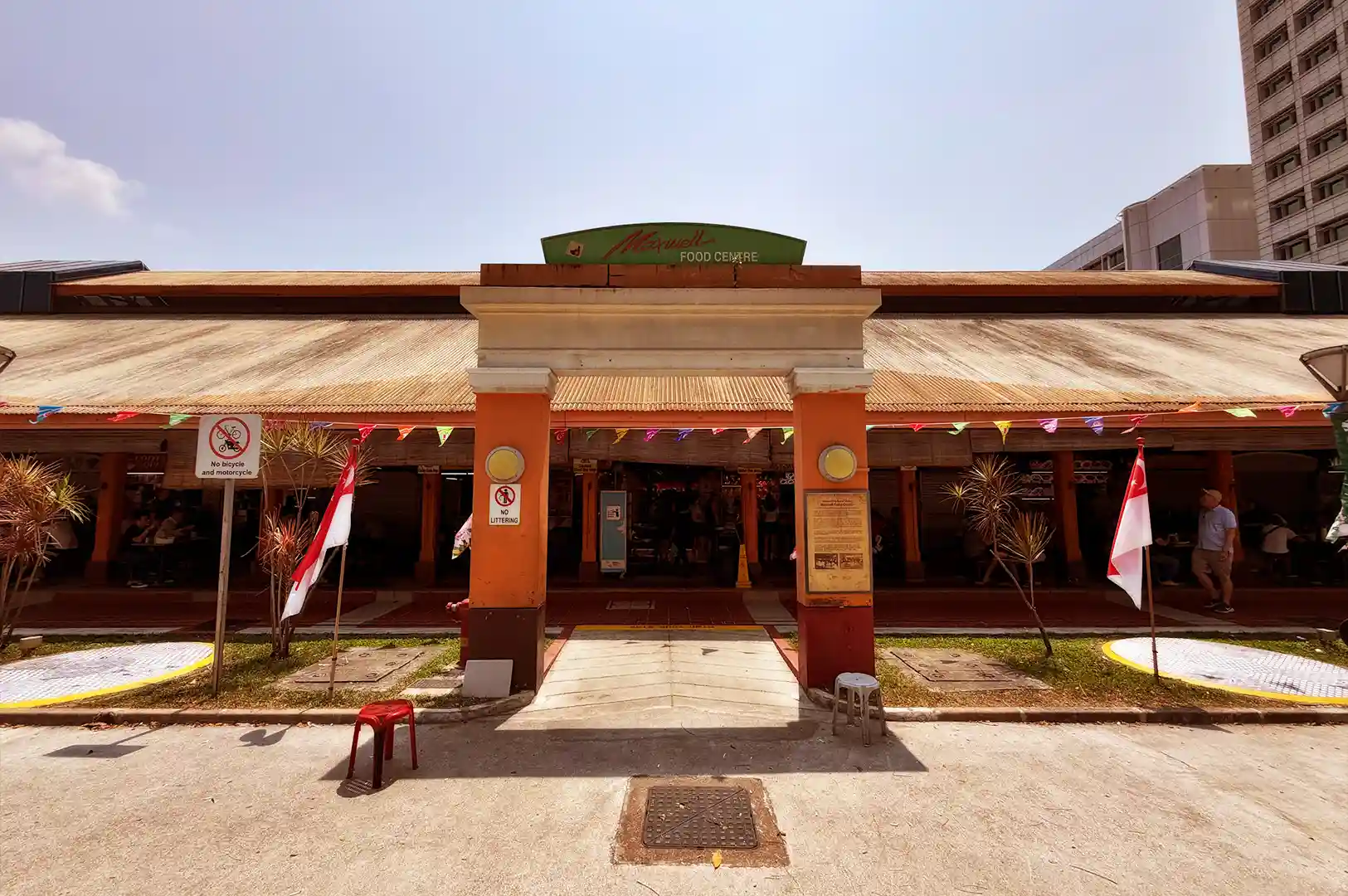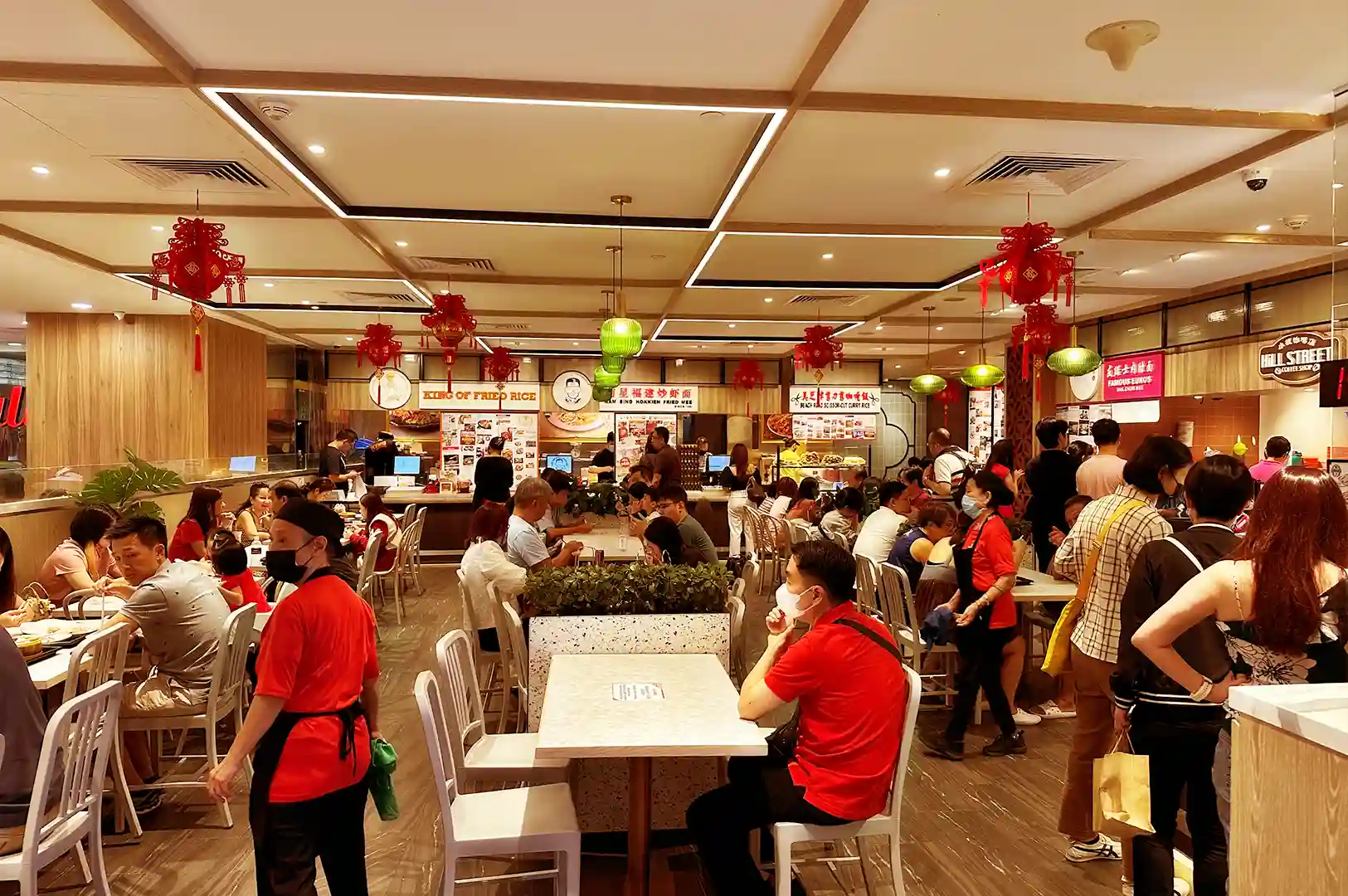

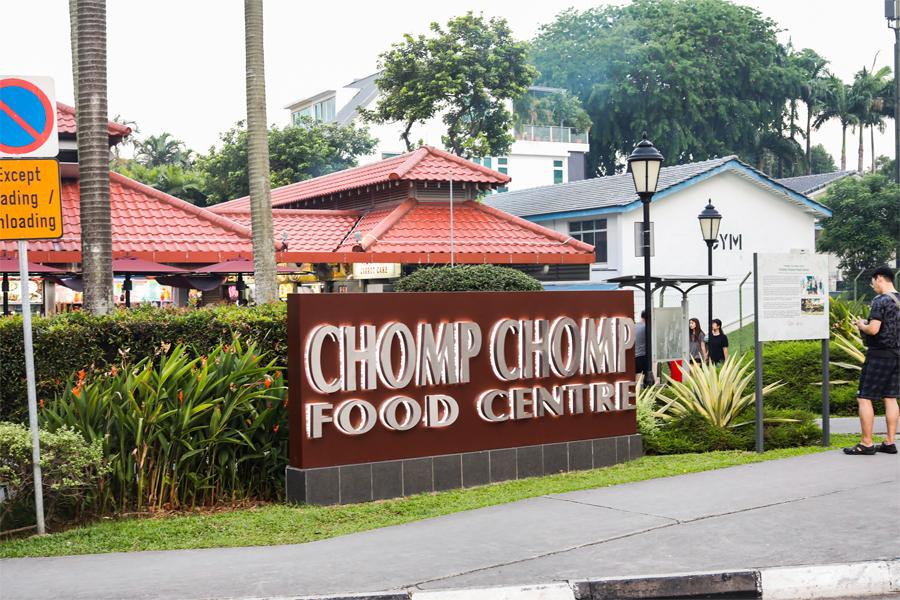
Chomp Chomp Food Centre operates on a different rhythm at night. As evening sets in, the centre fills quickly, with diners arriving in steady waves rather than all at once. Movement becomes more concentrated, and space is used efficiently. For many visitors, standing while waiting is part of the experience, as tables turn over gradually and queues extend into shared walkways.
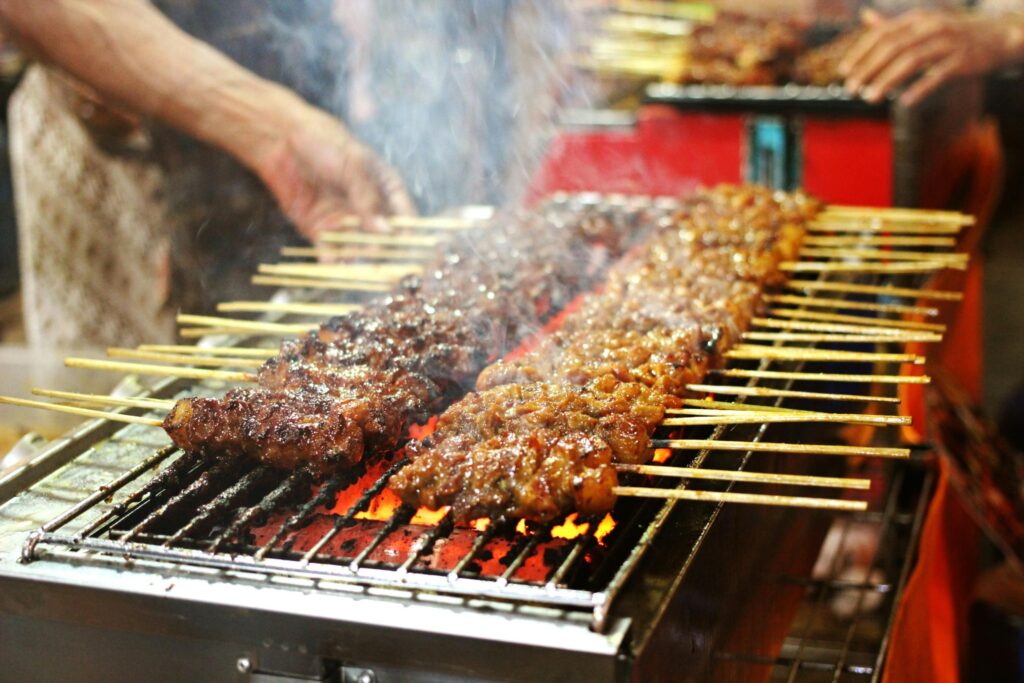
During the peak evening hours, the process is largely predictable. Diners place orders first, then look for seats while food is being prepared. Groups take turns watching over tables, and trays are collected as soon as they are ready. A plate of satay is often eaten standing nearby, reflecting how meals here are shaped by availability rather than preference.
What allows the centre to function under pressure is established coordination. Hawkers work within limited space, preparing dishes in quick succession without unnecessary variation. Staff and customers adapt to one another, forming an unspoken system that keeps orders moving.
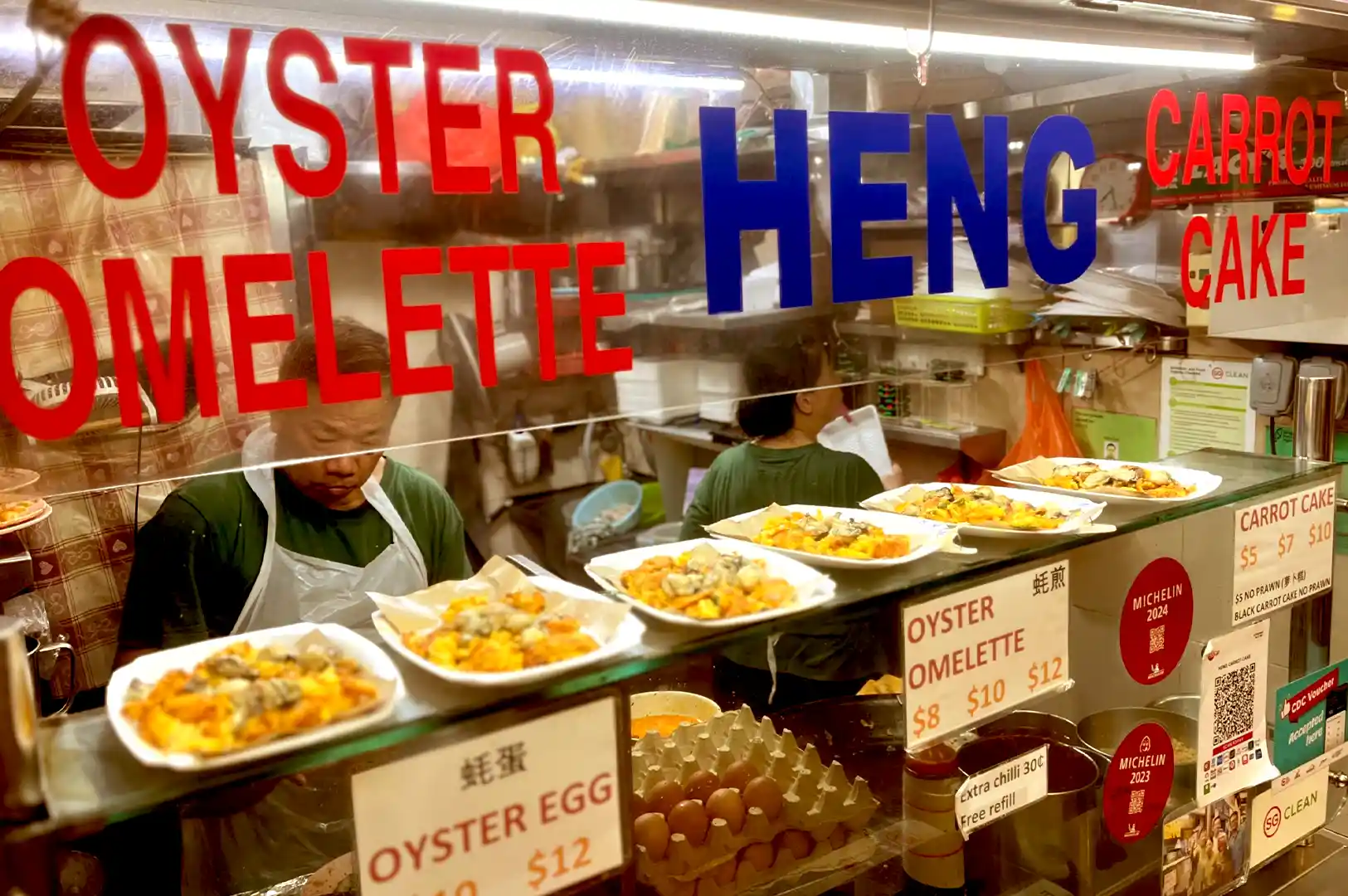
Whether waiting for a grilled item or a plate of char kway teow, expectations around timing are understood. Seating remains fluid throughout the night. Tables clear quickly, and diners move on without lingering. Some choose to stand and eat rather than wait, balancing plates or bowls while navigating the crowd. A serving of oyster omelette is finished efficiently, with trays returned promptly to free up space.
As the night progresses, the crowd gradually thins, but the rhythm remains consistent. Waiting, standing, and eating continue in cycles until closing. At Chomp Chomp Food Centre, the nighttime experience is shaped less by comfort than by flow. The system works because diners and hawkers follow it — allowing the centre to operate at capacity while still delivering meals in an organised, predictable manner.
What allows the centre to function under pressure is established coordination. Hawkers work within limited space, preparing dishes in quick succession without unnecessary variation. Staff and customers adapt to one another, forming an unspoken system that keeps orders moving.
Whether waiting for a grilled item or a plate of char kway teow, expectations around timing are understood. Seating remains fluid throughout the night. Tables clear quickly, and diners move on without lingering. Some choose to stand and eat rather than wait, balancing plates or bowls while navigating the crowd. A serving of oyster omelette is finished efficiently, with trays returned promptly to free up space.
As the night progresses, the crowd gradually thins, but the rhythm remains consistent. Waiting, standing, and eating continue in cycles until closing. At Chomp Chomp Food Centre, the nighttime experience is shaped less by comfort than by flow. The system works because diners and hawkers follow it — allowing the centre to operate at capacity while still delivering meals in an organised, predictable manner.
As the night progresses, the crowd gradually thins, but the rhythm remains consistent. Waiting, standing, and eating continue in cycles until closing. At Chomp Chomp Food Centre, the nighttime experience is shaped less by comfort than by flow. The system works because diners and hawkers follow it — allowing the centre to operate at capacity while still delivering meals in an organised, predictable manner.