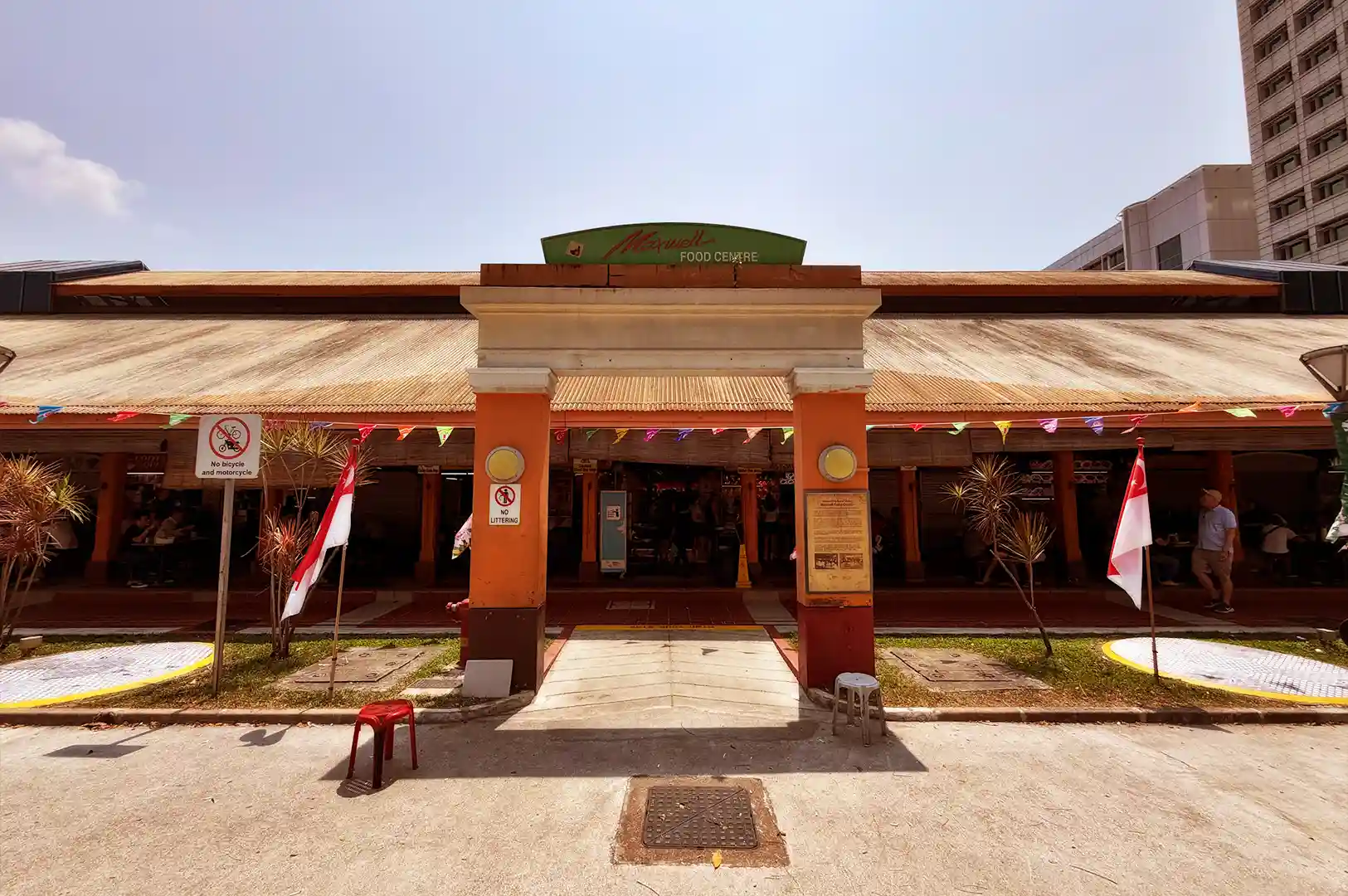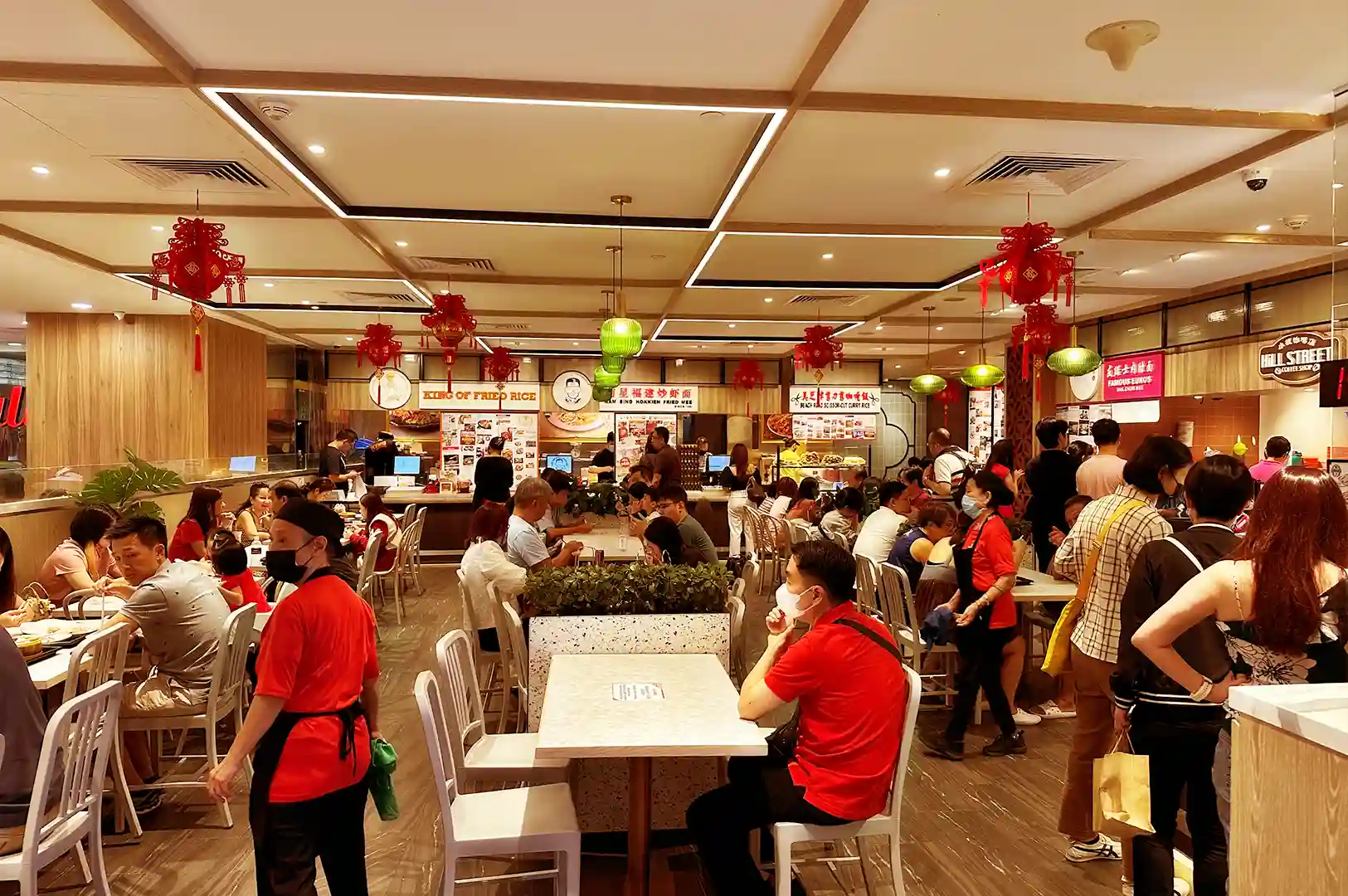

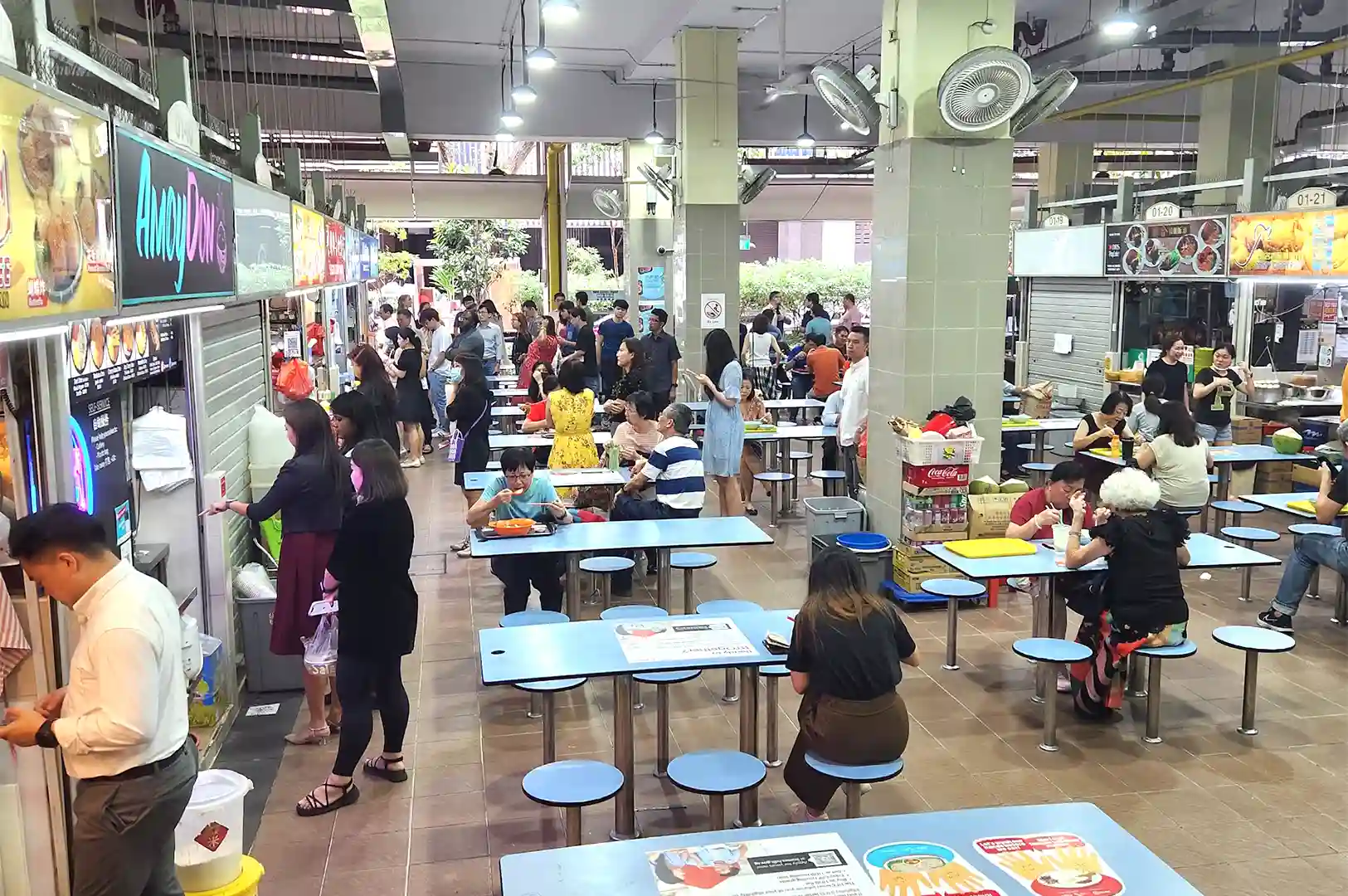
The hawker centre feels different when the crowd begins to disappear.
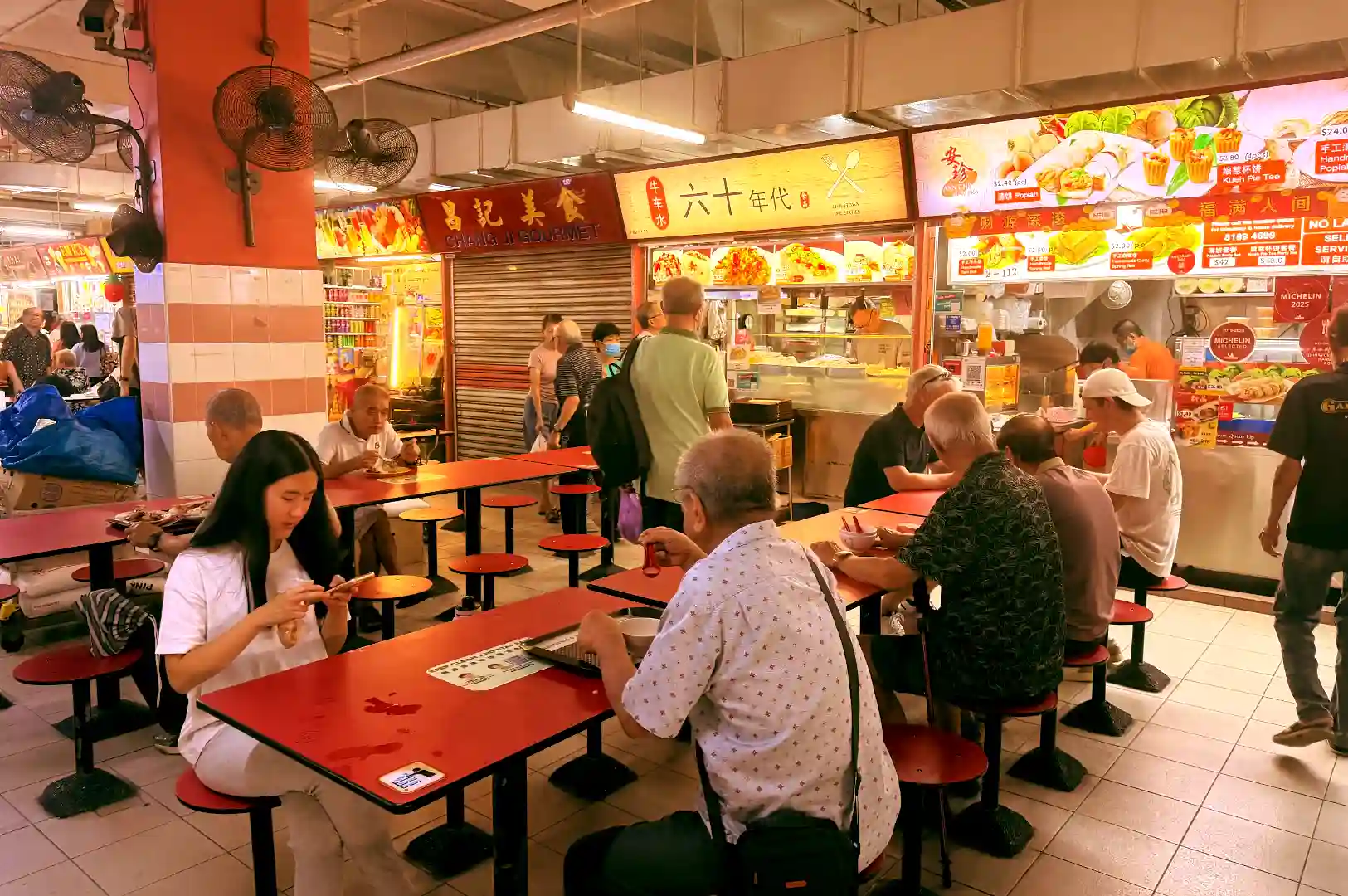
Earlier in the evening, every table carries its own rhythm. Conversations overlap. Trays move between seats. Orders are called across counters. The space feels occupied from every direction.
Then, slowly, the gaps appear.
A few tables remain full while others are already empty. The sound of footsteps becomes more noticeable. A stall that was busy an hour earlier begins wiping down its counter. Ingredients are covered. Utensils are moved aside.
The day does not end suddenly.
It folds itself away.
The final customers seem to move at a different pace. Some finish their meals without rushing. Others sit quietly after eating, enjoying a little more time before leaving. There is no longer the same urgency to find a seat or move through the crowd.
The hawker centre becomes more spacious.
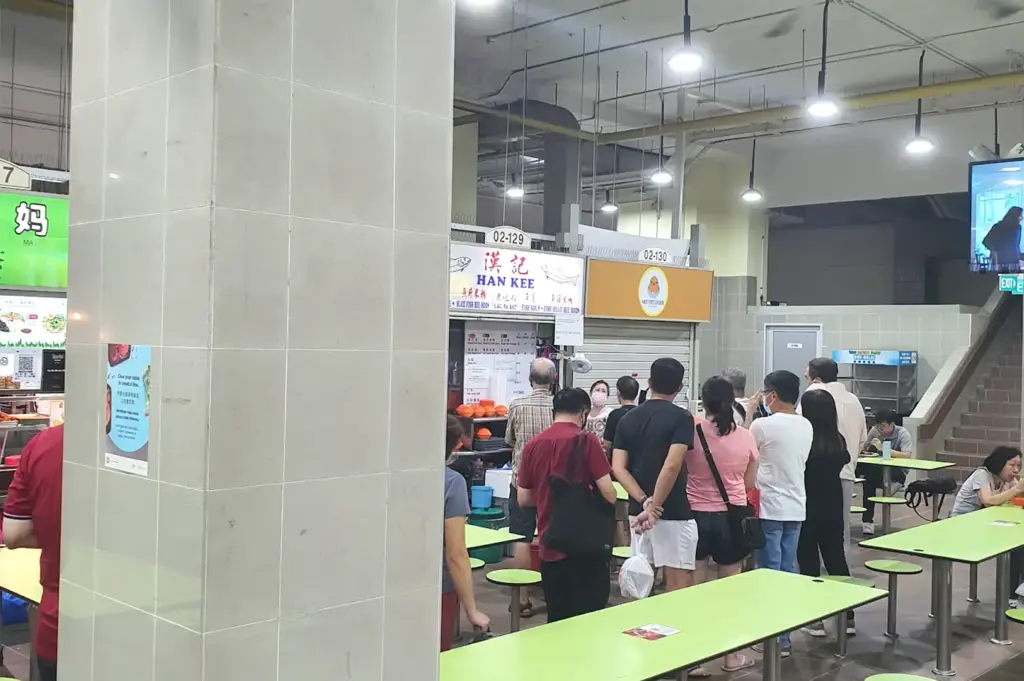
Tables that were once shared by strangers now sit untouched. Walkways that carried constant movement become clearer. The familiar sounds remain, but softer. A fan continues turning overhead. A stallholder counts remaining ingredients. A chair is lifted and placed somewhere else.
These small actions mark the transition.
During closing hours, the space reveals another side of itself. It is no longer only a place of exchange and activity. It becomes a workplace preparing to rest.
I often find these moments more revealing than the busiest periods. The rush shows how many people pass through a hawker centre. The quiet hours show how the place holds itself together when fewer people are watching.
For those who enjoy observing these slower transitions, you can also explore another feature from our archive that follows the changing atmosphere of hawker spaces as crowds gather, wait, and eventually move away: a night at Chomp Chomp.
Eventually, the last customer stands.
The tray is returned. The chair moves back into place. Another stall light turns off.
The hawker centre is not empty yet.
It is simply becoming something quieter.