
We have learned not to ask for the counter to be cleared.
There is often a temptation when photographing a stall to make things look more intentional. Move the cloth. Straighten the bowls. Wait until the empty containers are replaced. Find the moment when everything appears ready for a photograph.
We usually do the opposite.
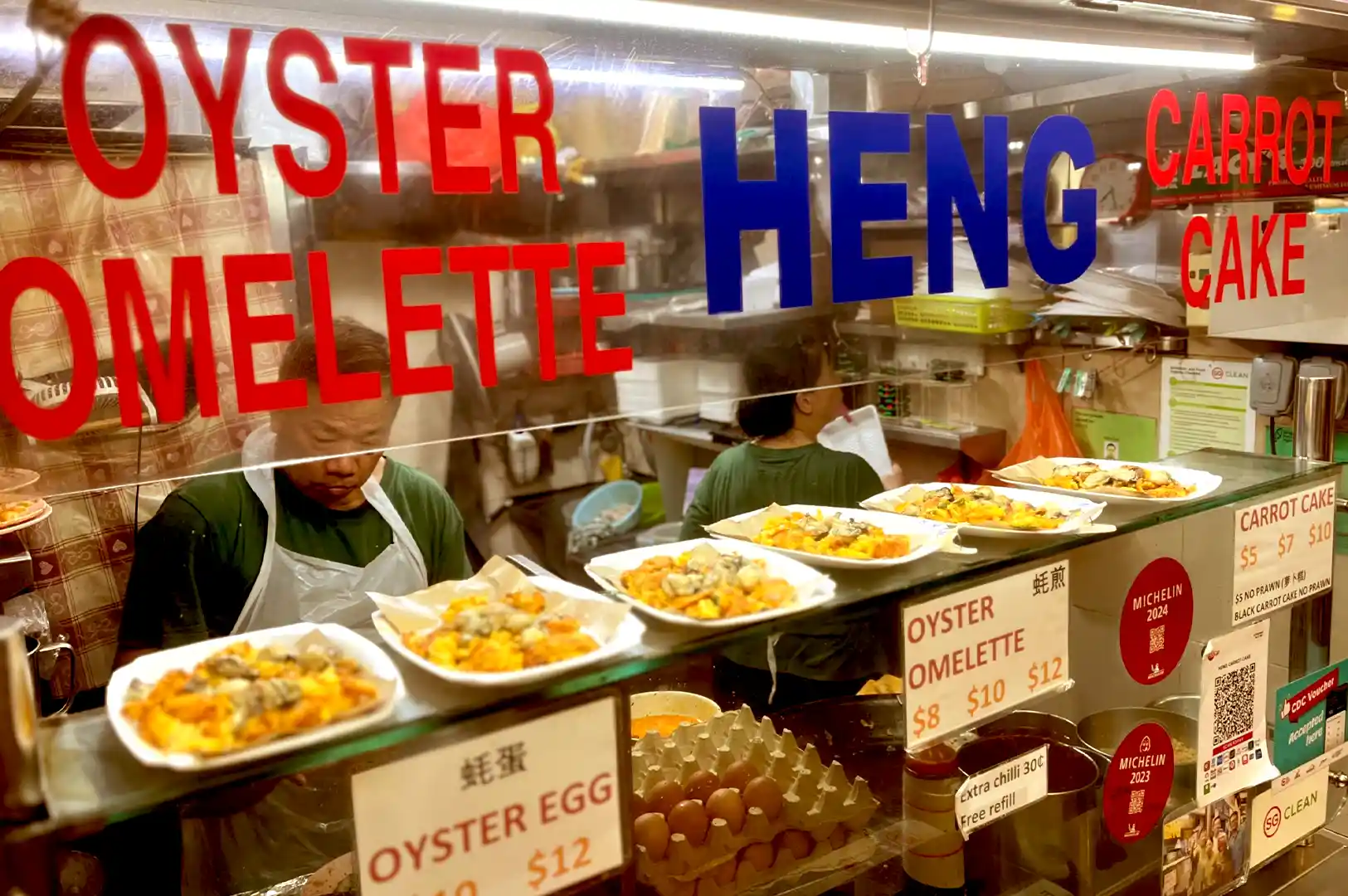
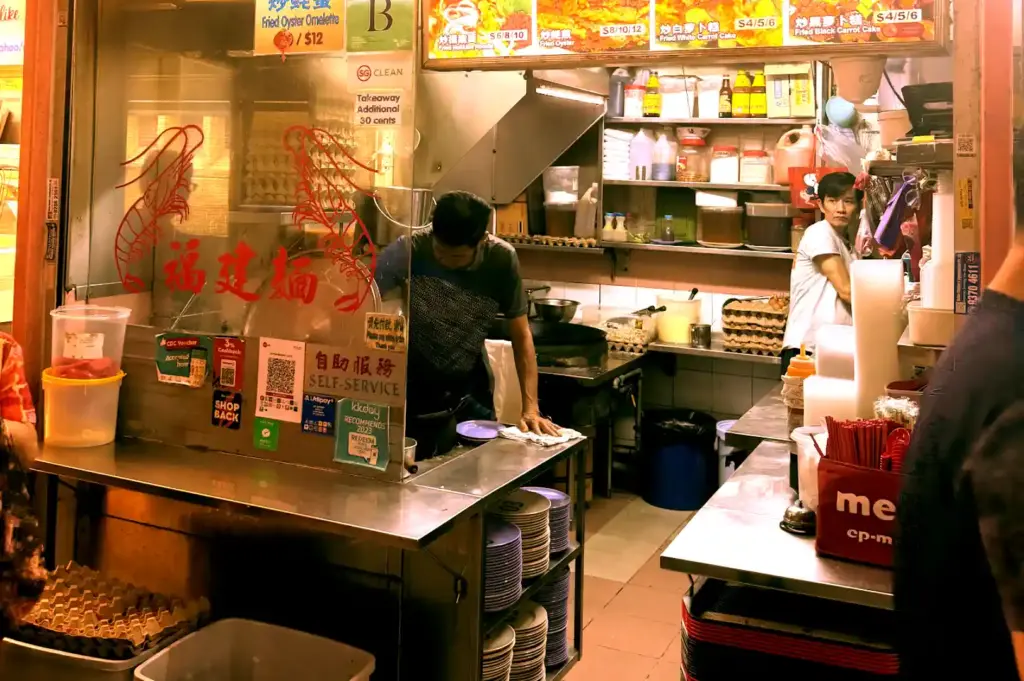
We arrive during ordinary service and work with whatever the day has left in front of us. A plastic bag hanging from a hook stays there. A half-used stack of takeaway containers remains in the frame. If a handwritten note has been taped unevenly to the wall, we do not straighten it.
Those details are not interruptions to the photograph.
They are part of the stall.
On one visit, we found ourselves waiting for a cleaner frame. Customers kept passing in front of us. Trays accumulated near the counter. Someone left a drink beside a container of utensils. For several minutes, we assumed the scene would eventually settle into something photographable.
It never did.
Then we realised that waiting was beginning to create a version of the stall that did not exist.
So we photographed it as it was.
The resulting frames were less orderly than we had expected, but they held more of the afternoon. The interruptions showed where people stood. The trays showed how quickly tables were turning. Even the objects we initially wanted out of the frame helped explain how the space was actually being used.
We have encountered this repeatedly.
A working stall rarely presents itself as a finished composition. It expands and contracts with each order. Ingredients move forward. Containers empty. Towels change position. Customers enter the edges of the frame and leave again.
Our role is not to correct those conditions.
It is to recognise when imperfection is information.
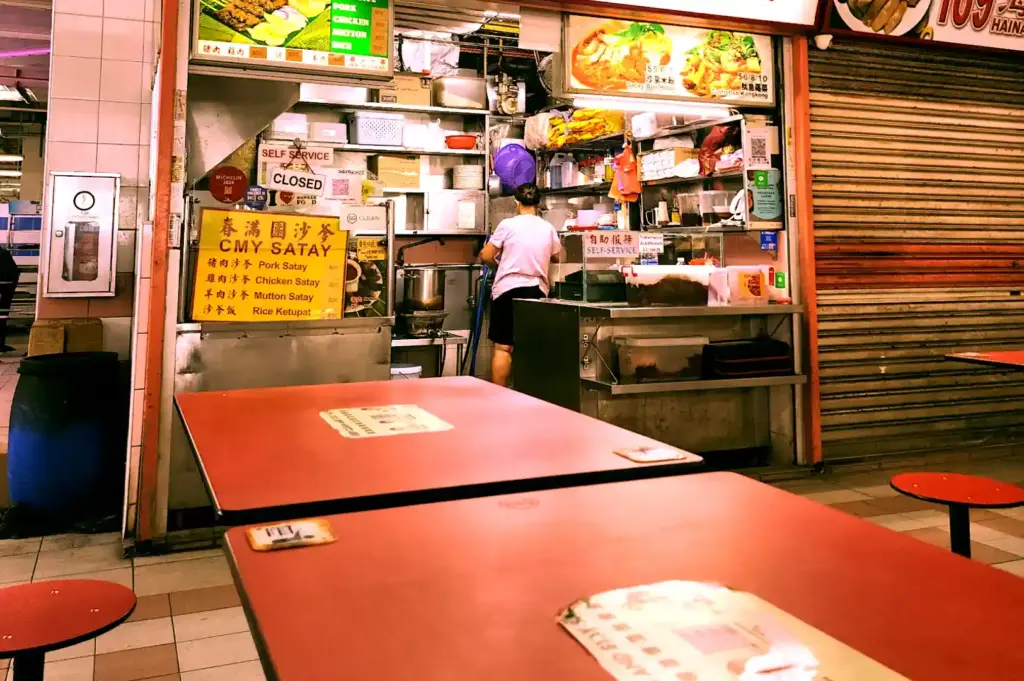
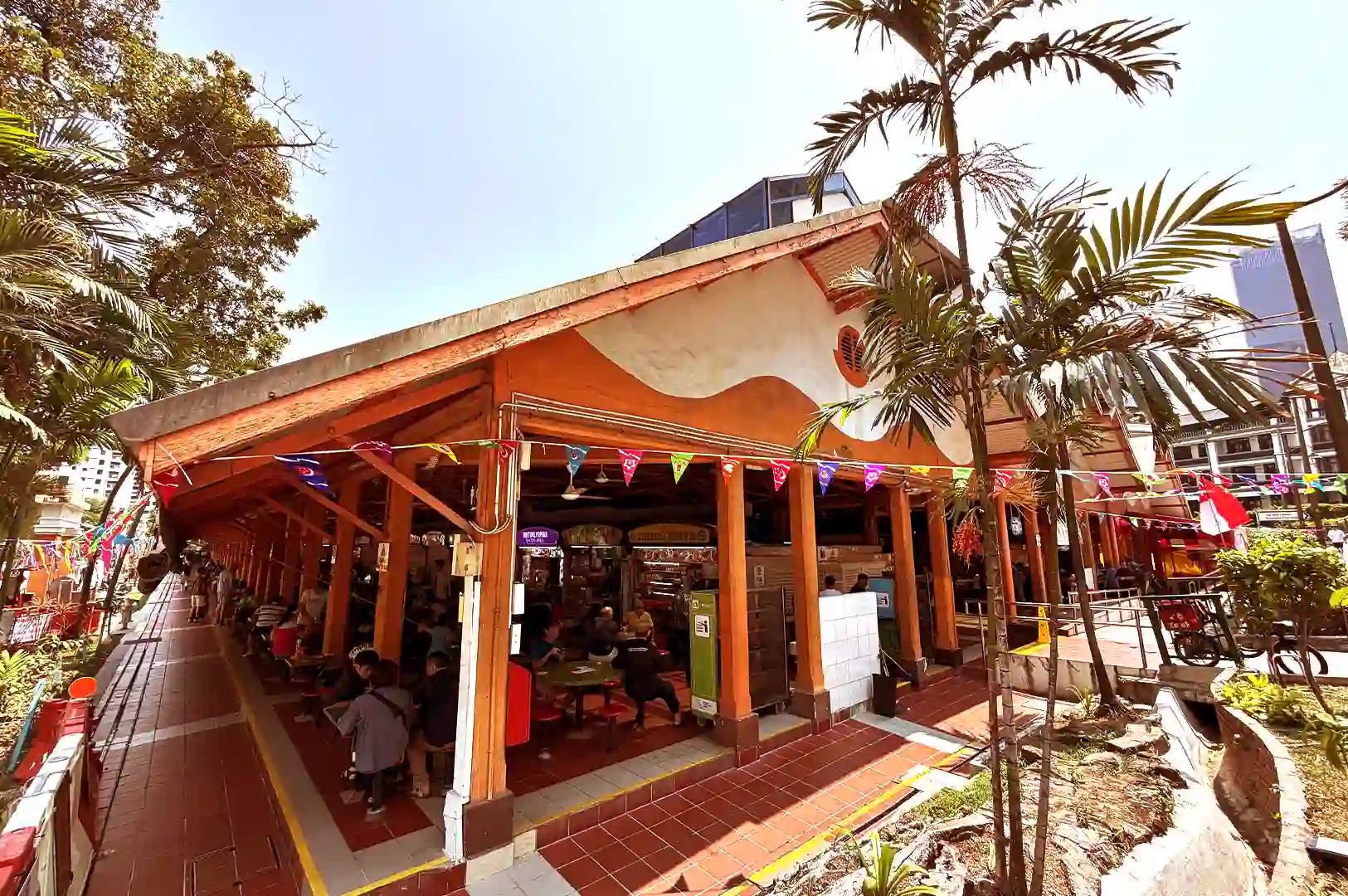
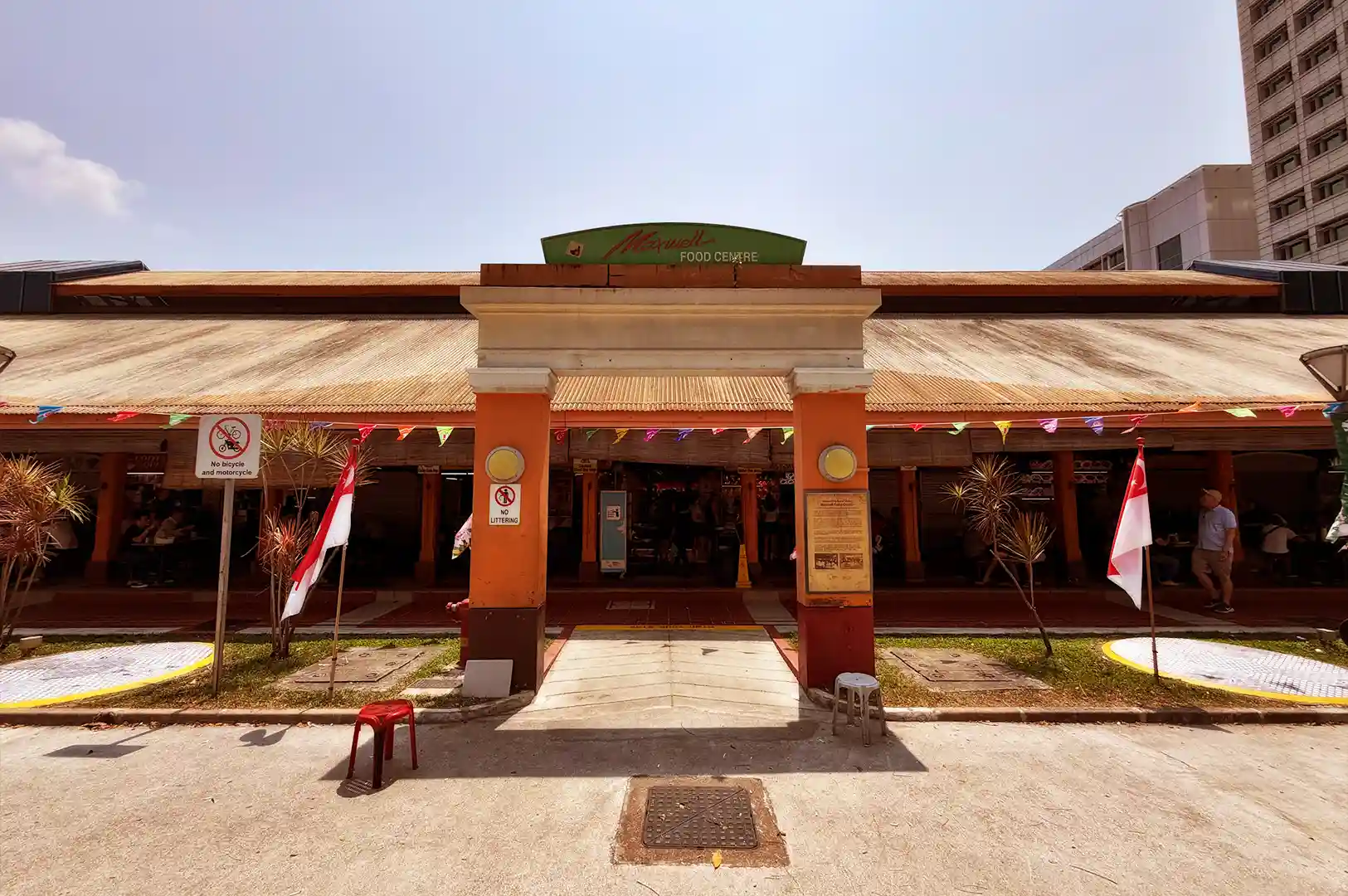
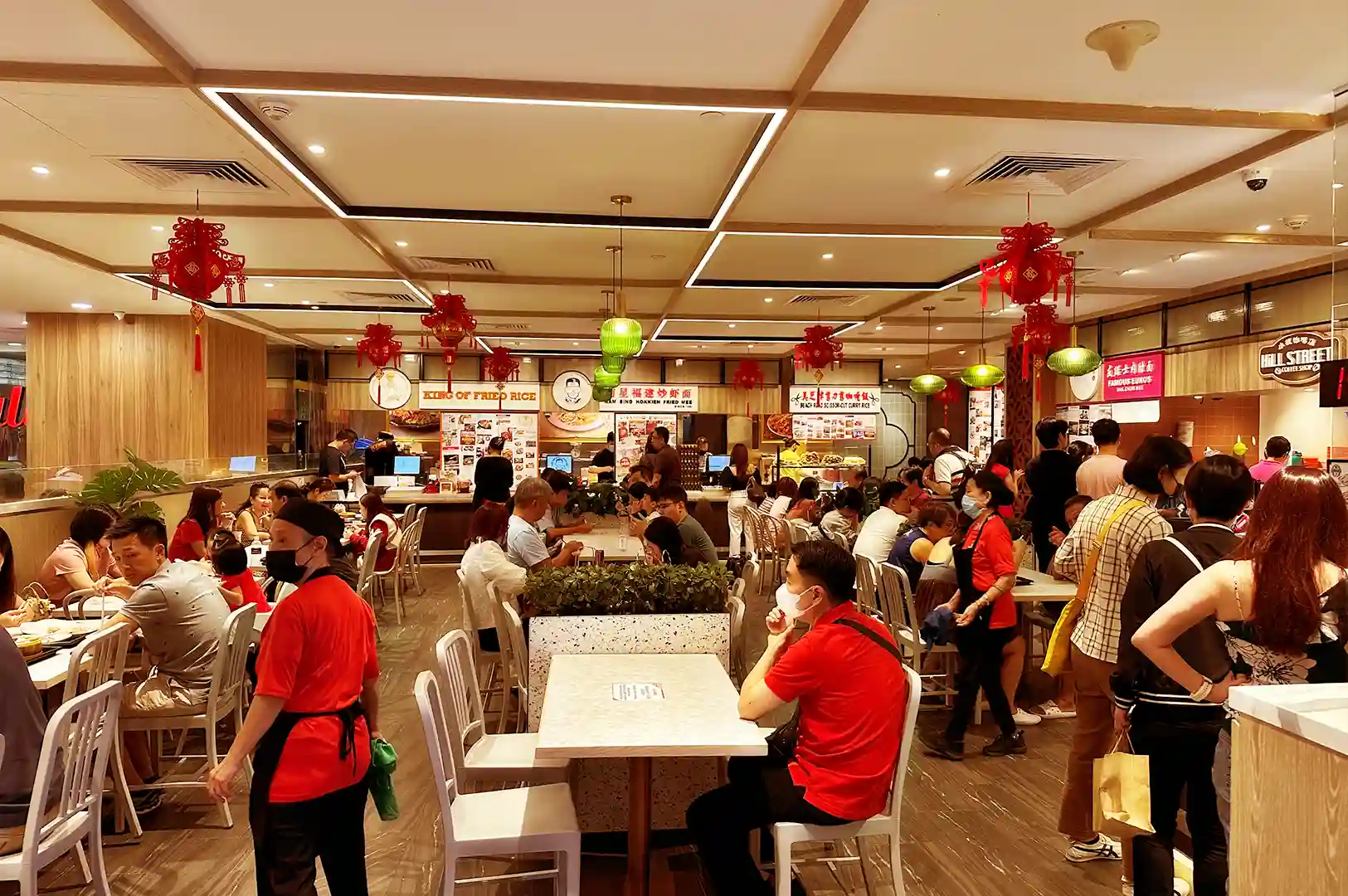
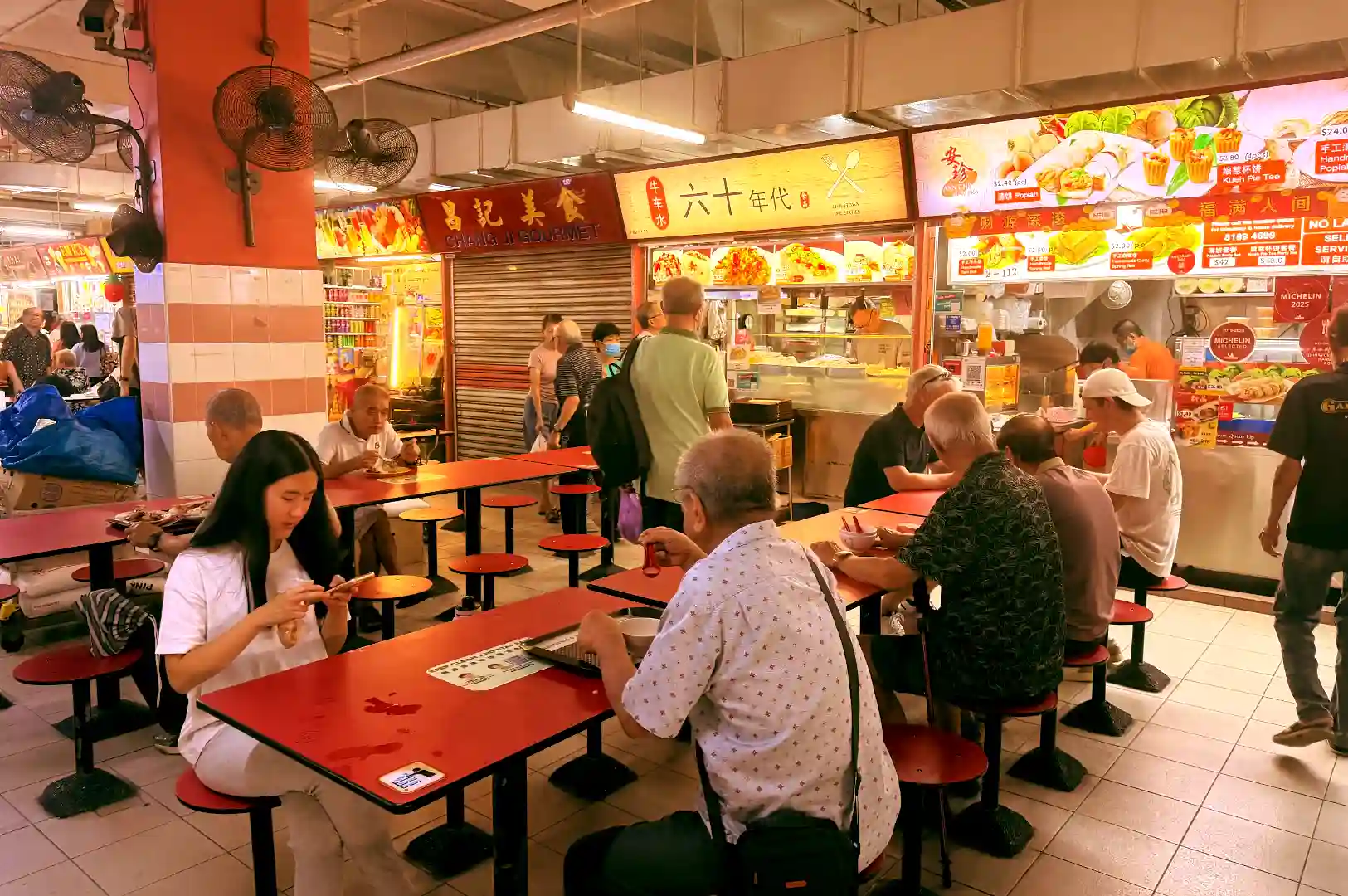
That approach also changes how we photograph hawker centres beyond individual counters. In our photographic record of Chinatown Complex rows continuing without a break, the surrounding repetition and everyday interruptions matter because they show the centre functioning as a place rather than presenting itself as a destination.
There are still moments when a stall looks unusually composed. We photograph those too. But we do not treat them as more truthful simply because the frame is cleaner.
Sometimes the most useful photograph contains the things we would once have cropped away.
Weeks or years later, those details may become the reason we return to the image. A container no longer used. An old sign. A counter arrangement that has since changed. Something ordinary enough that nobody thought to preserve it deliberately.
That is why we leave the scene alone.
We are not trying to photograph the stall at its best.
We are trying to keep a record of what it was like to find it there.