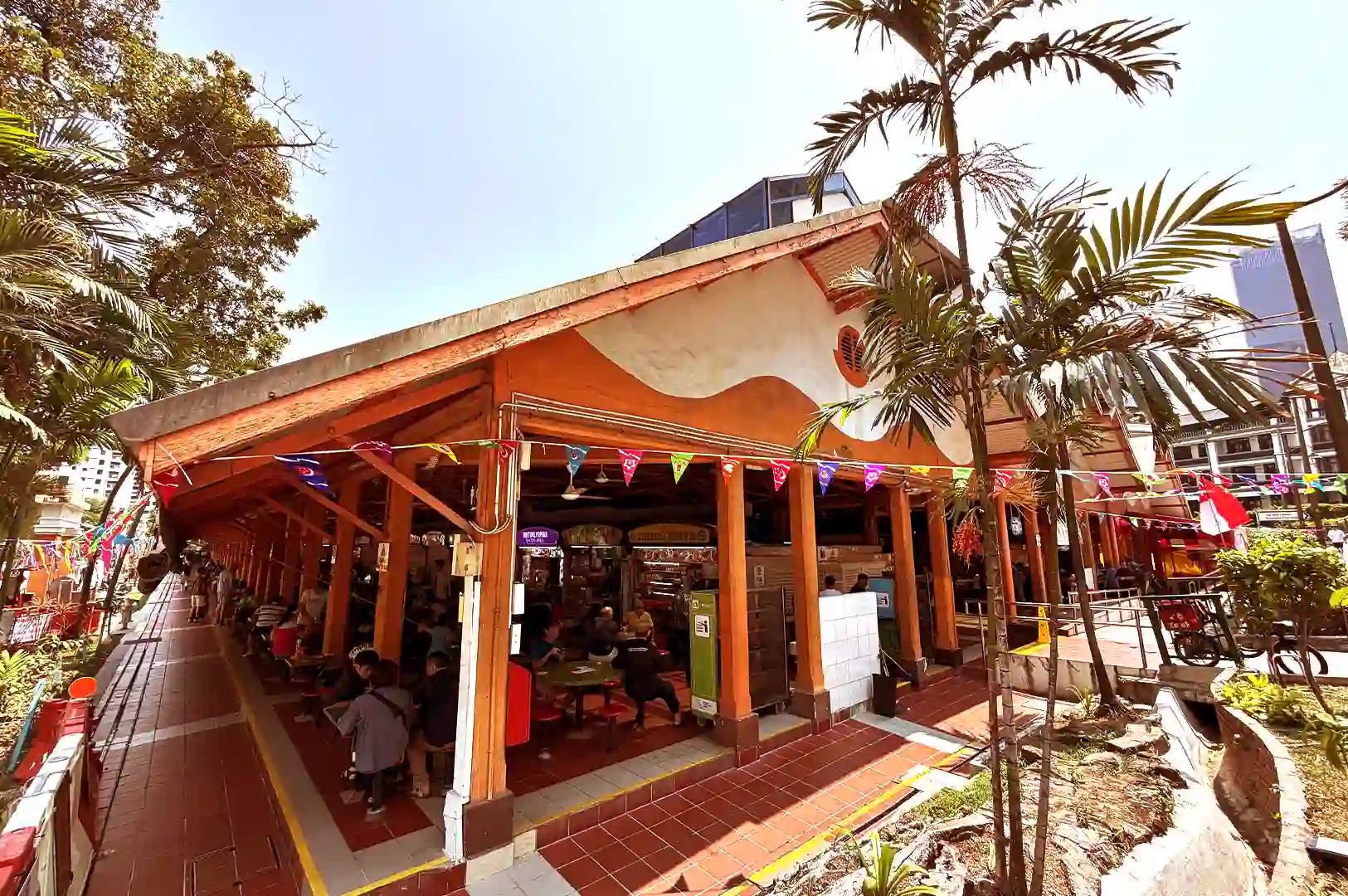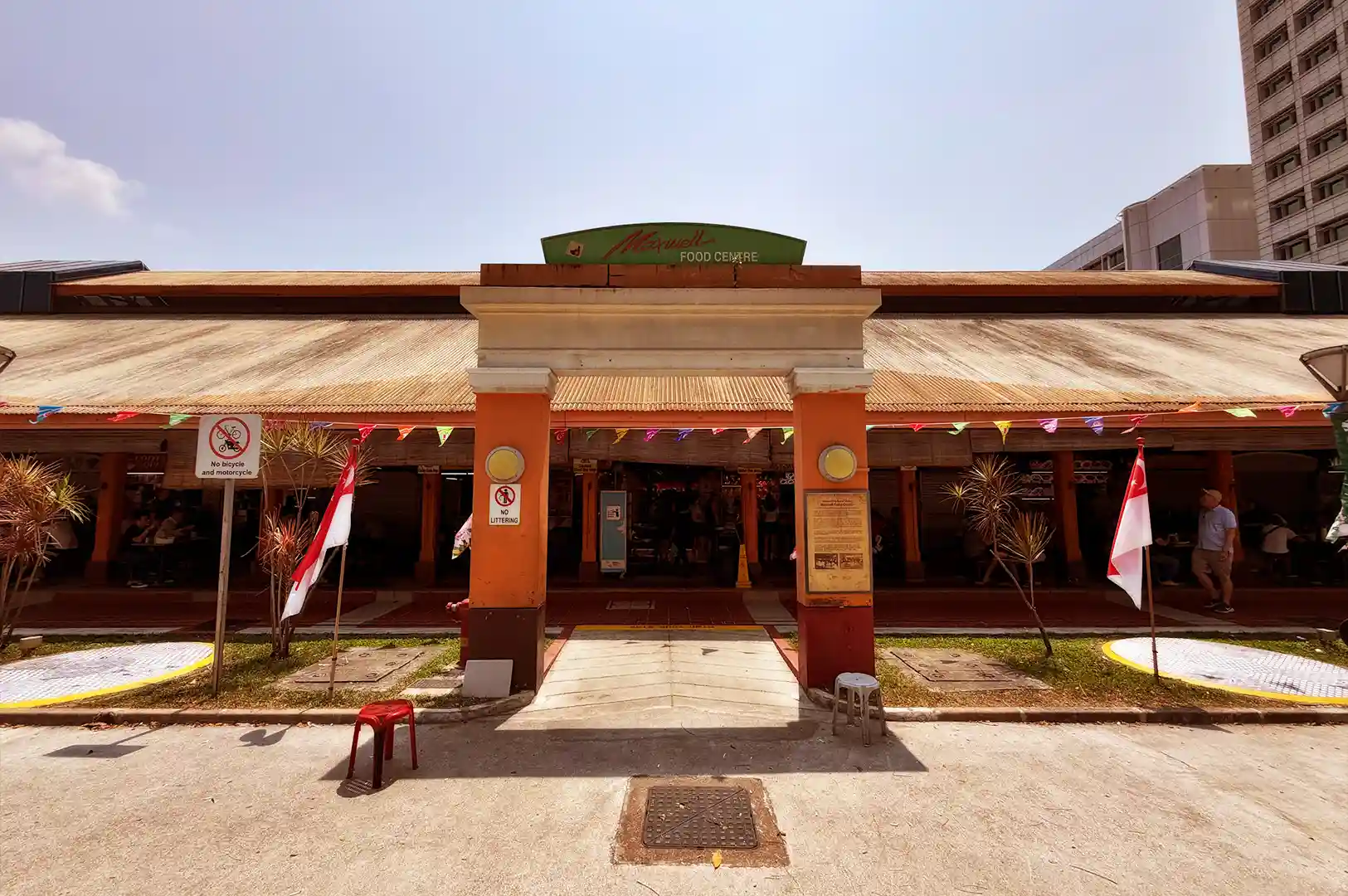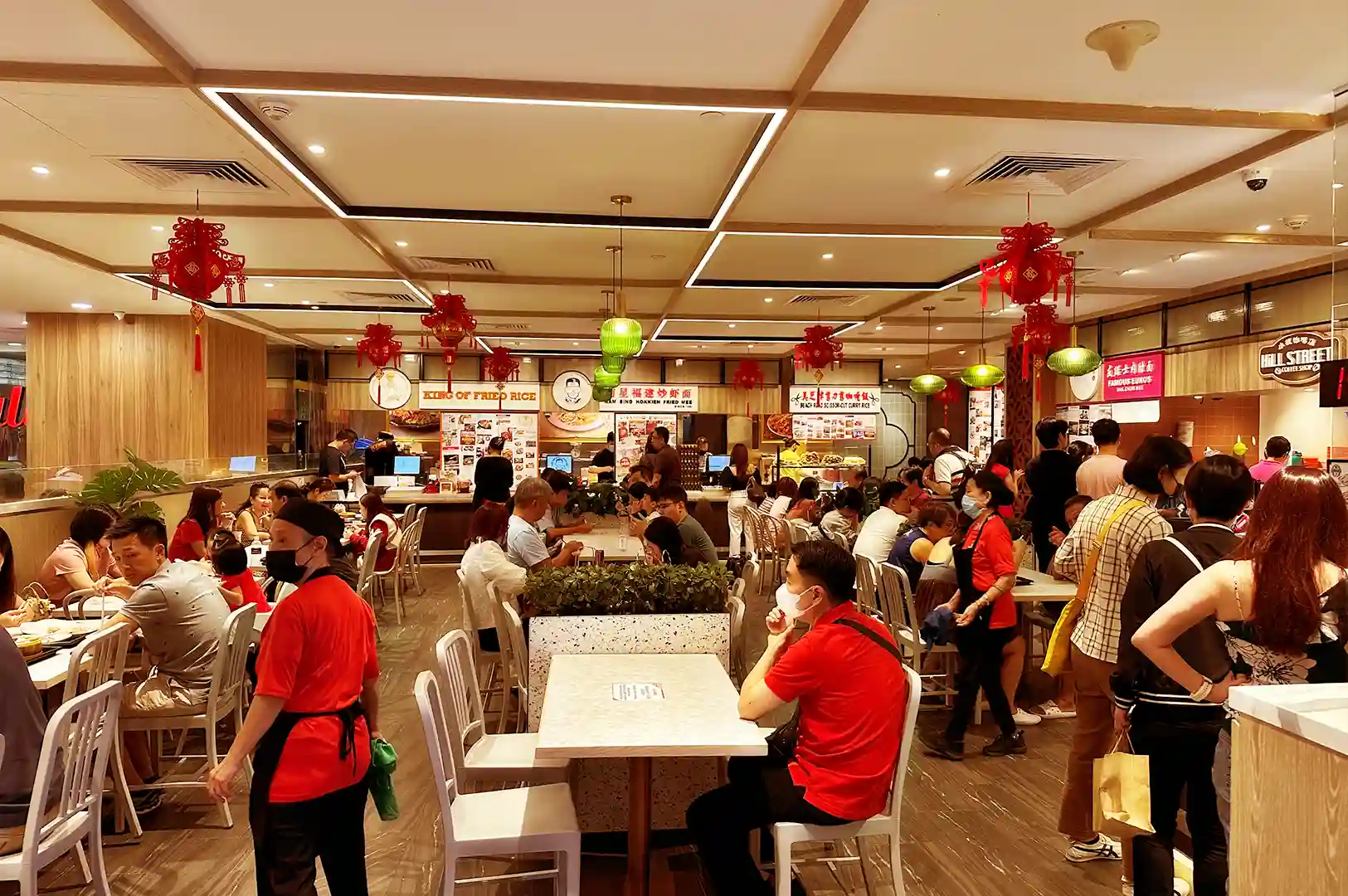

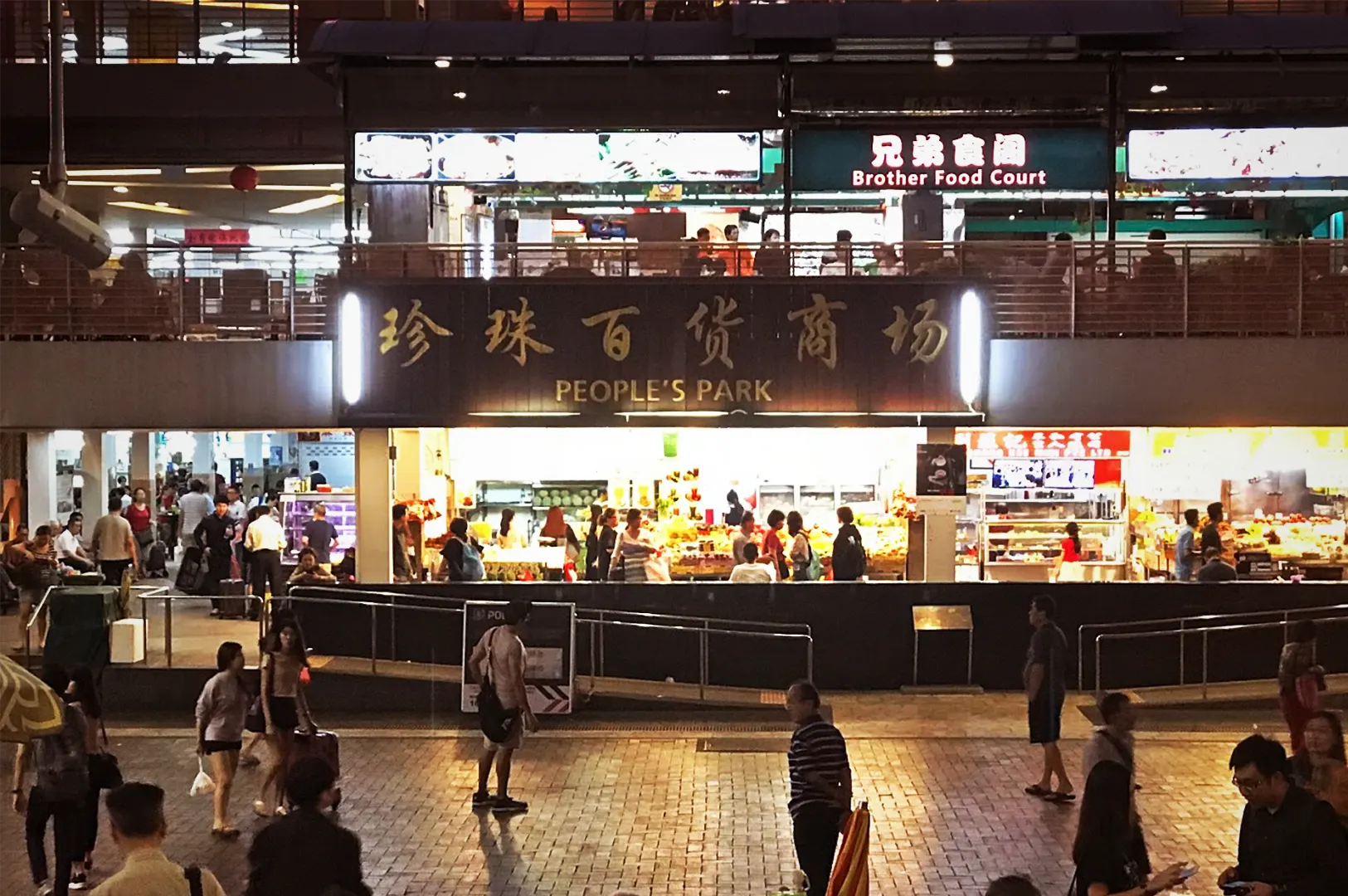
Movement enters from several directions at once.
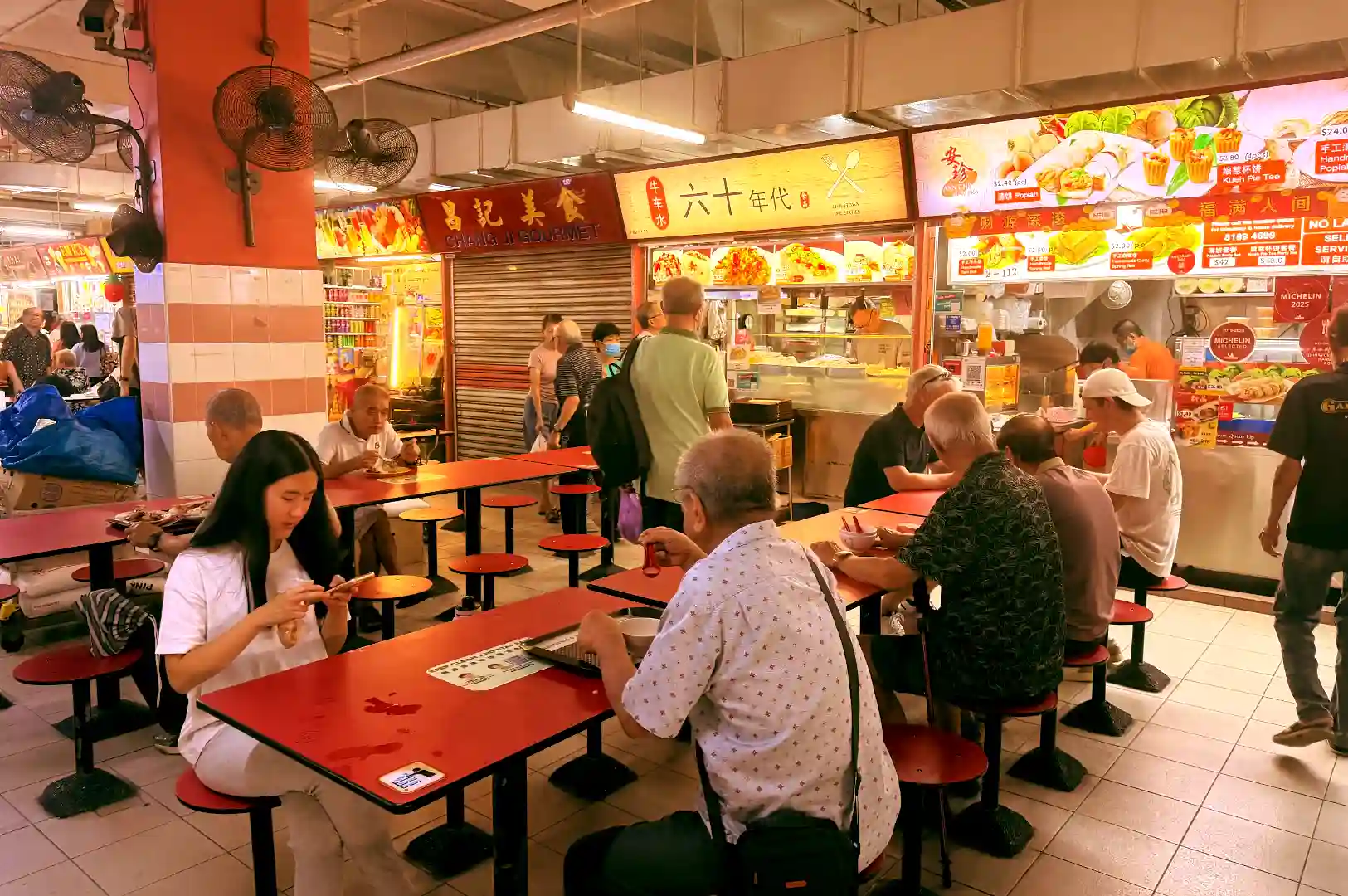
Chinatown Complex Food Centre is defined by scale and repetition. Entry points lead into a large, open upper level where stalls line the perimeter in long, continuous rows. Movement distributes quickly across the space, preventing any single point from becoming congested.
Parallel lines organise both work and movement.
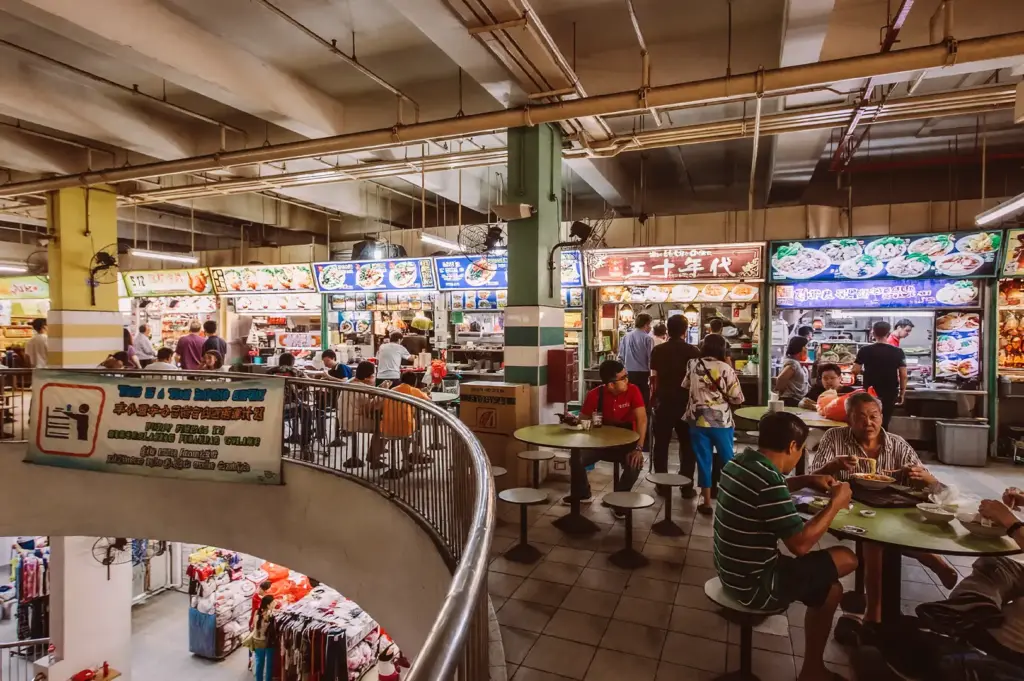
Stall fronts maintain consistent depth and alignment. Queues form close to counters, extending inward only when needed. Main aisles remain usable, allowing circulation to continue alongside ordering activity. The layout supports simultaneous actions—queuing, walking, collecting—without overlap.
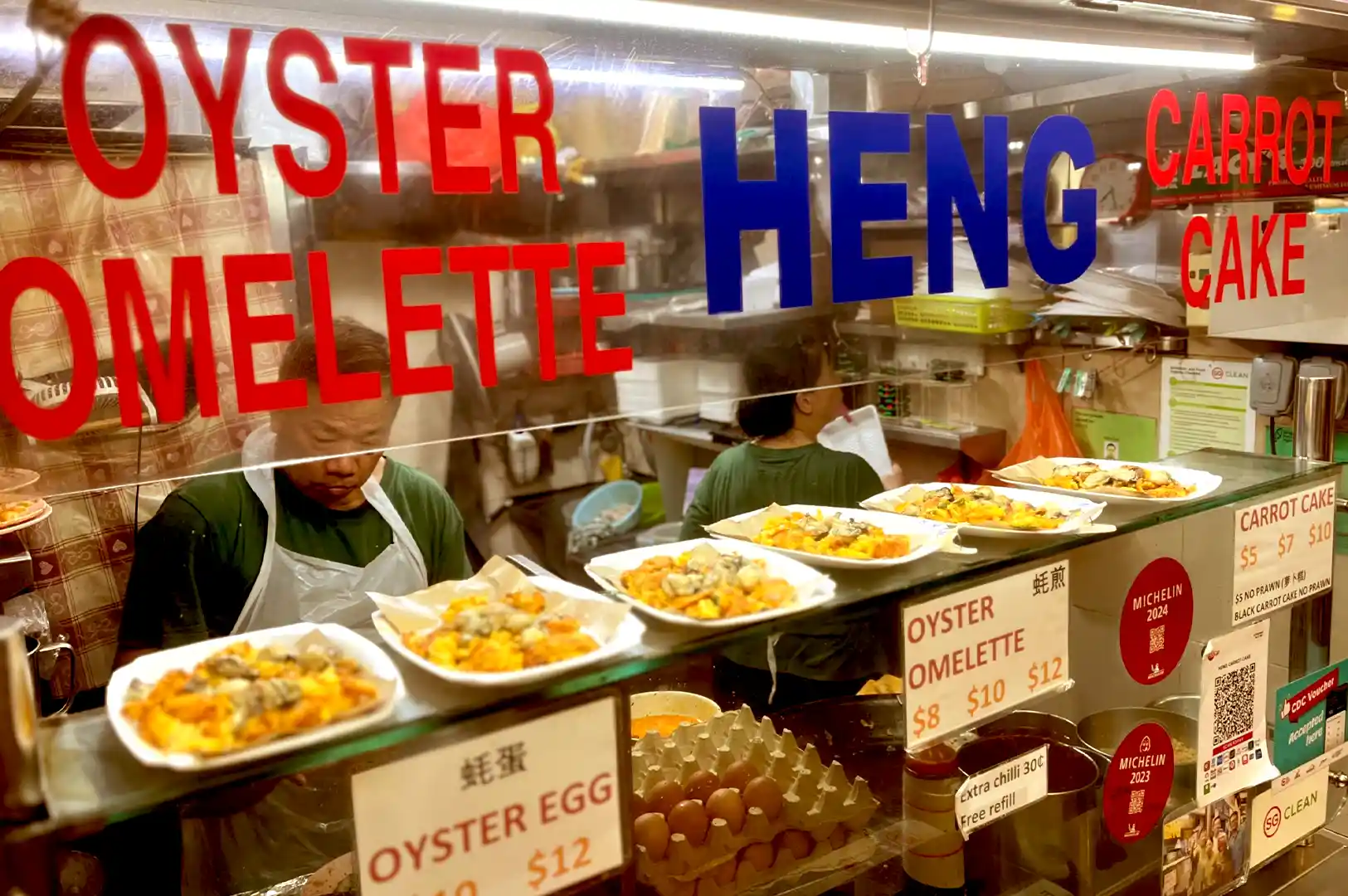
Work is visible but contained. At several stalls, Hokkien mee is prepared in repeated cycles: ingredients added, stirred, reduced, then plated. Each cycle resets quickly. Output is steady, matching the pace of incoming orders without accumulation.
Use and clearing occur in sequence.
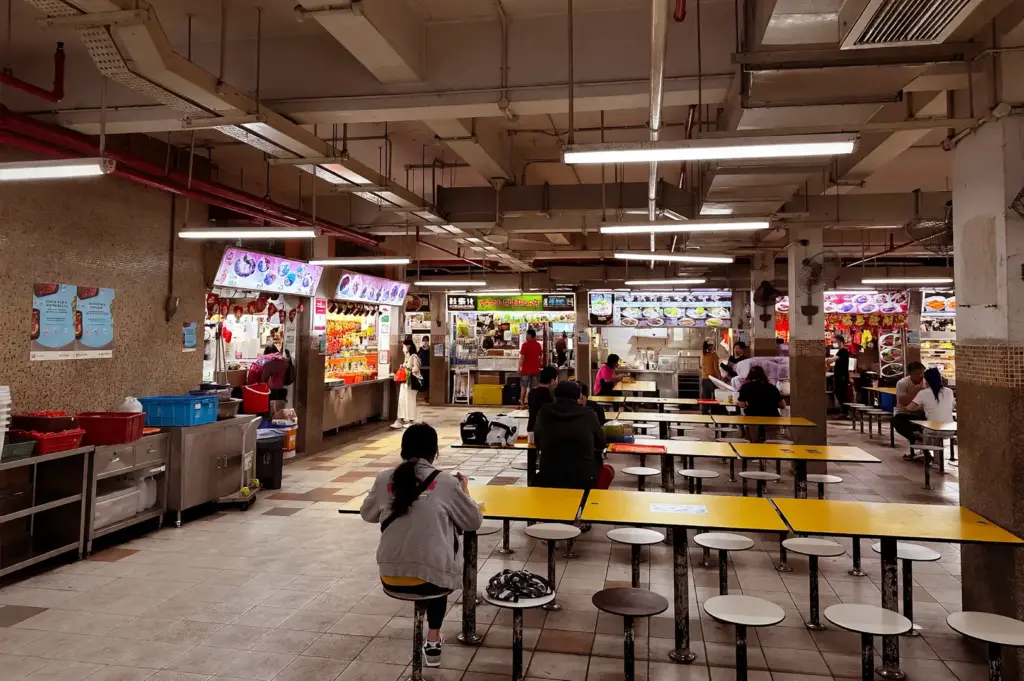
Seating occupies the central field. Tables are shared by default, filled as spaces open. Trays move between stalls and tables in a consistent loop—carried, used, returned. Clearing follows closely, restoring surfaces for the next cycle of use.
Lighting remains even across the space, combining overhead fixtures with natural light from the building edges. Sound levels rise and fall with volume but do not disrupt movement patterns.
Chinatown Complex Food Centre maintains order through repetition. Each row, queue, and table operates within a defined structure, allowing the system to continue without interruption.
Continue with: Circulation and Pause: Tekka Centre Fishball Noodles