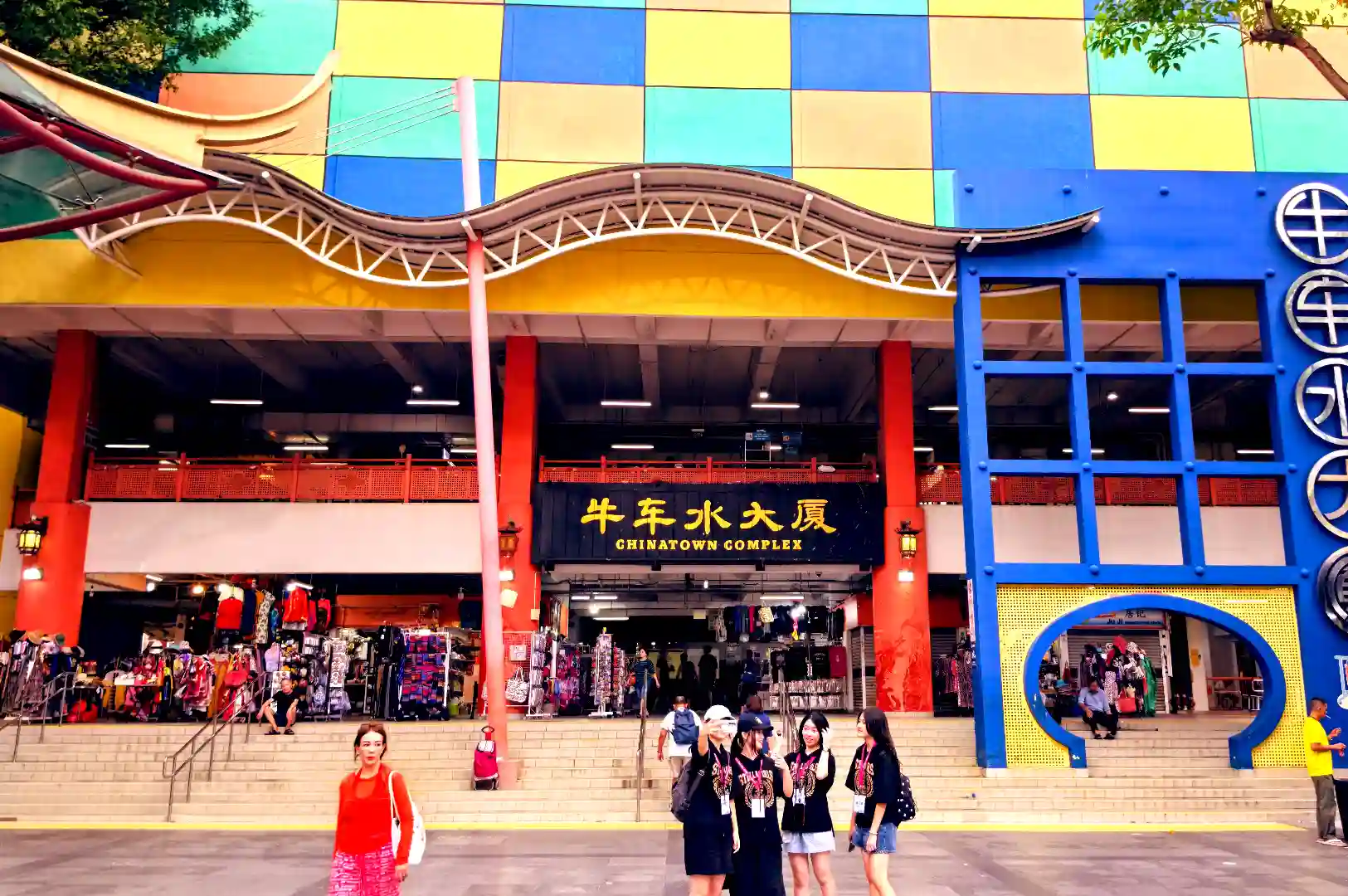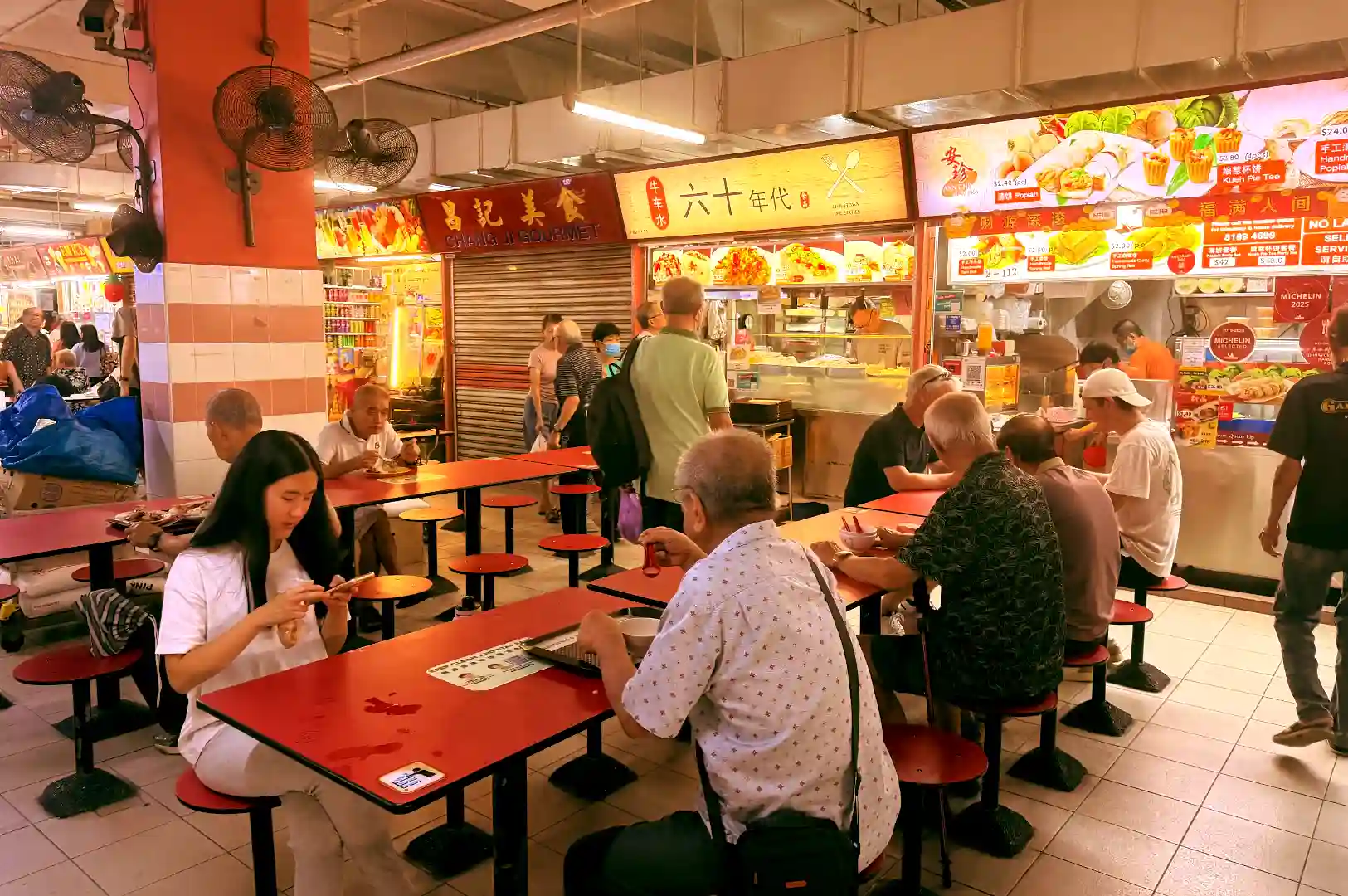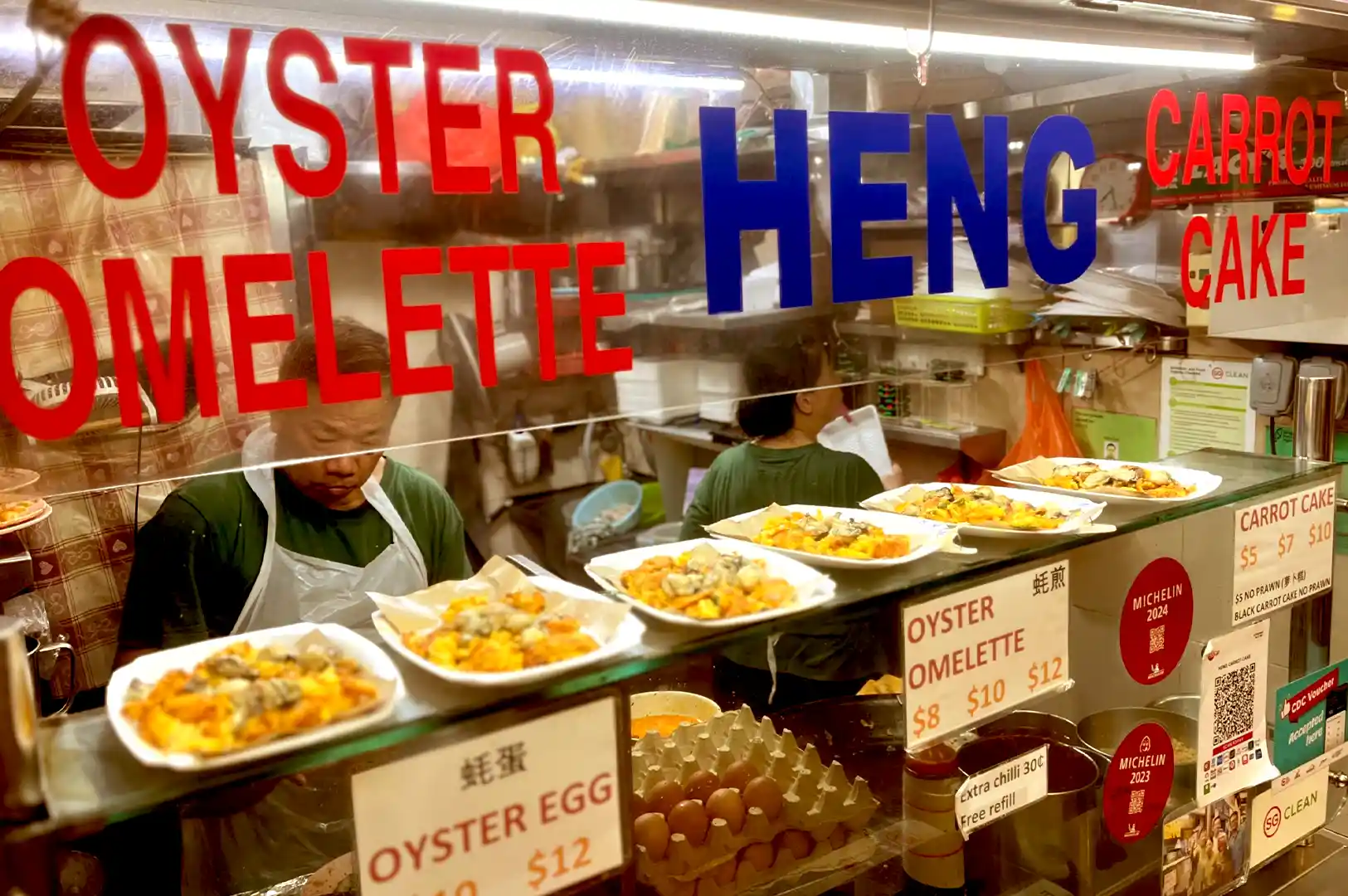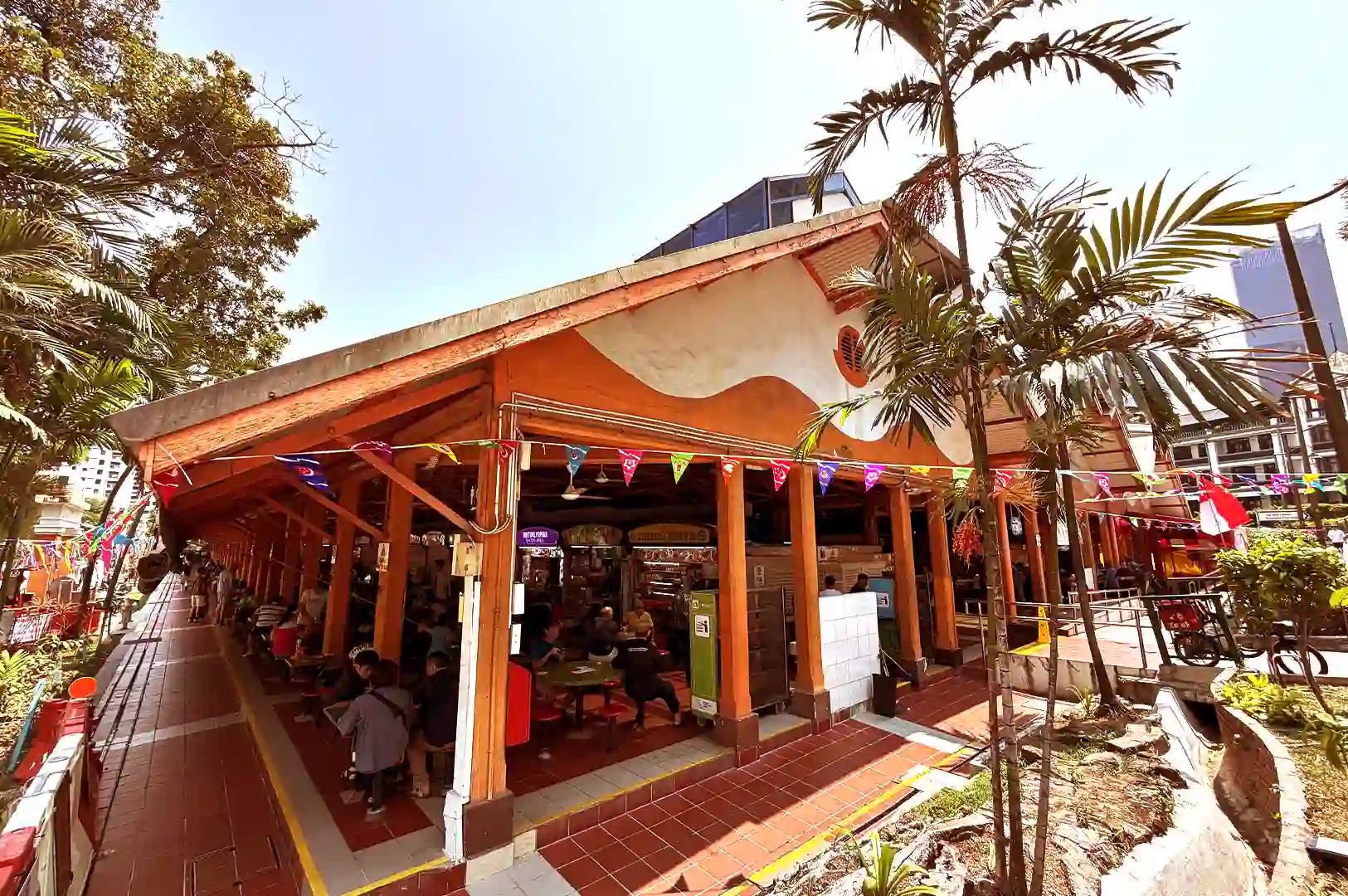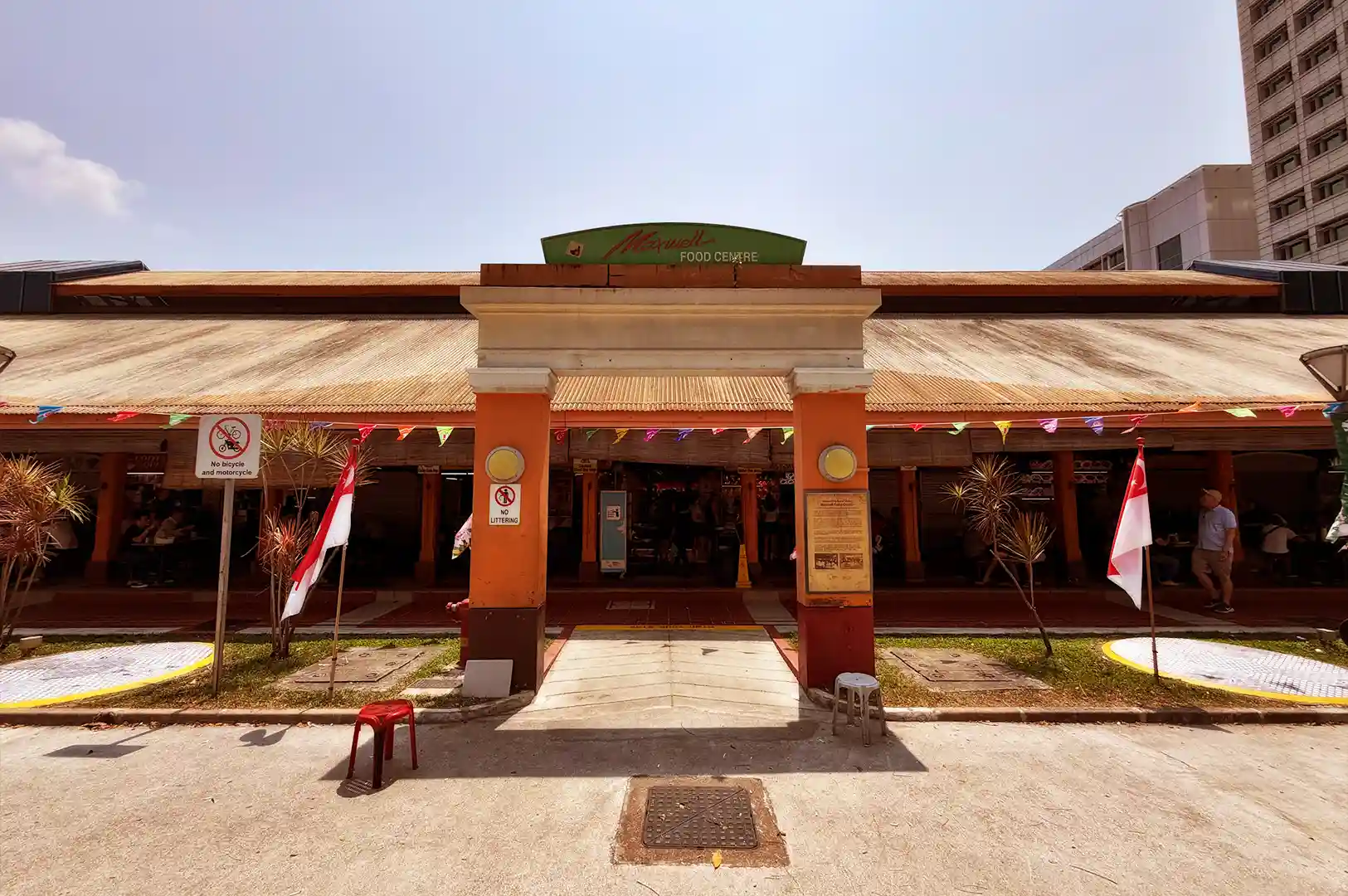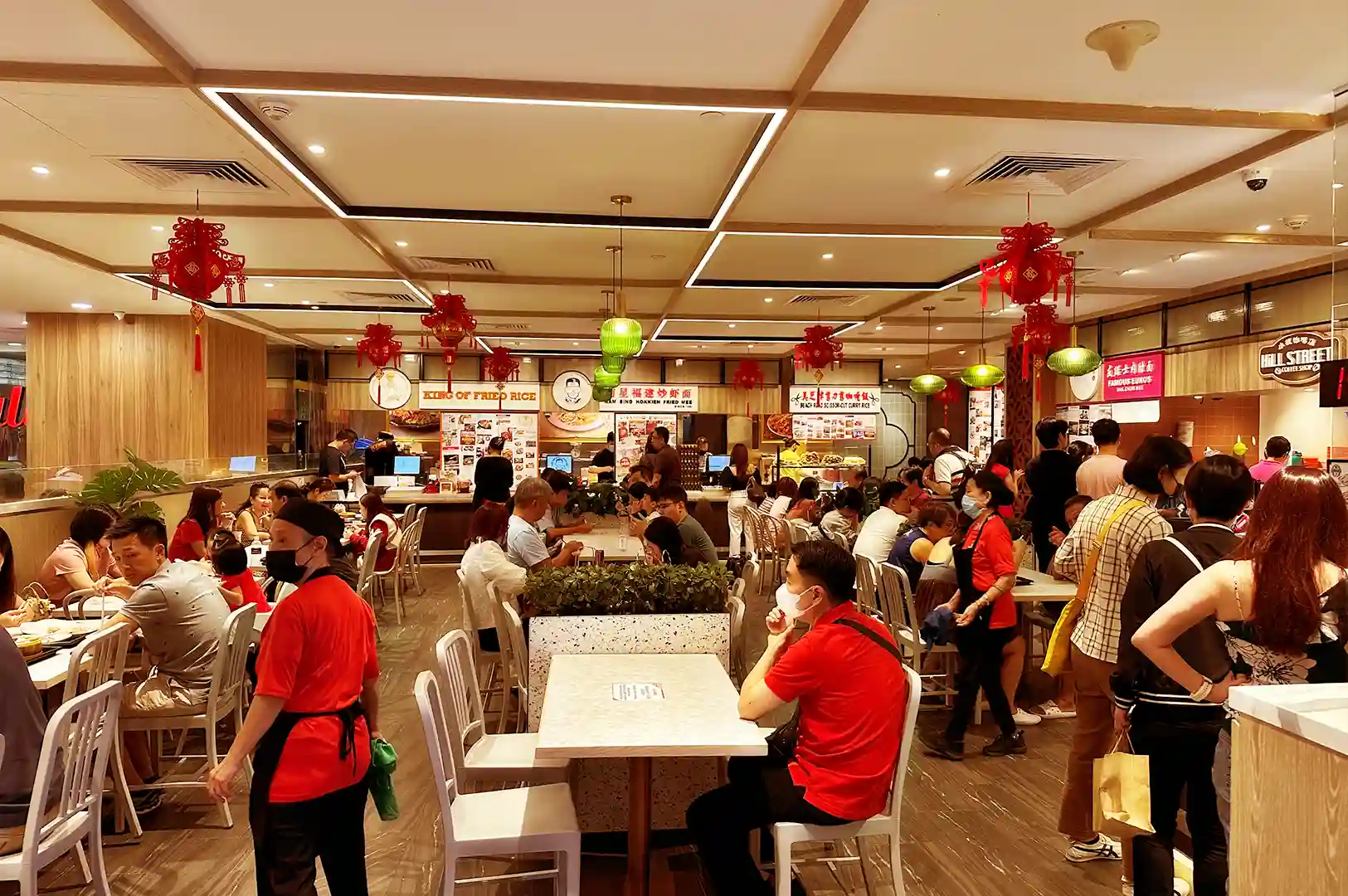

Morning movement at a hawker stall like Tanjong Pagar Plaza Market & Food Centre, that would be featured in Singapore Hawkers, begins in straight lines. Chairs are turned outward one by one. Trays stack near the washing station. A row of fluorescent lights flickers awake above the centre aisle while the first pots of curry settle into place behind glass panels.
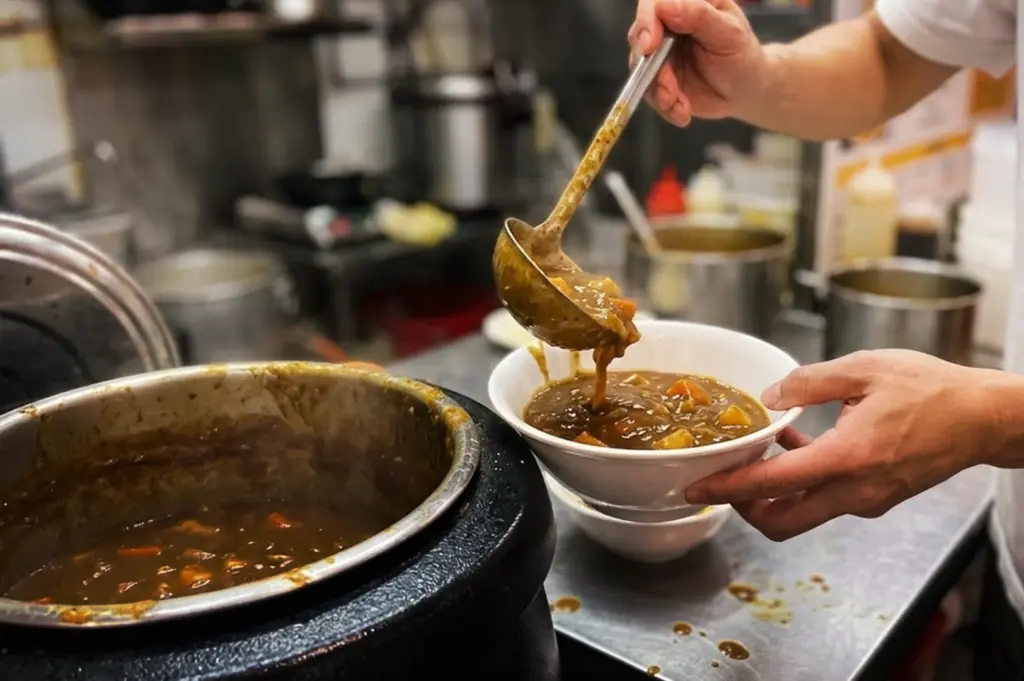
The Japanese curry stall sits midway through the row, close enough to the drink stall that cups continue moving across the same few tables throughout the afternoon. Orders arrive in short intervals. Rice is portioned first, then curry ladled in a practiced motion that barely changes between plates. Fried cutlets rest briefly on wire racks before disappearing into takeaway containers.
Steam gathers briefly against the glass before clearing again.
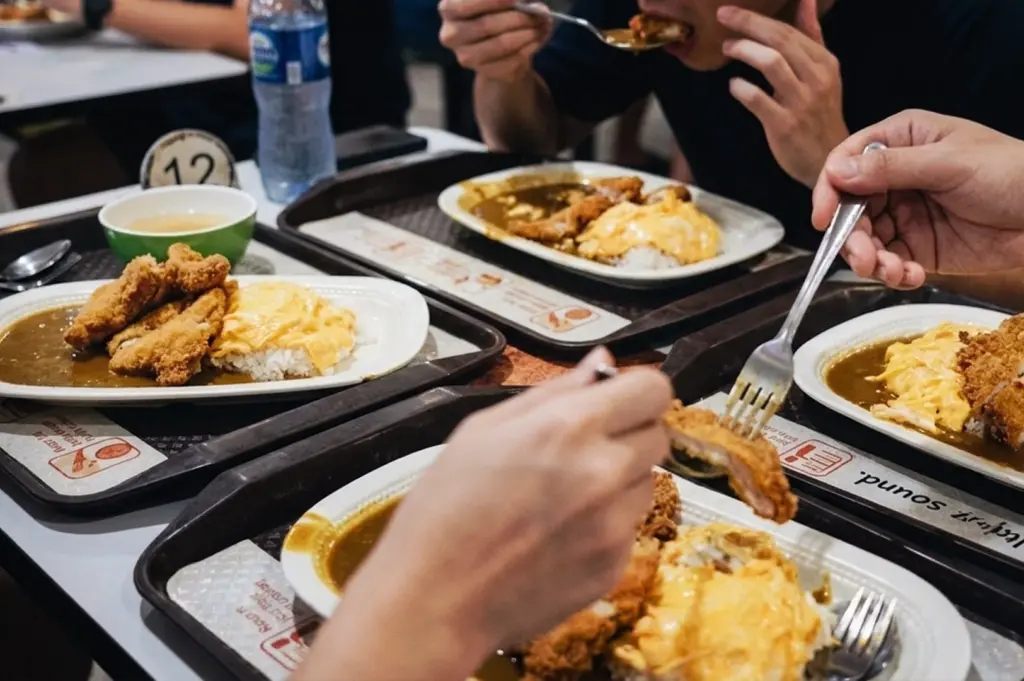
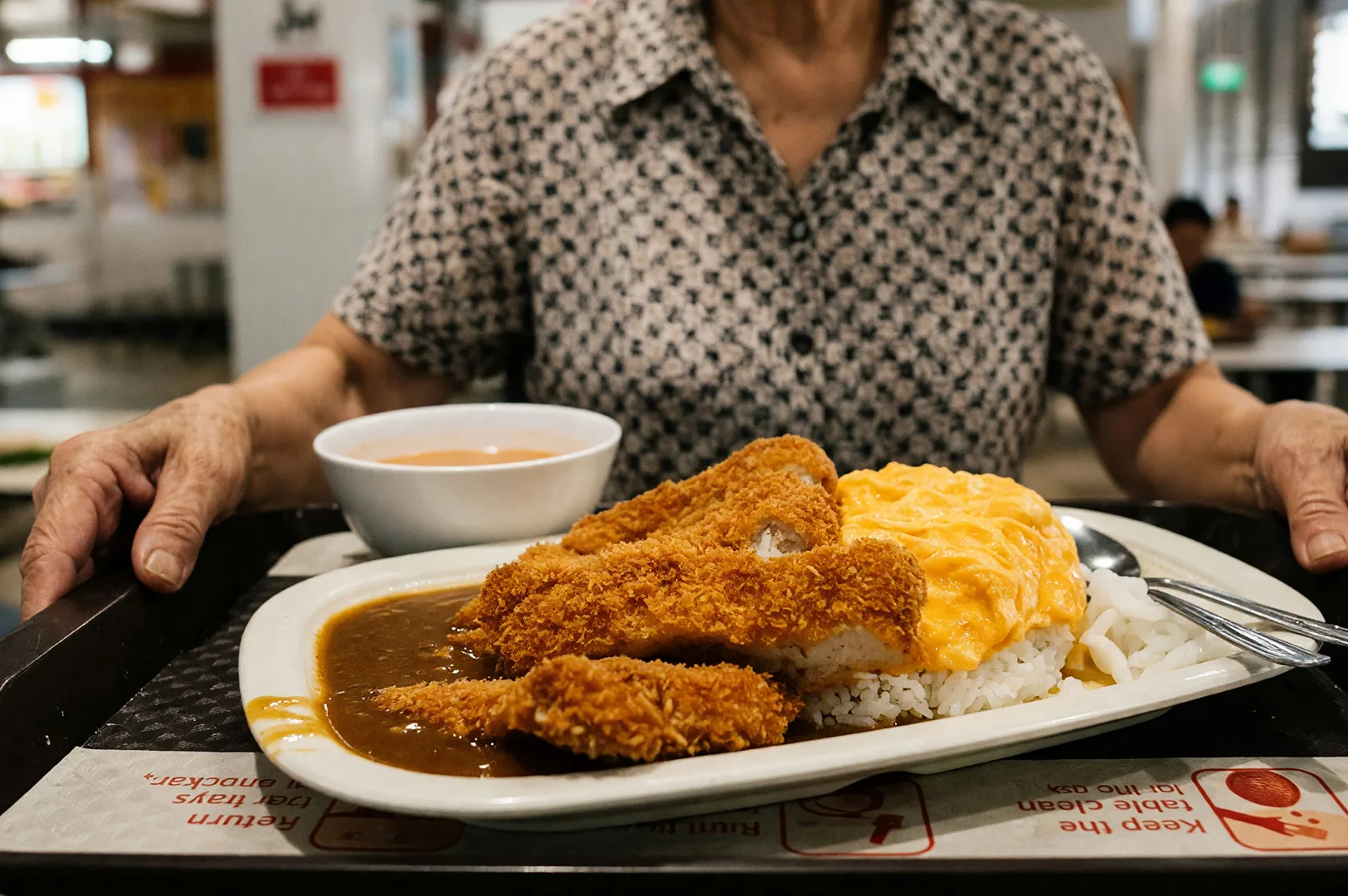
By lunchtime, the centre shifts into a denser rhythm. Diners pause at table edges before sitting. Empty trays collect near corners before being carried back toward the return station. Metal spoons knock softly against thick ceramic plates. The curry appears repeatedly across the room in nearly identical arrangements, changing only slightly from table to table.
The space continues functioning through repetition rather than speed. Queue lengths shorten, refill containers appear, and the same wiping cloth circles across tabletops every few minutes. By late afternoon, some stalls close early while others remain half-lit behind partially lowered shutters.
The trays continue returning quietly around the centre long after the busiest hour has passed.