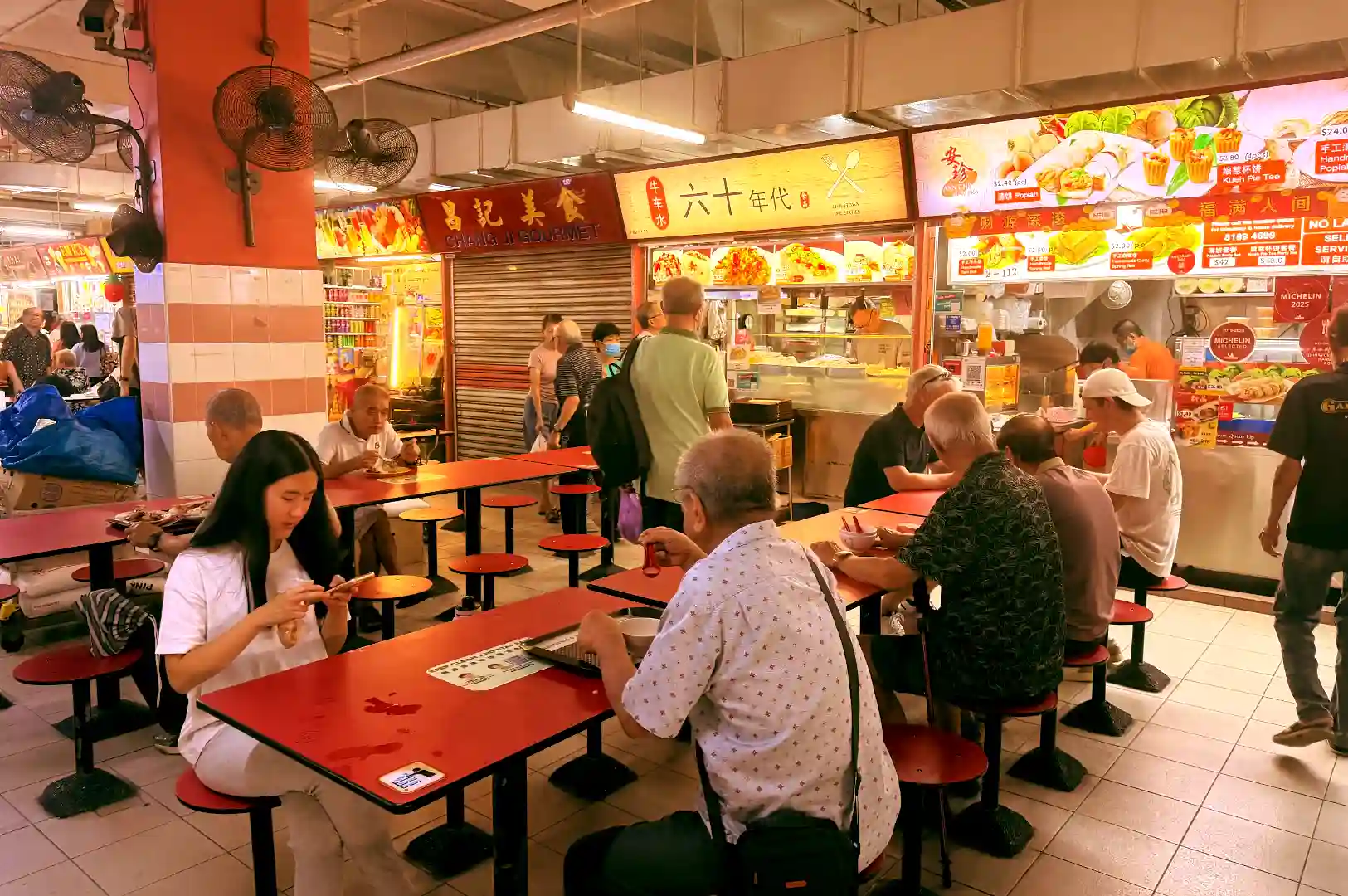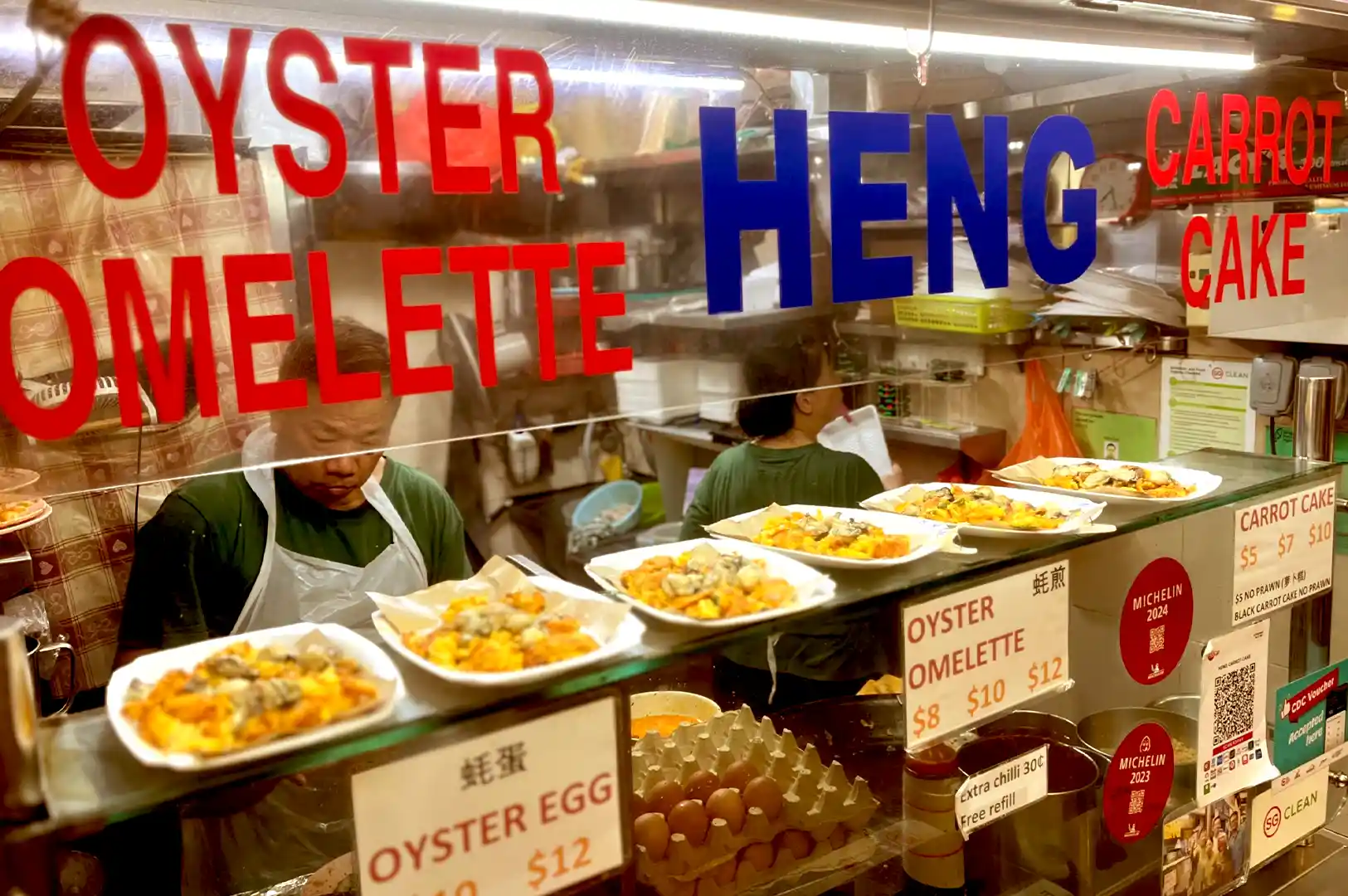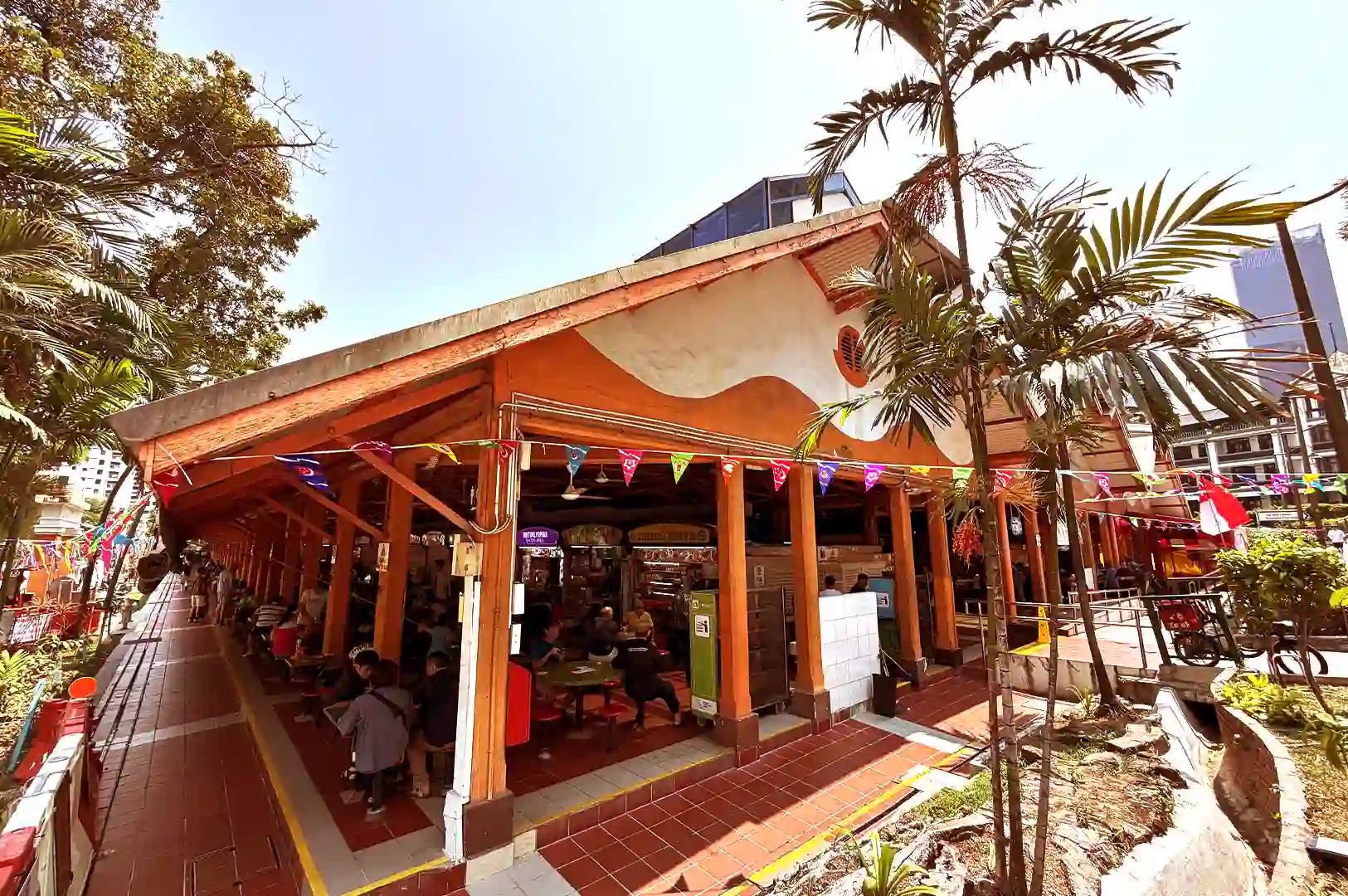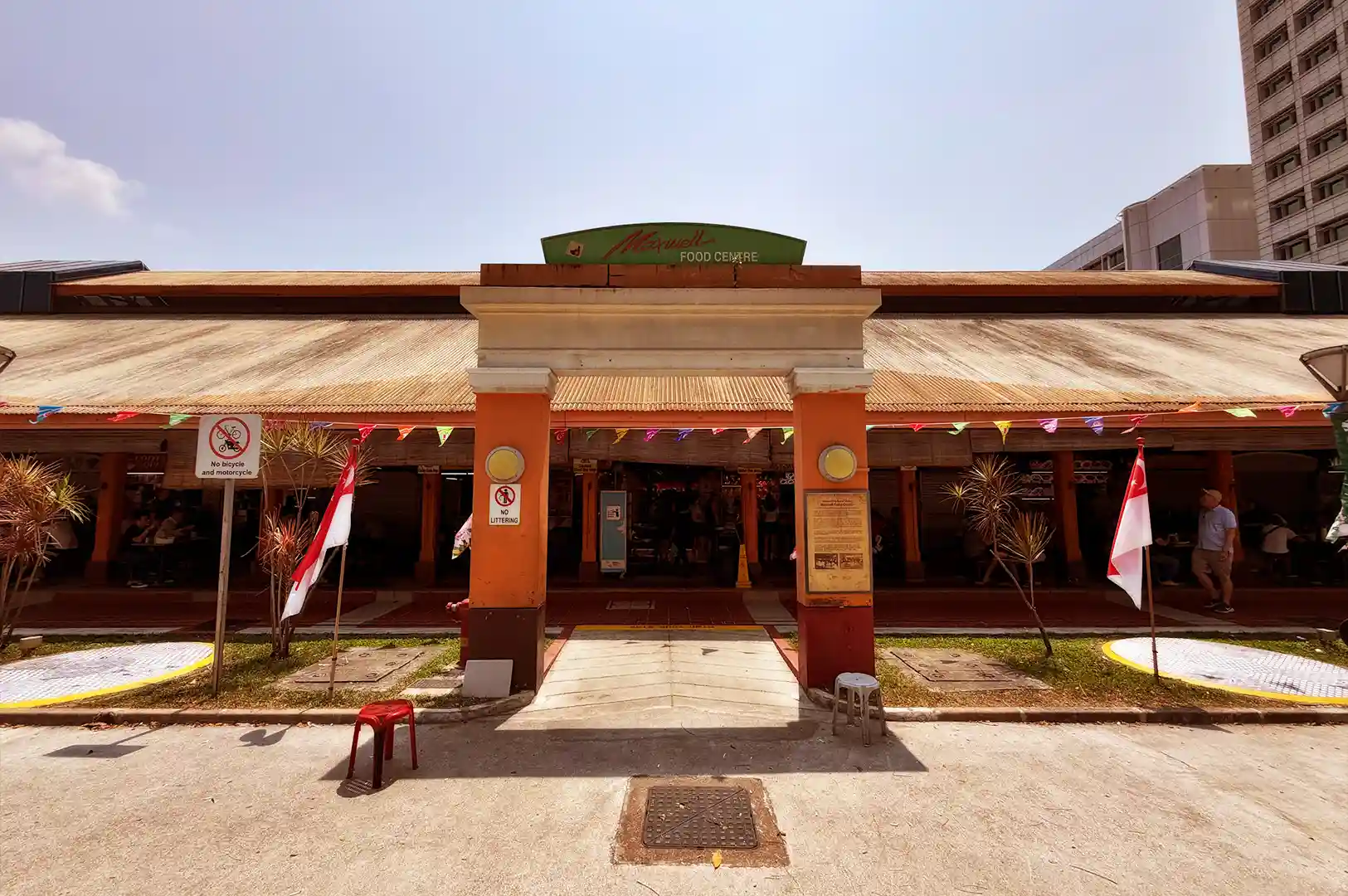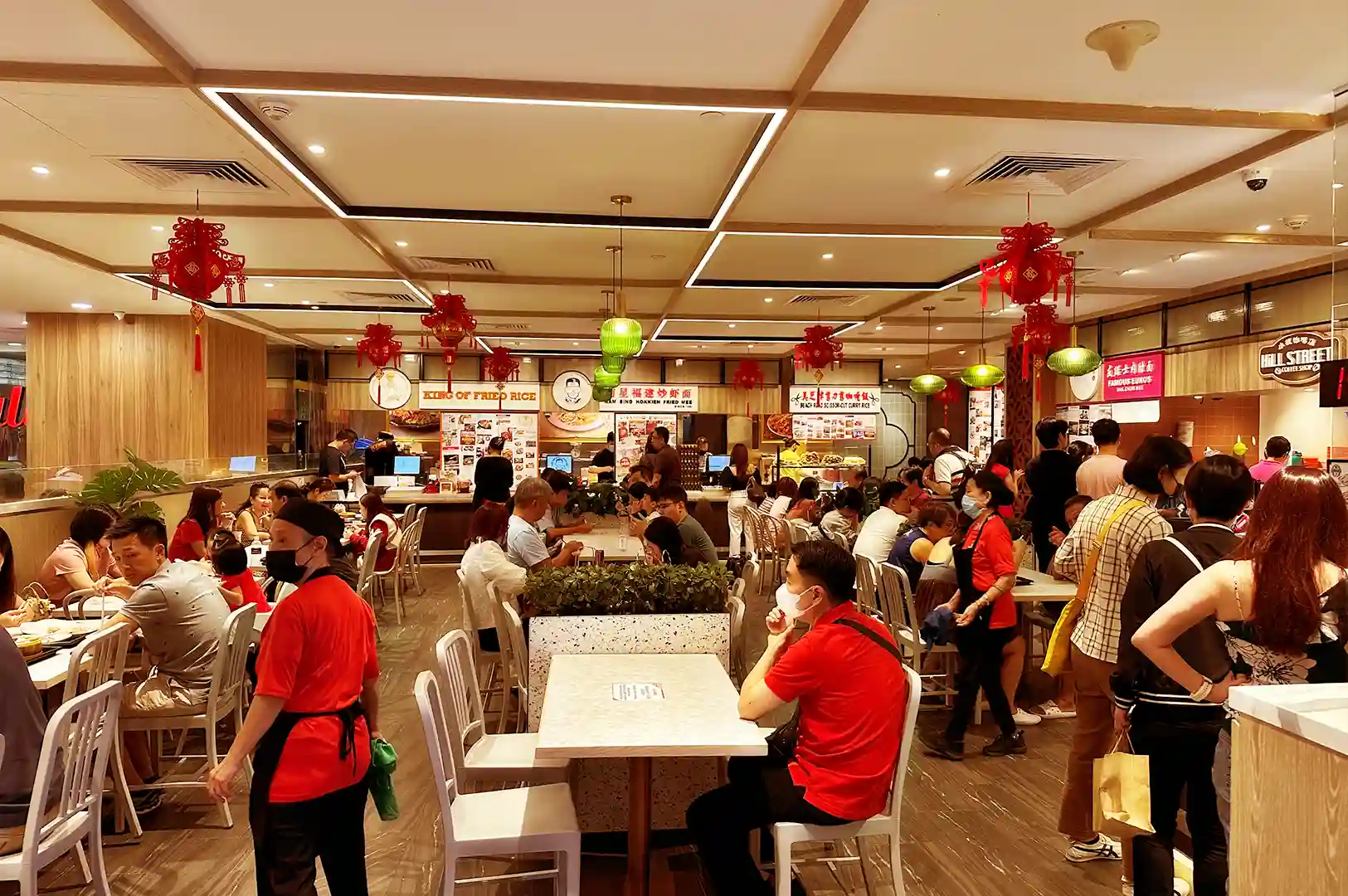

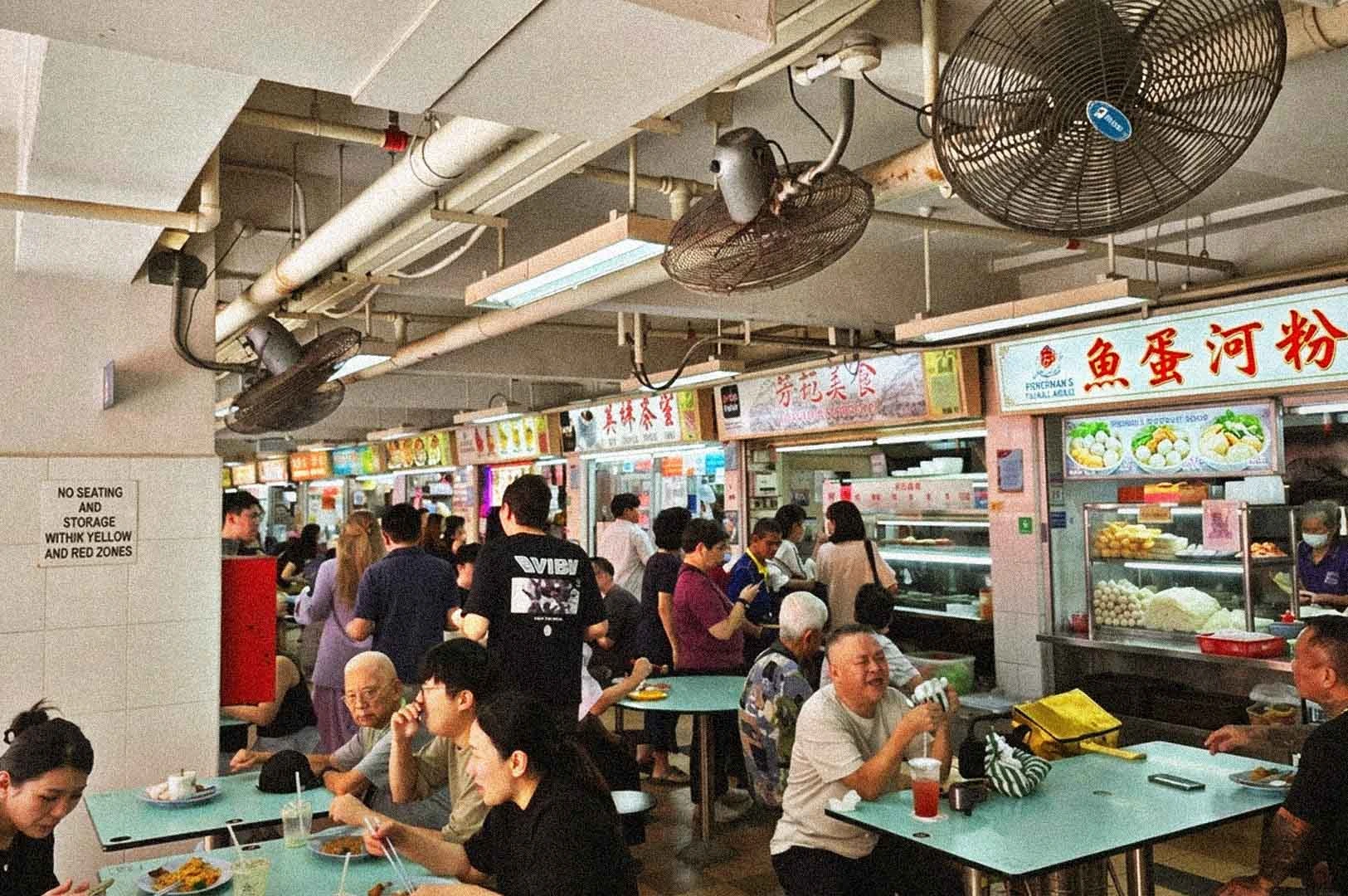
Hong Lim Food Centre operates in a rhythm that feels both settled and perpetual. From the exterior, the approach is straightforward—foot traffic weaving between the busy street and the open doors. Inside, the centre spreads out into a wide expanse.
Stalls line the perimeter, each with their own small counter space and a direct line of sight to the seating area.
The aisles run parallel to the stalls, keeping movement streamlined and predictable.
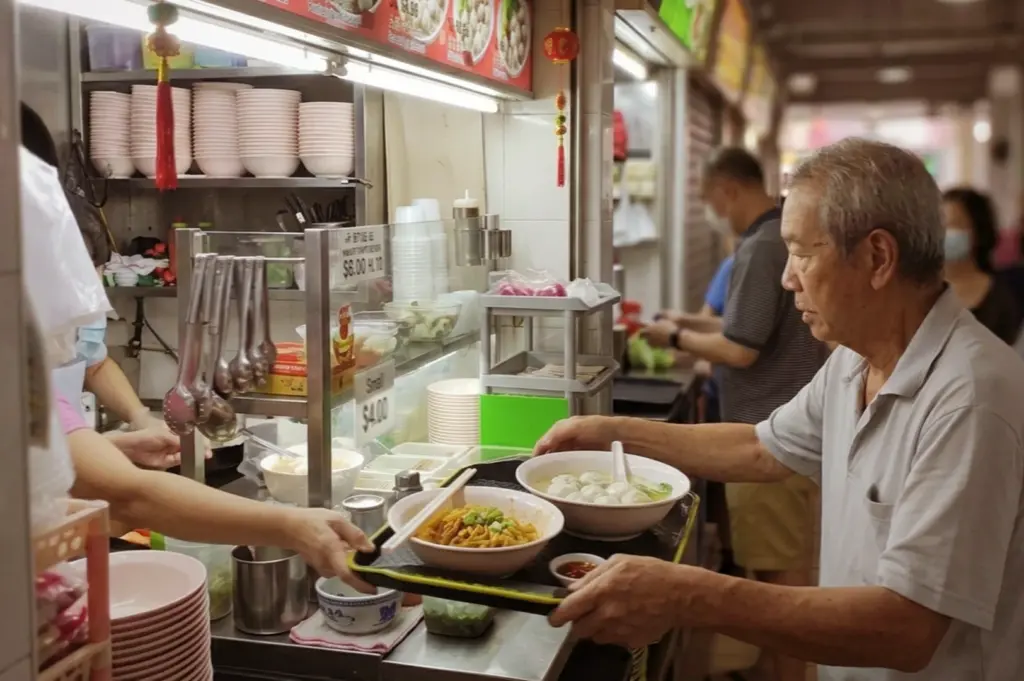
Diners move purposefully, selecting their stalls with minimal distraction. Plates are passed with practiced hands, and transactions are quick but rarely rushed. Each bowl of fishball noodles, a staple here, is assembled in a steady flow of action. This rhythm is a sweet frame that My Taste of Singapore knows is worth showing and inviting visitors to dine at.
There’s a rhythm to how ingredients are portioned, with the likes of how Sungei Road Laksa’s noodles are placed into bowls, topped, and then handed over in one smooth motion. A pause follows each exchange, only for the cycle to begin again with the next diner.
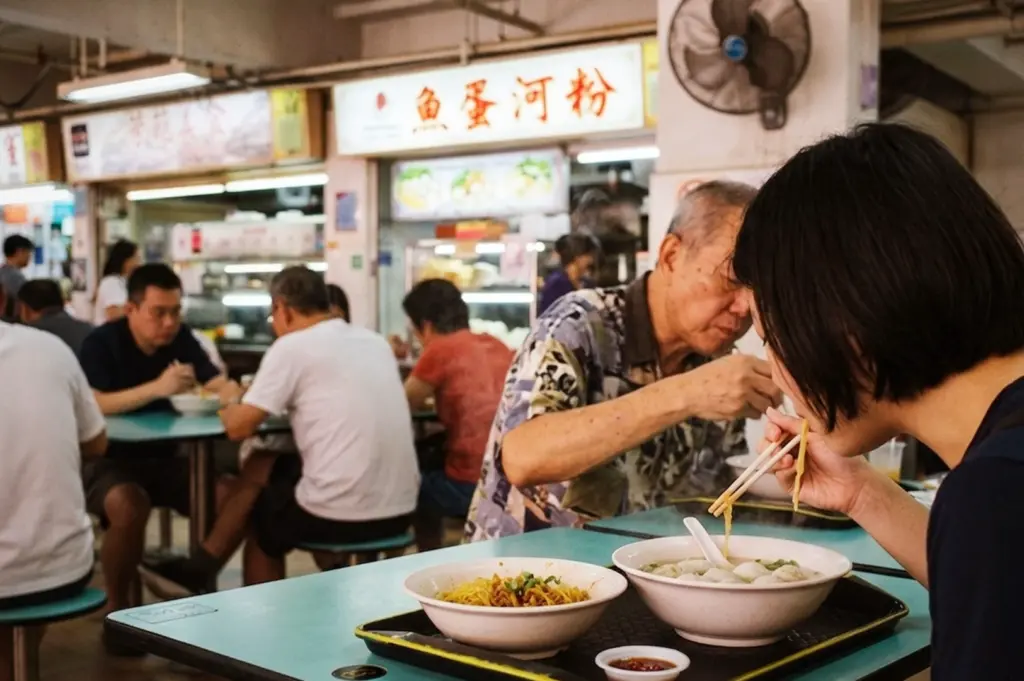
Tables are shared, a quiet expectation that connects people through a communal space. The surfaces show the wear of a bustling centre—scratches on trays, small spills, the occasional napkin crumpled carelessly beside empty bowls.
The same sense of continuity can be found beyond a single stall or bowl. Around Hong Lim Food Centre, each preparation carries its own pace. Some beginning quietly before the first wave of diners arrives, others continuing through the busiest hours without losing their rhythm.
For another look at how a familiar hawker dish takes shape through repetition, timing, and small movements behind the counter, we follow the early stages of how Hong Lim Food Centre’s char kway teow comes together before the midday rush.
As lunchtime fades into afternoon, the movement remains constant, punctuated by the soft clink of trays being collected and replaced.
Hong Lim Food Centre’s function isn’t in its novelty but in its steady routine.
Each part of the space is dedicated to keeping that flow intact, a cycle of consistent activity and exchange that remains unchanged, regardless of the time of day.