
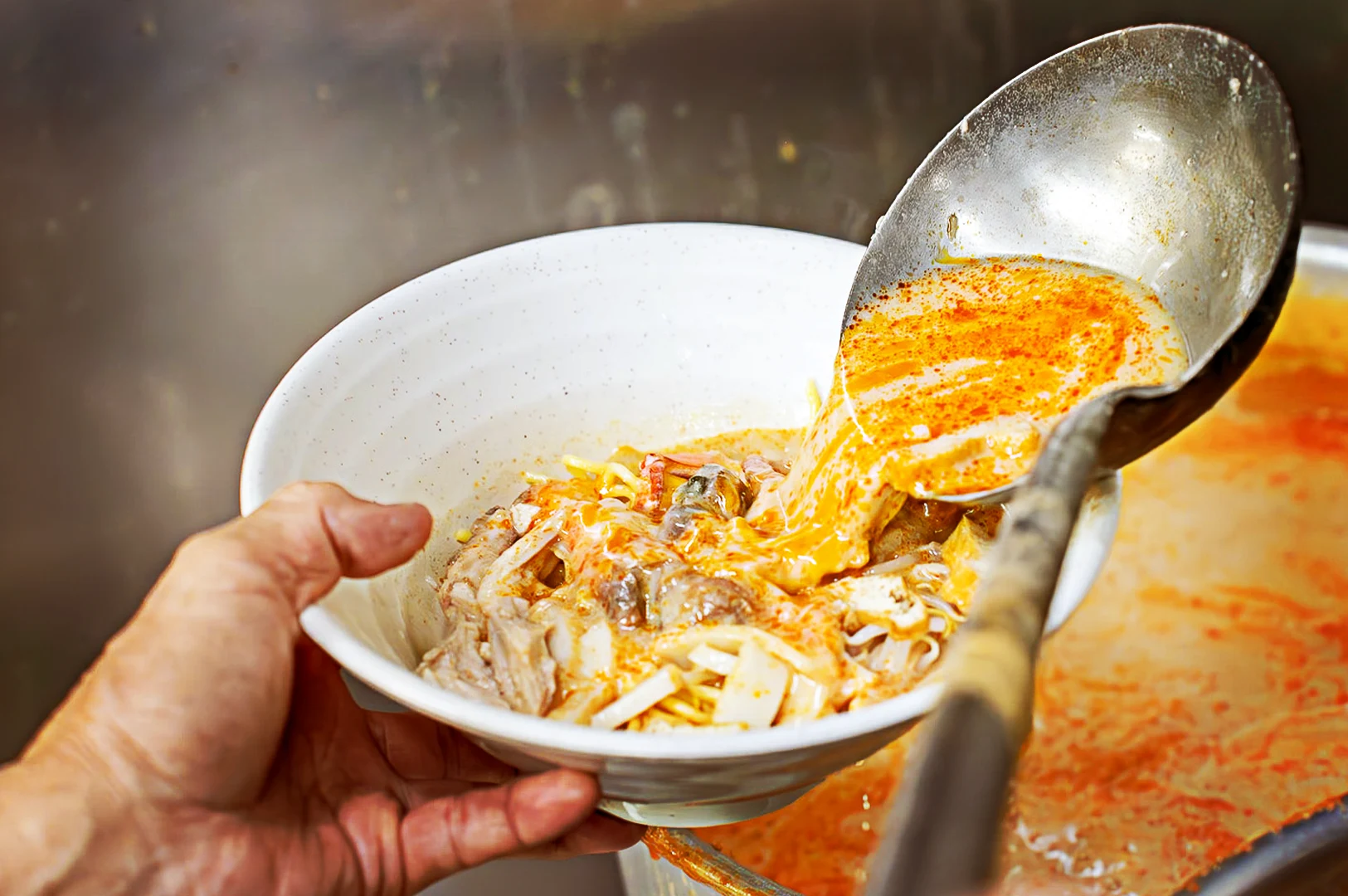
The liquid arrives after everything else is in place.
Laksa begins with assembly. At Bedok Interchange Hawker Centre, noodles are portioned first, placed into the bowl before any liquid is added. Toppings follow in a familiar sequence, each component occupying its place before the broth brings them together.
The process is repetitive but controlled. Bowls move along a narrow working area. Ingredients remain within reach. Hands travel the same paths between containers, rarely extending further than necessary. Each motion serves the next.
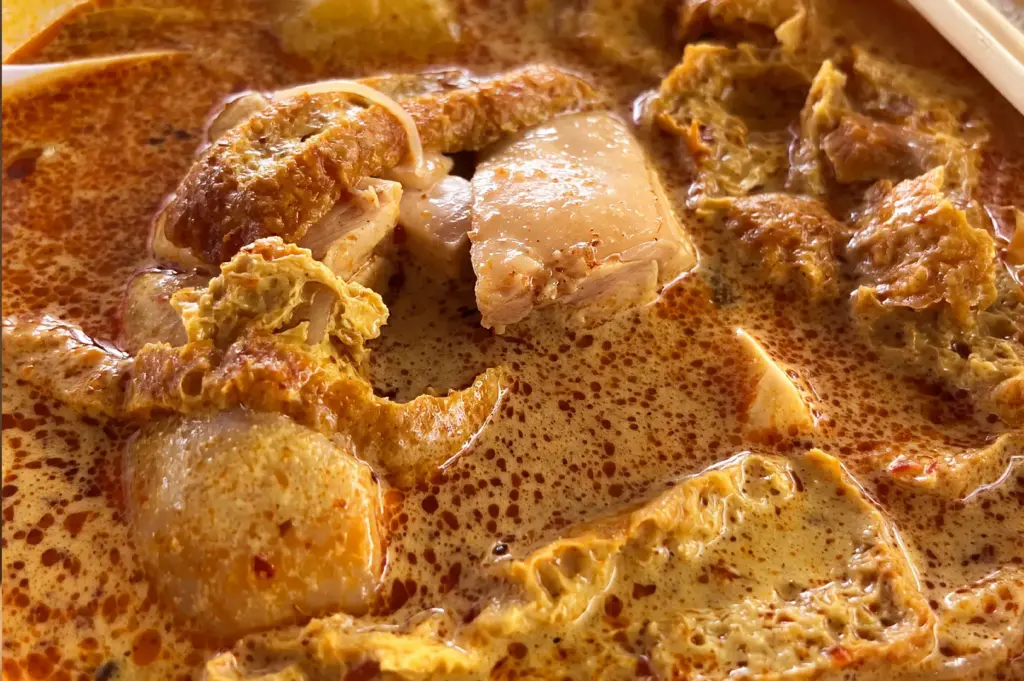
The arrangement changes once the broth is added.
The broth settles quickly. Oil gathers at the edges. Noodles disappear beneath the surface, leaving only sections visible. Steam rises briefly, then thins into the surrounding air.
Nothing on the counter remains still for long. Completed bowls move forward. Empty spaces are filled immediately by the next order. The cycle continues without interruption.
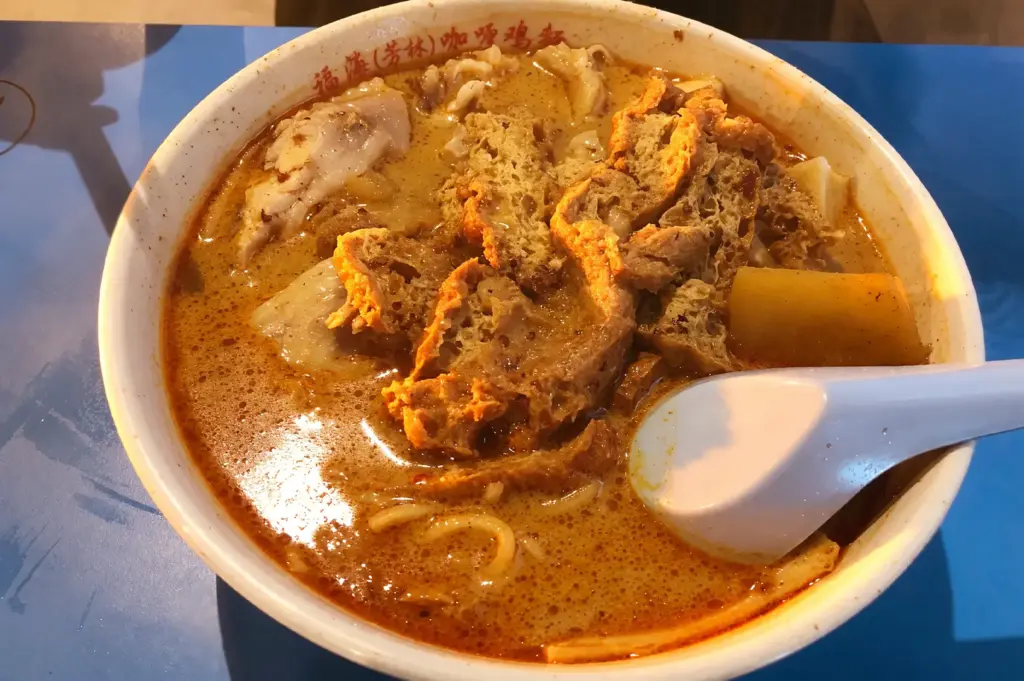
Placed down, ready for use.
At the table, the structure remains visible. The spoon rests against the rim. Chopsticks bridge the bowl. The first movement is usually the same: ingredients lifted slightly, checked, then returned to the broth before eating begins.
Around it, the hawker centre continues its own rhythm of trays, conversations, and clearing cycles. The bowl becomes part of that larger system, used and replaced in sequence.
The process depends less on speed than consistency. Each bowl follows the same order, allowing the routine to continue without adjustment.
For another look at preparation shaped by repetition, see “Built in Sequence”, observing the steady routine behind popiah at Ann Chin Popiah: