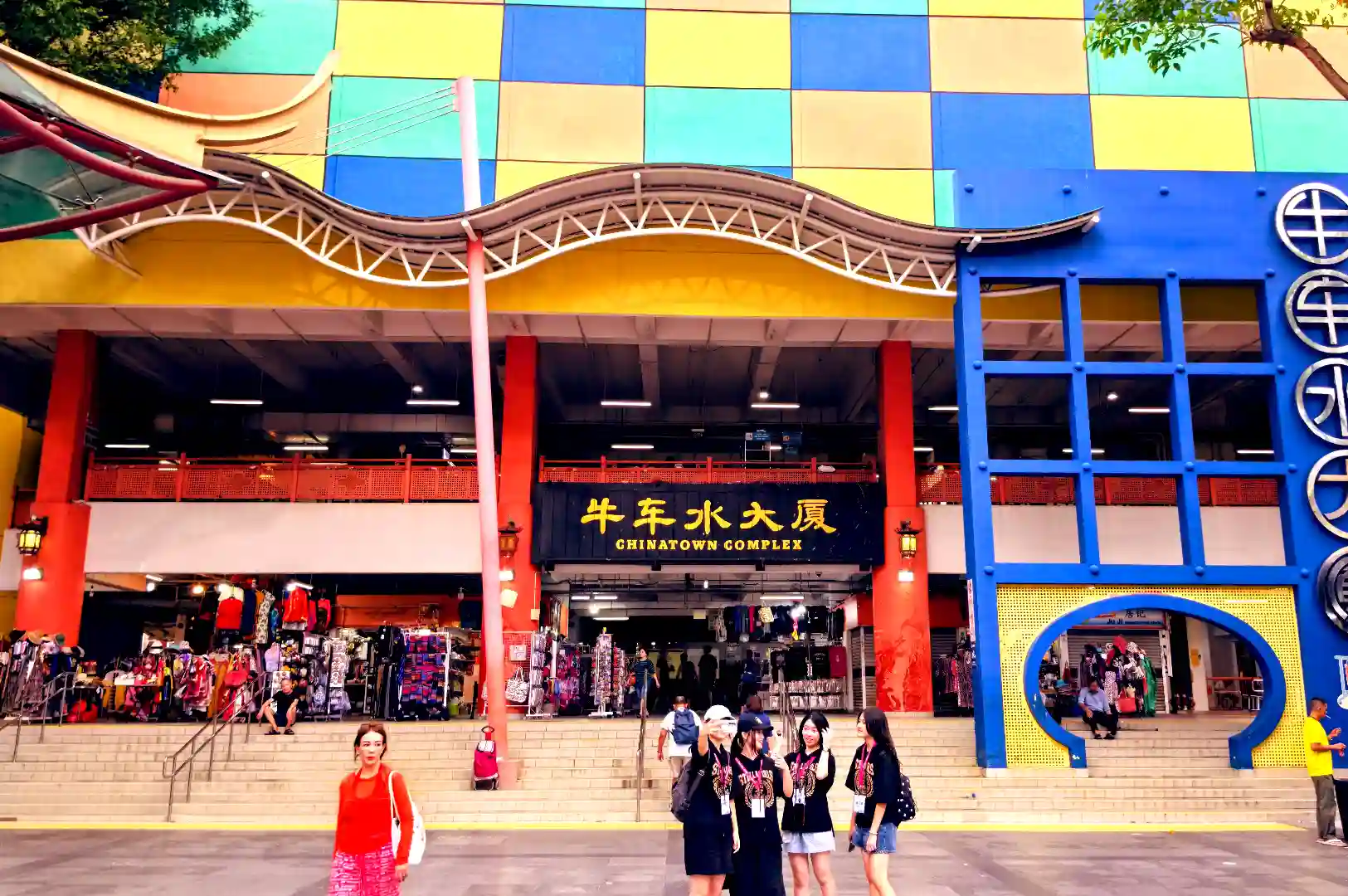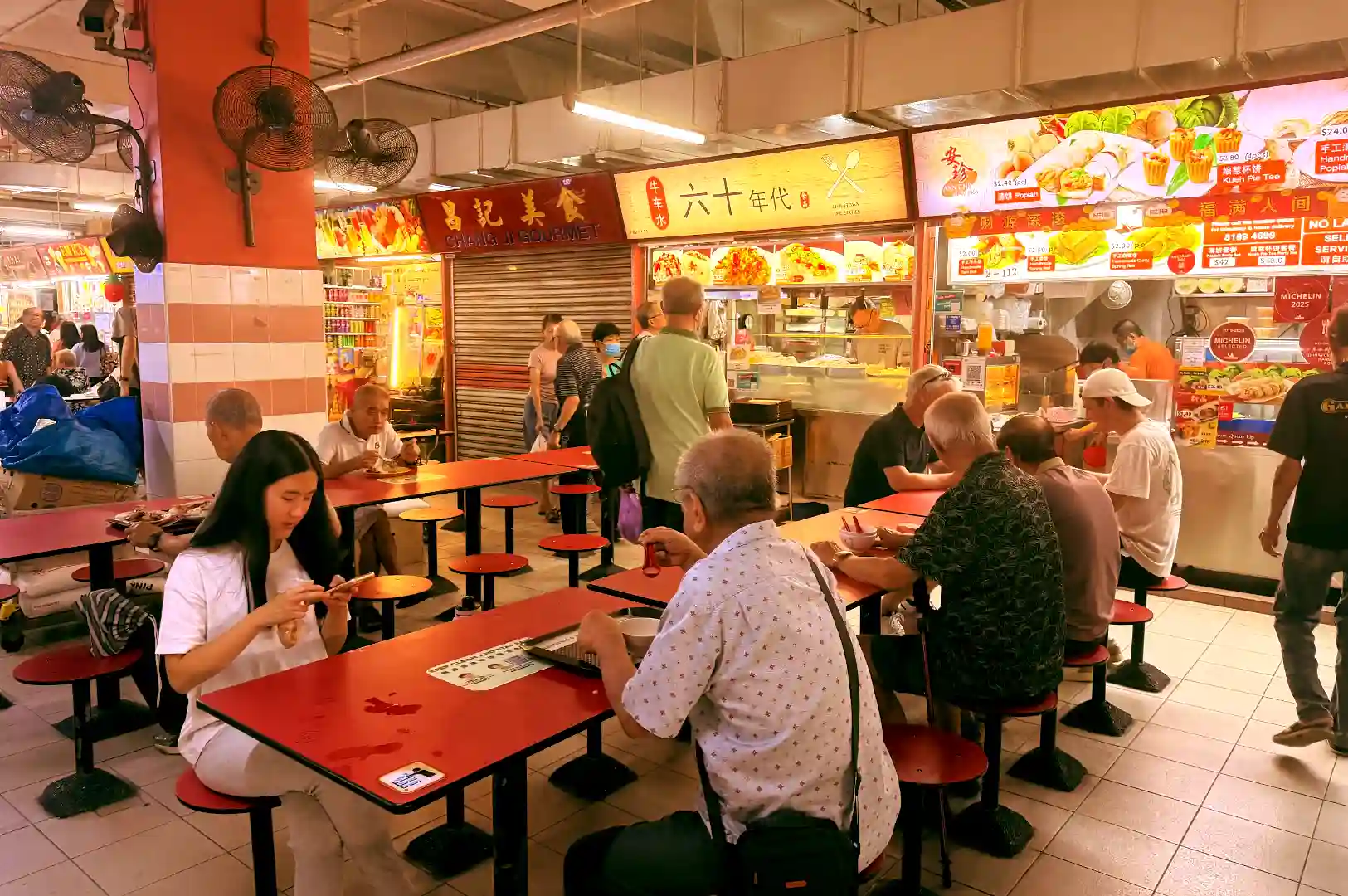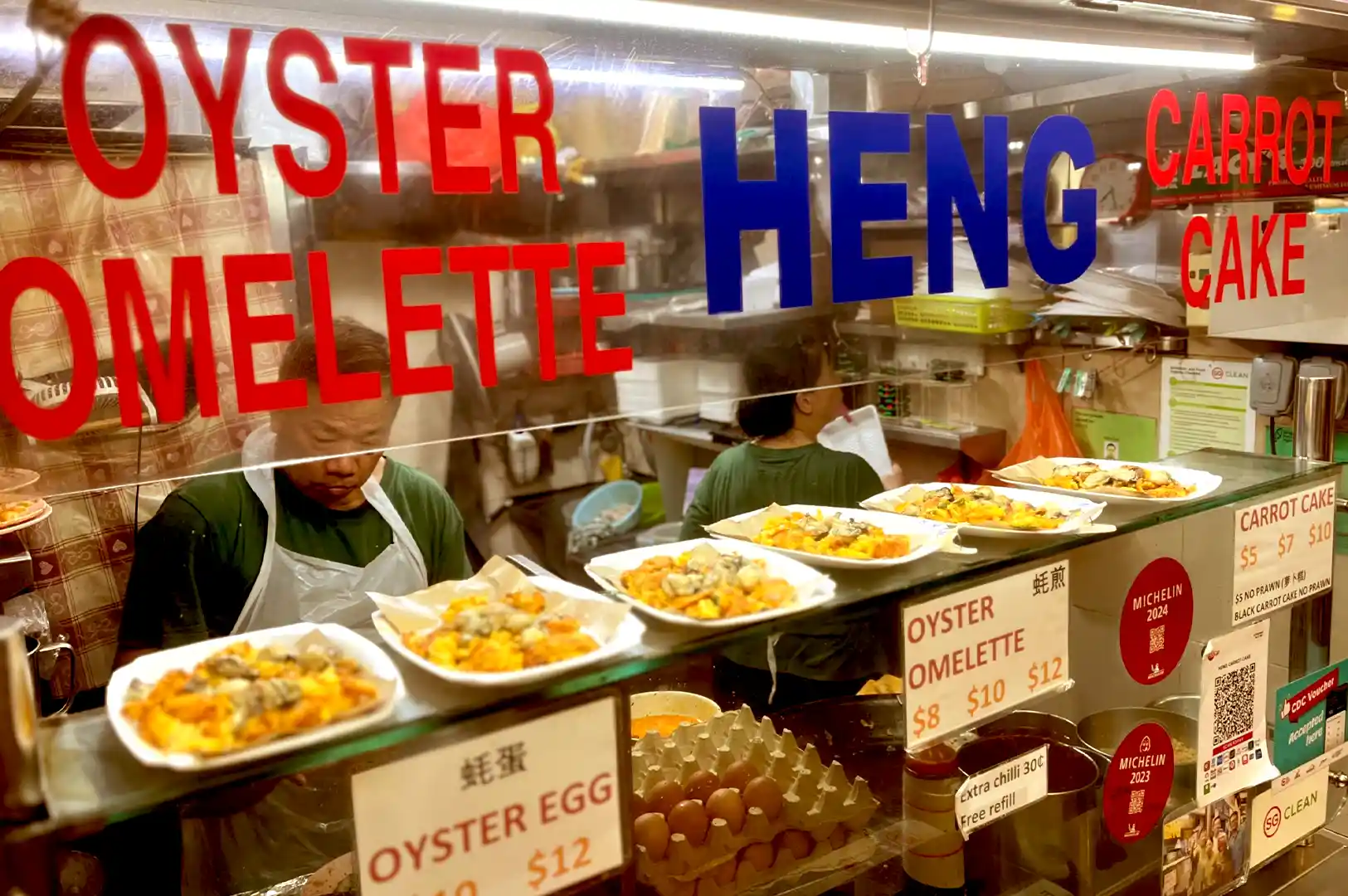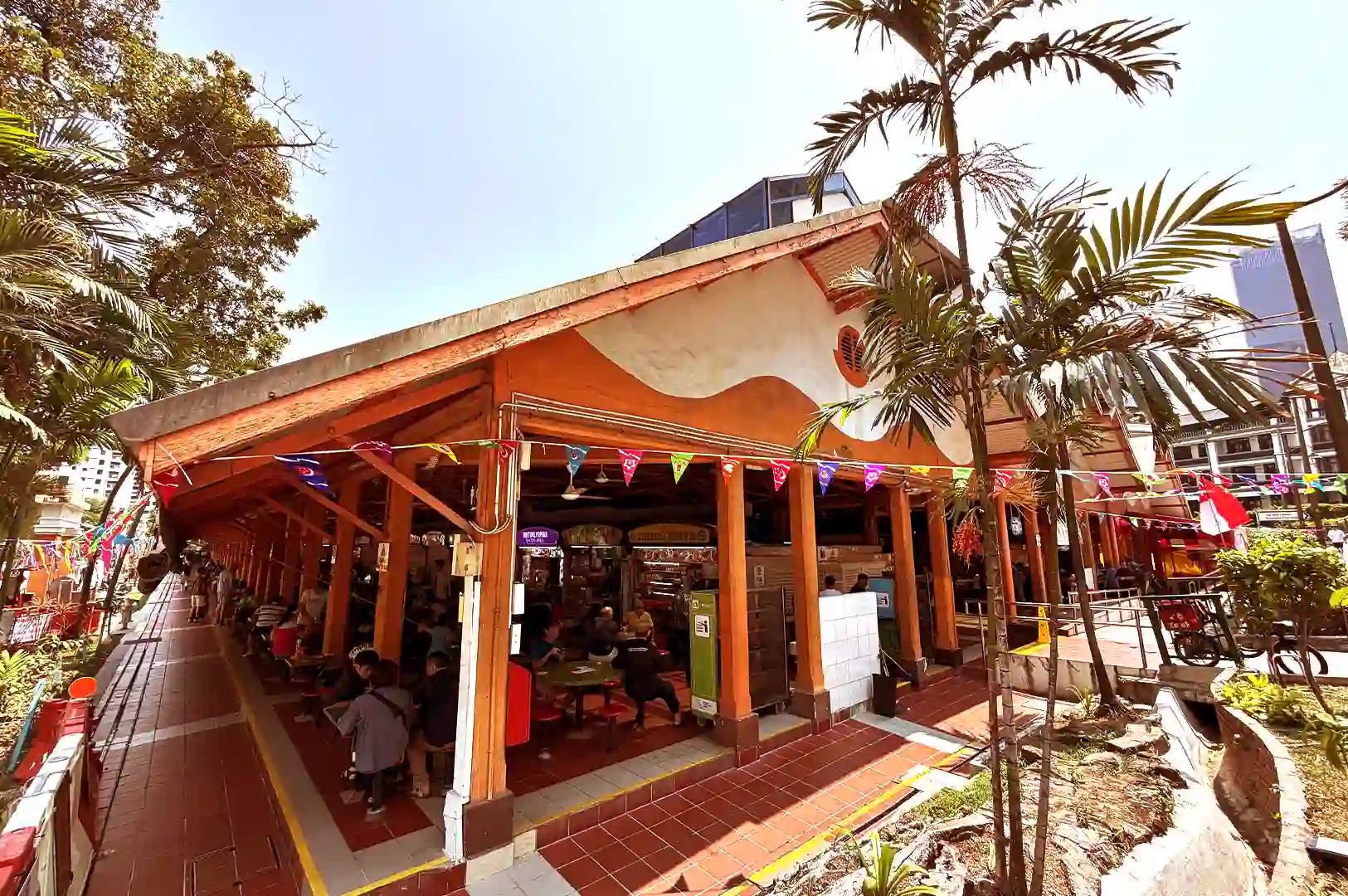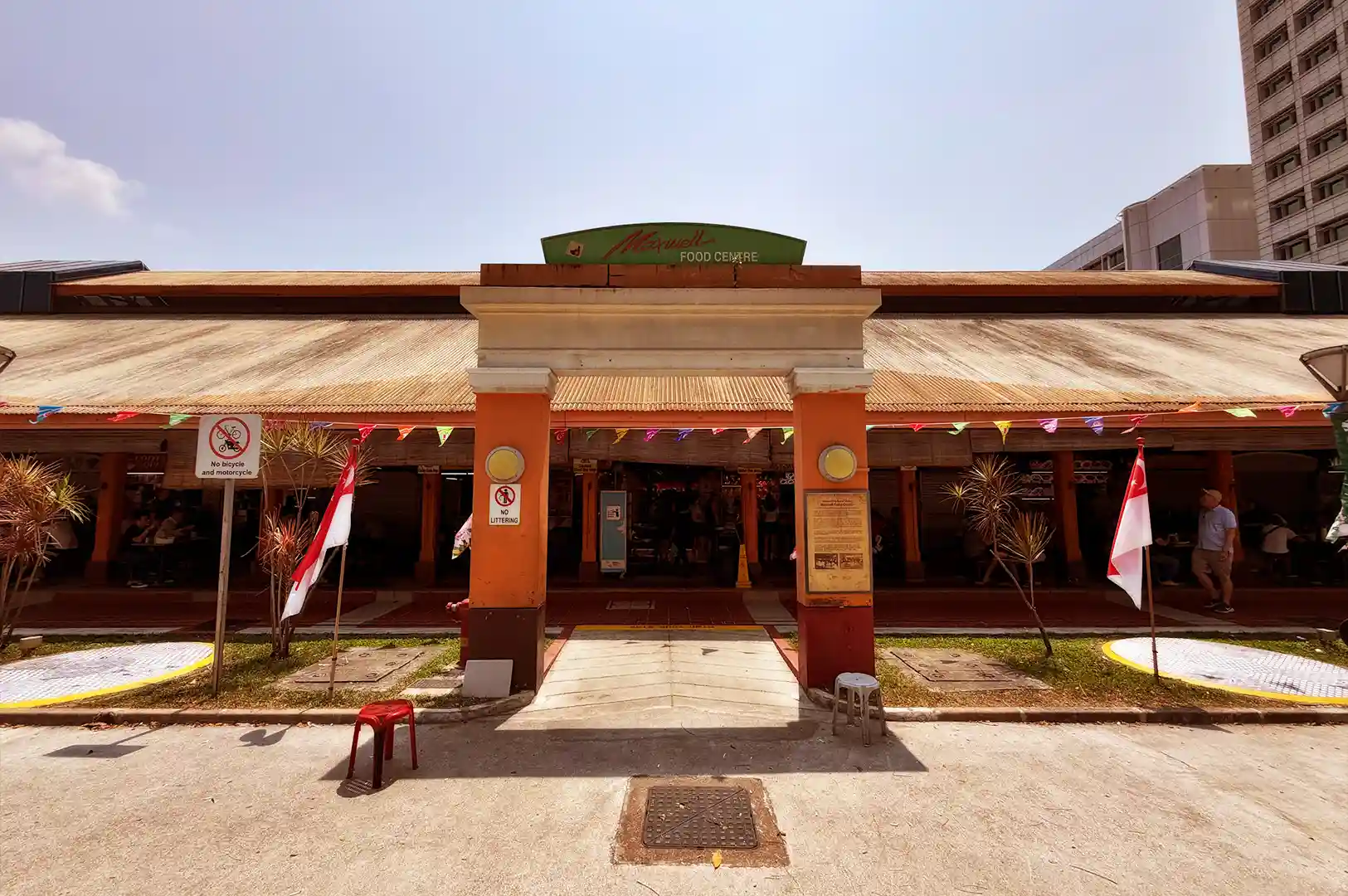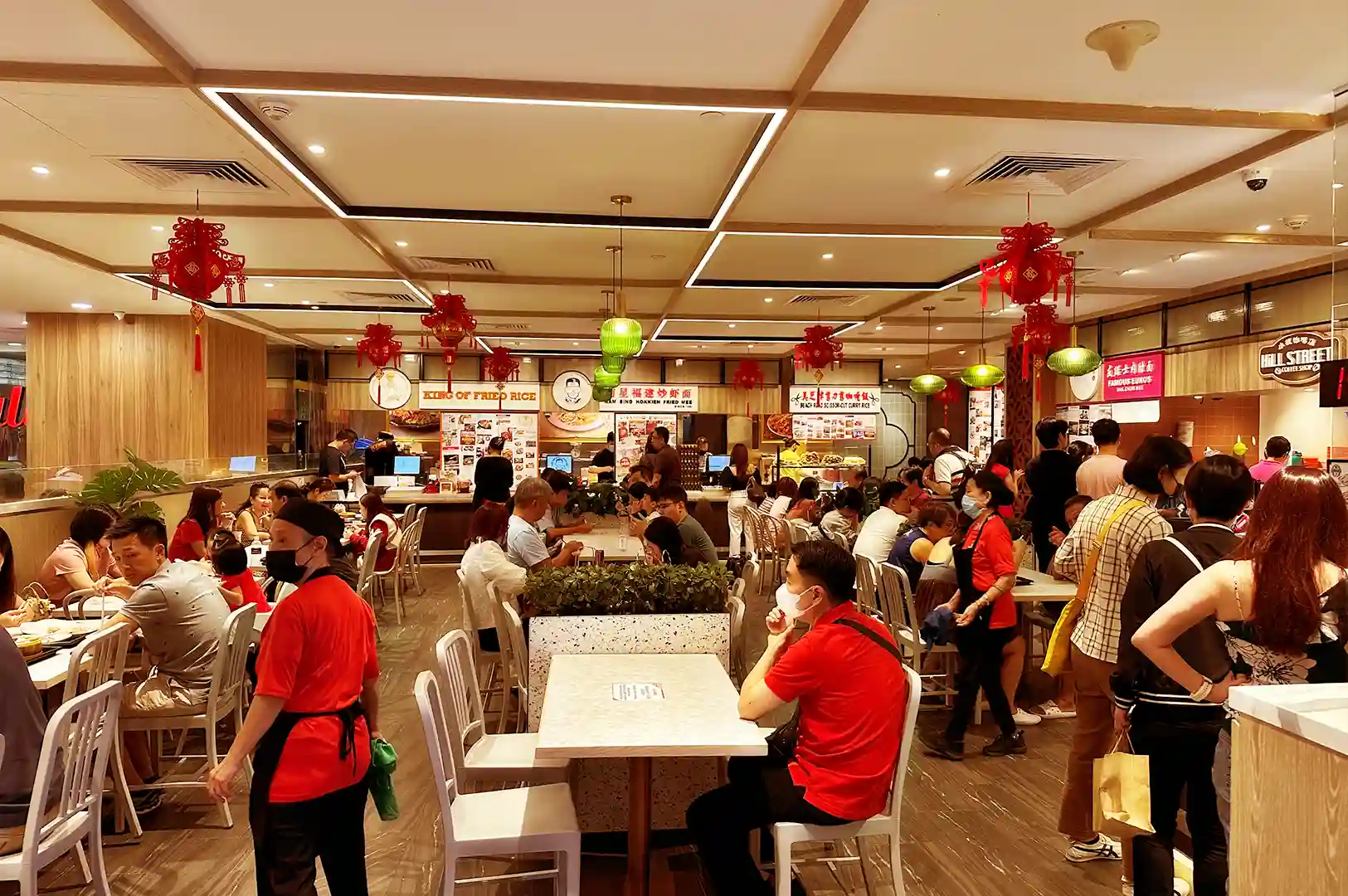

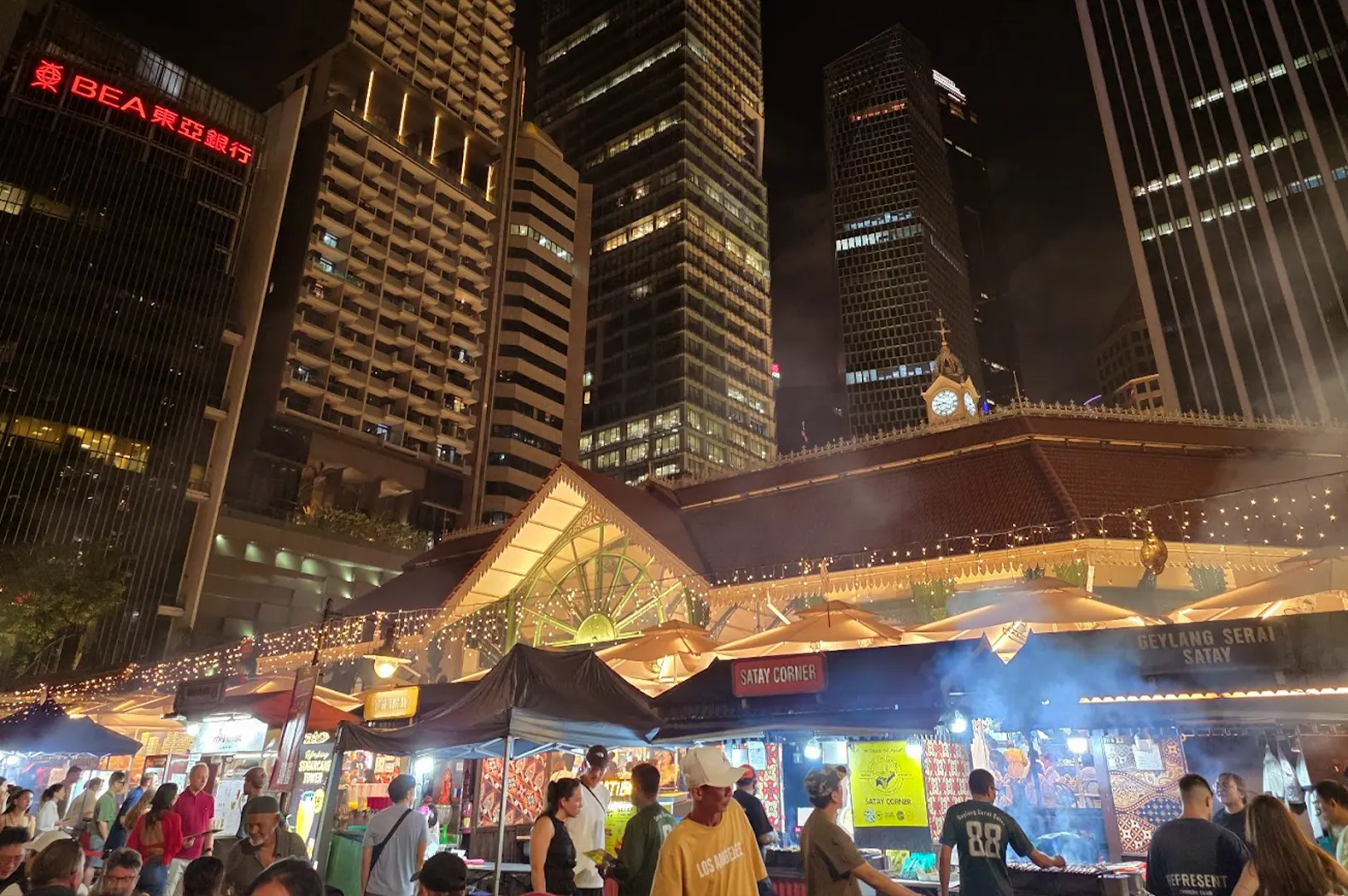
The building receives the street before the tables begin.
Before the names arrive, there is light.
One place holds it through iron ribs and high openings, where footsteps echo slightly before they settle into the food hall. Another gathers it more plainly, through concrete edges, stairways, and the everyday movement of people arriving from nearby roads.
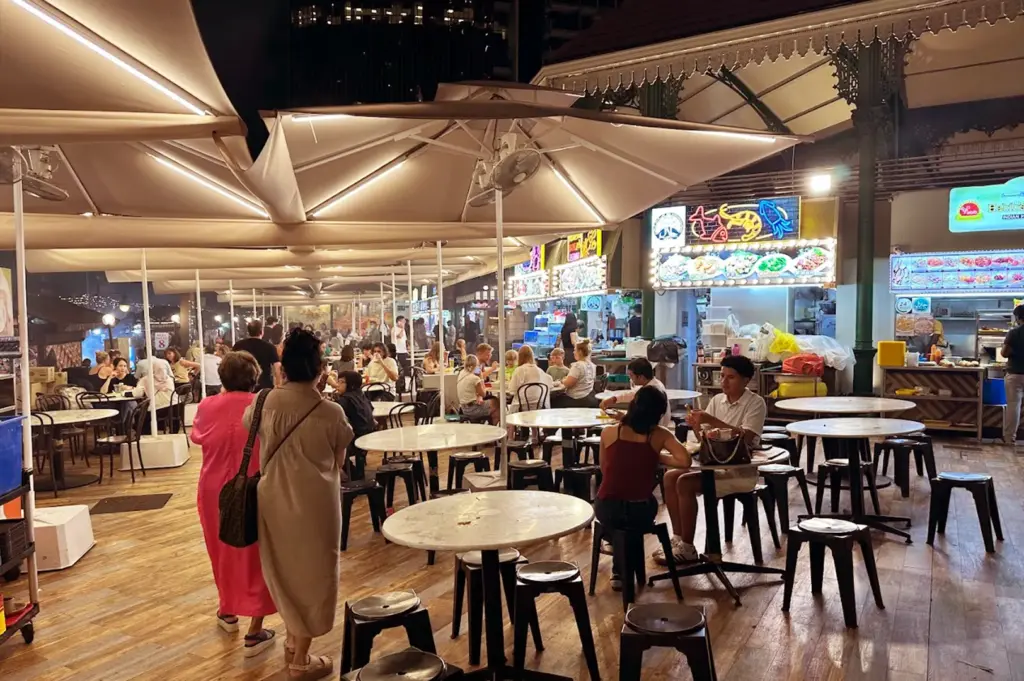
The centre keeps its height above the meal.
Lau Pa Sat moves with a visible order. Tables repeat beneath the roof. Walkways stay open between stalls and seats. Diners cross through the centre, pause, turn back, choose a table, leave again. The space feels arranged for passing through as much as staying.
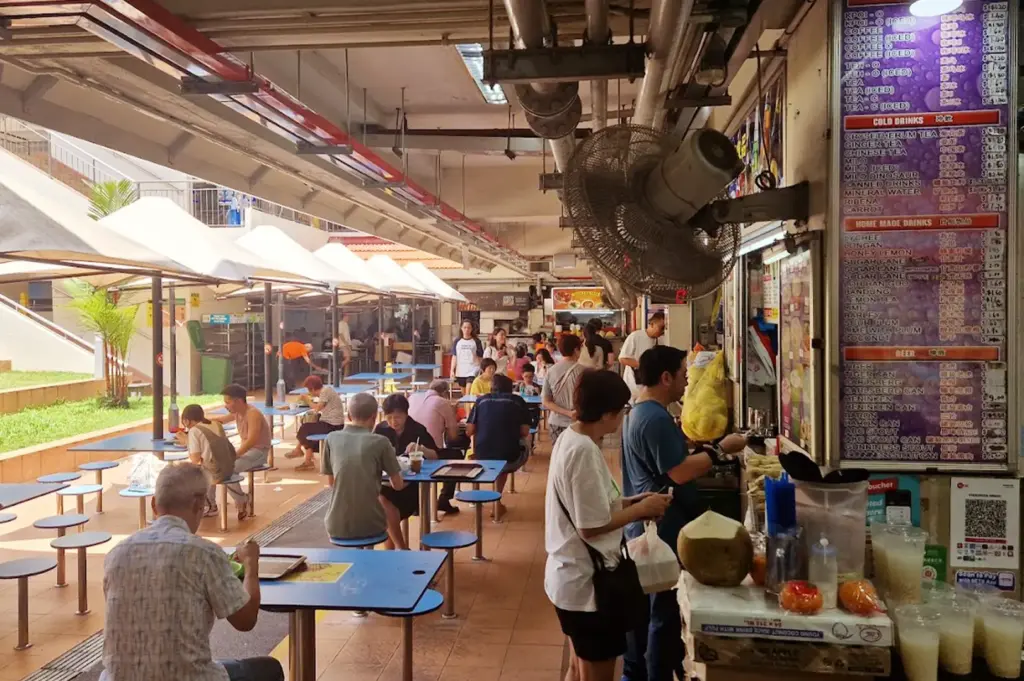
Movement narrows, then loosens around the tables.
Golden Mile Food Centre holds a different rhythm. The scale is lower, the movement closer. Stalls sit in rows. Tables gather around them without spectacle. Trays pass quietly from counter to seat. A chair is pulled out, then pushed back in. Someone waits while another finishes.
Between both places, repetition does most of the work. Orders are placed, plates are carried, surfaces are cleared. Some meals are quick. Some remain longer than expected. The dishes change, but the motions return.
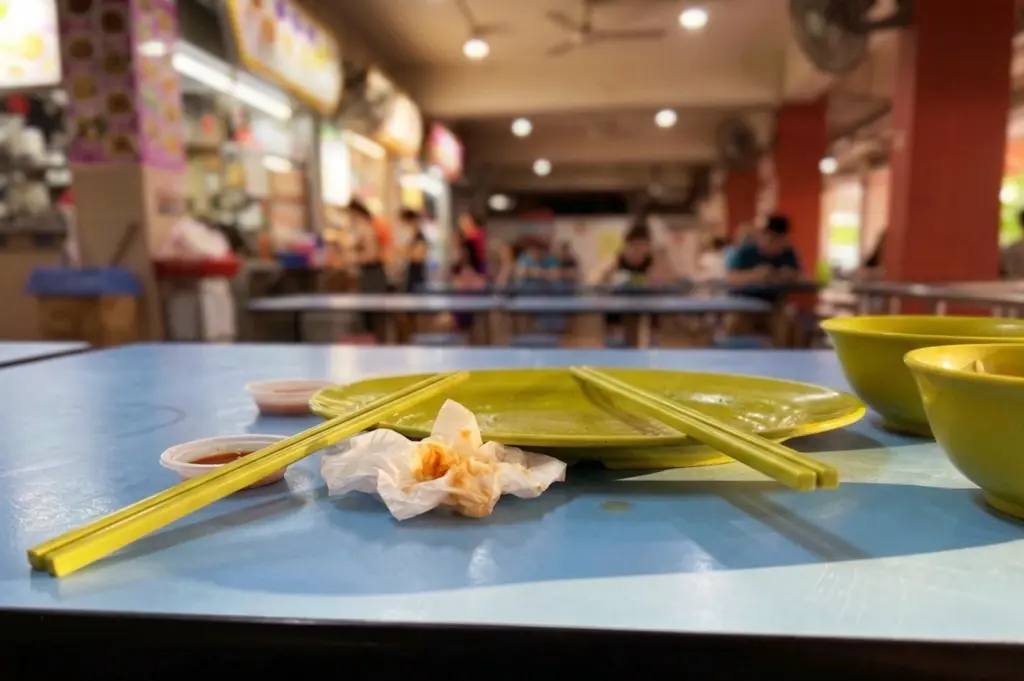
What remains is cleared, then used again.
Lau Pa Sat and Golden Mile Food Centre are not alike in shape, but they share a pattern of use. Movement enters, slows, gathers around food, then leaves room for the next person.
Continue with “Lau Pa Sat in Daylight” for another measured view of space, light, and hawker centre movement: