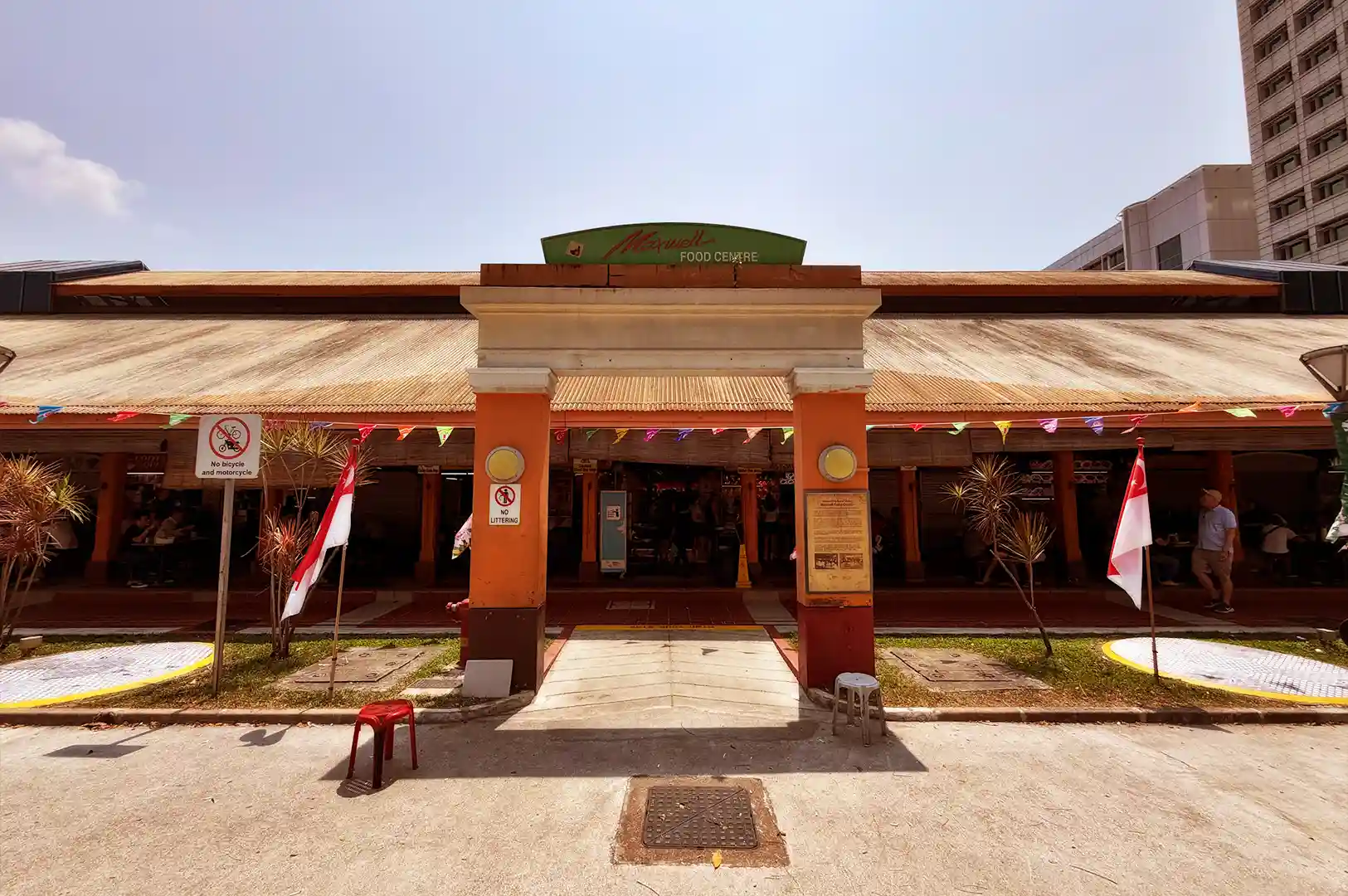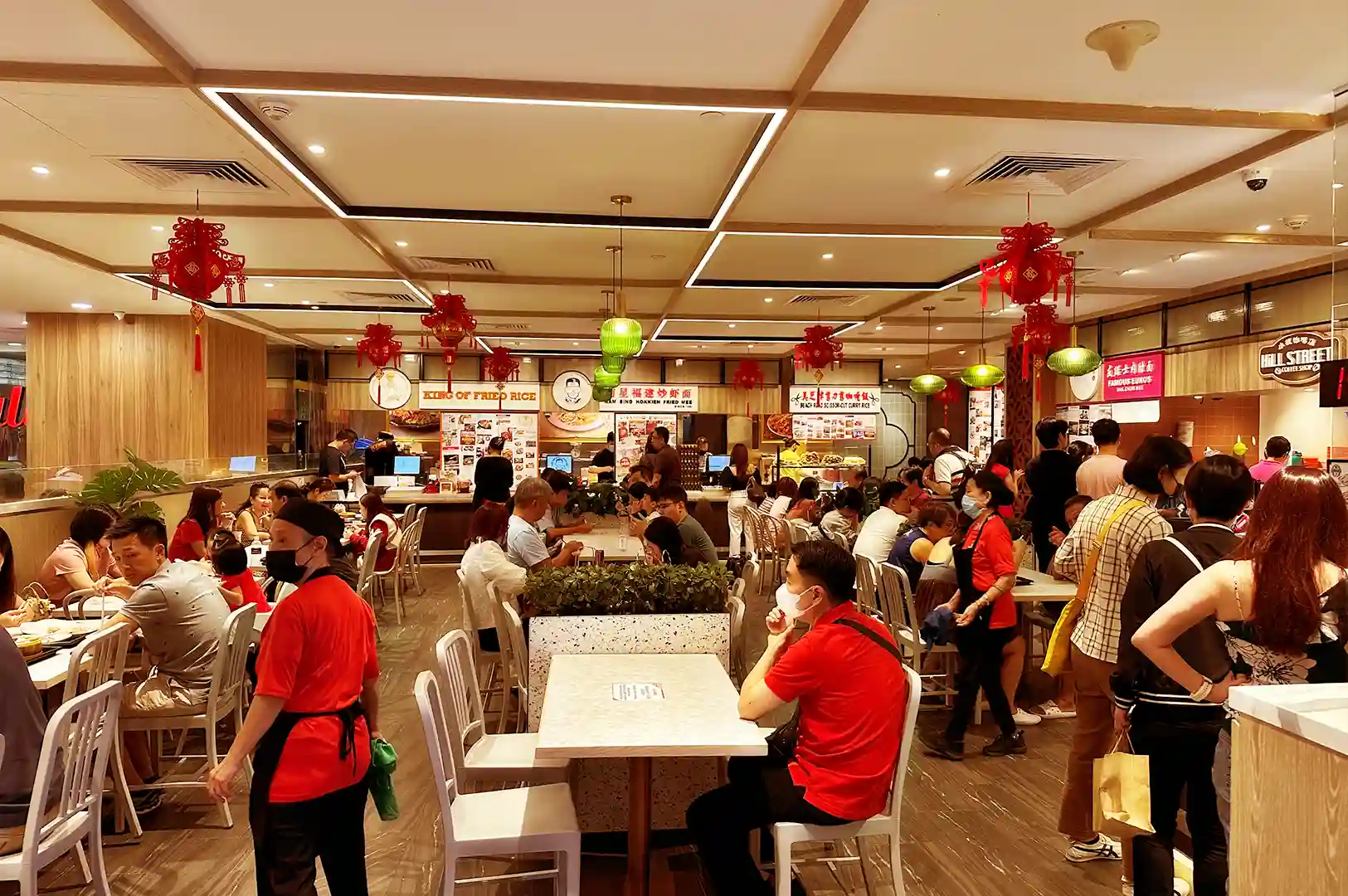

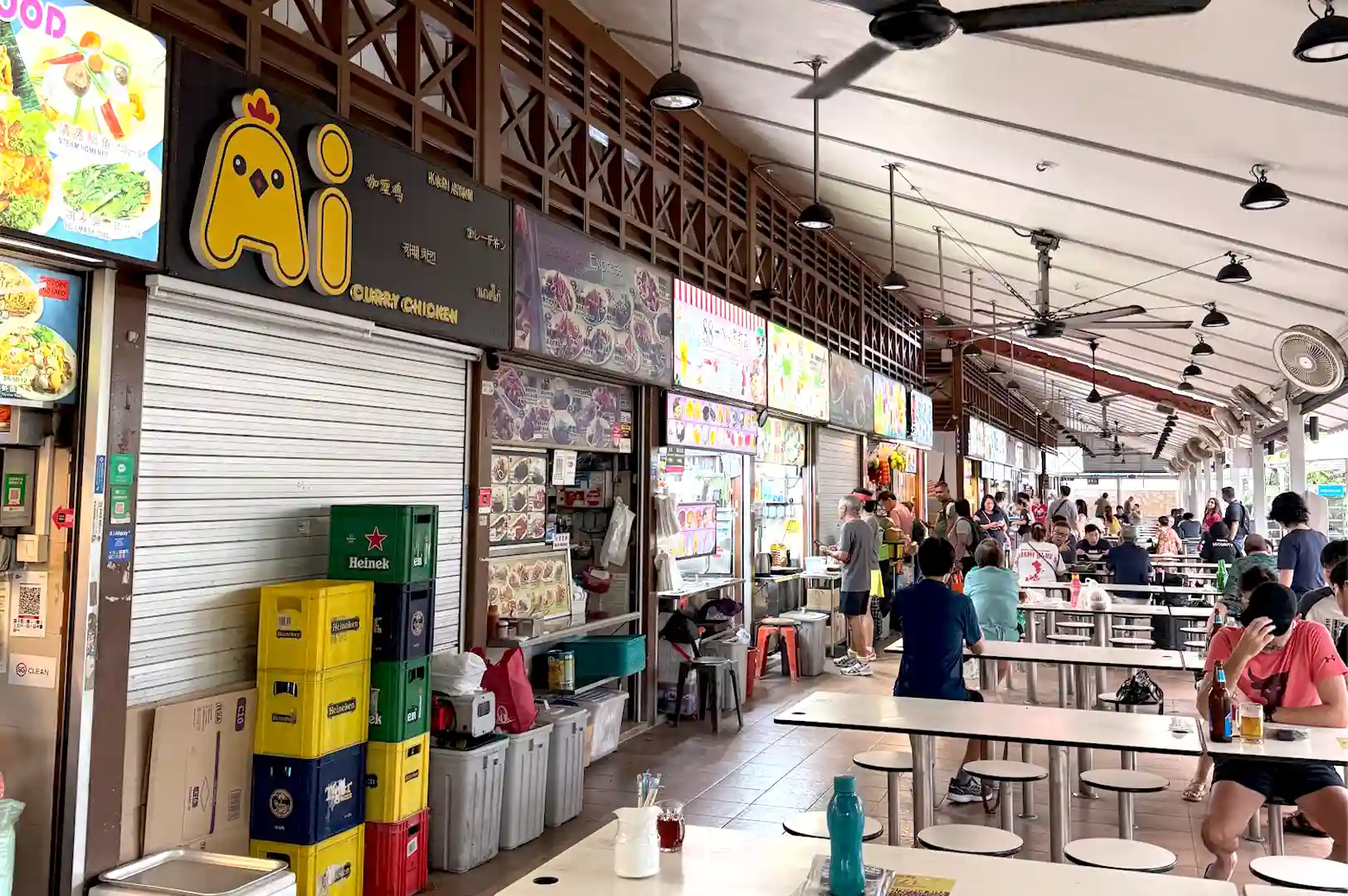
The first thing that changes is the atmosphere.
In the morning, the stall feels measured. The counter is organised. Ingredients are arranged within reach. Tools sit in their usual positions, waiting for the first orders of the day.
A ladle hangs beside the pot. A knife rests near the preparation area. Containers are opened and closed with familiar movements.
Nothing appears rushed.
A few hours later, the same stall looks different.
The queue grows. More voices gather in front of the counter. Orders arrive faster. The space behind the stall becomes more active, with hands moving between ingredients, cookware, and finished plates.
But the tools have not moved.
The ladle is still returned to the same place. The knife remains where it can be reached without searching. The same bowls are stacked in the same order. The same sequence continues.
This is what becomes interesting when observing a stall across different hours.
The environment changes, but the system remains.
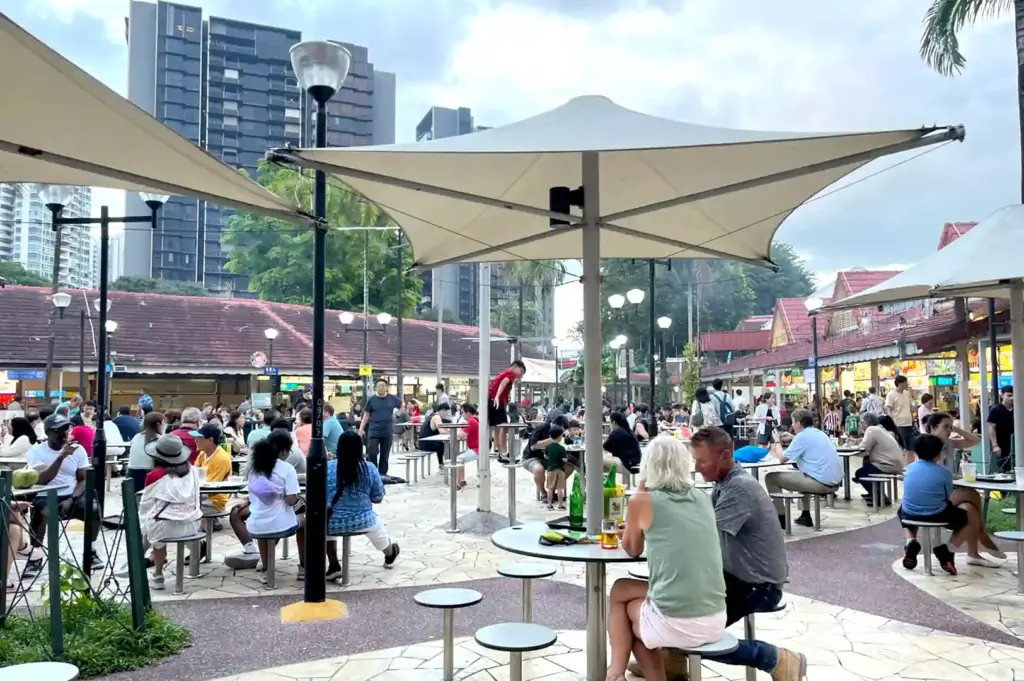
A busy period does not create a new method. It reveals the strength of the existing one. Years of repetition have already determined where things belong and how each movement connects to the next.
I often think of tools as extensions of the stallholder’s memory.
The placement of a container is not accidental. The distance between two actions has been considered through thousands of repetitions. A hand reaches before the mind needs to decide.
The same rhythm appears during quieter periods too.
There may be fewer orders and more space between tasks, but the process remains unchanged. Preparation follows the same order. Ingredients are handled the same way. The workspace returns to the same arrangement after each cycle.
This is similar to what can be seen in Built in Sequence: Popiah at Ann Chin, where the focus is on how a stall’s preparation relies on a structured series of movements. It shows how consistency is created through small actions repeated carefully over time.
A hawker stall is often judged by its busiest moments.
But the quieter hours reveal something equally important.
They show that efficiency does not come from moving faster.
It comes from knowing what stays the same.