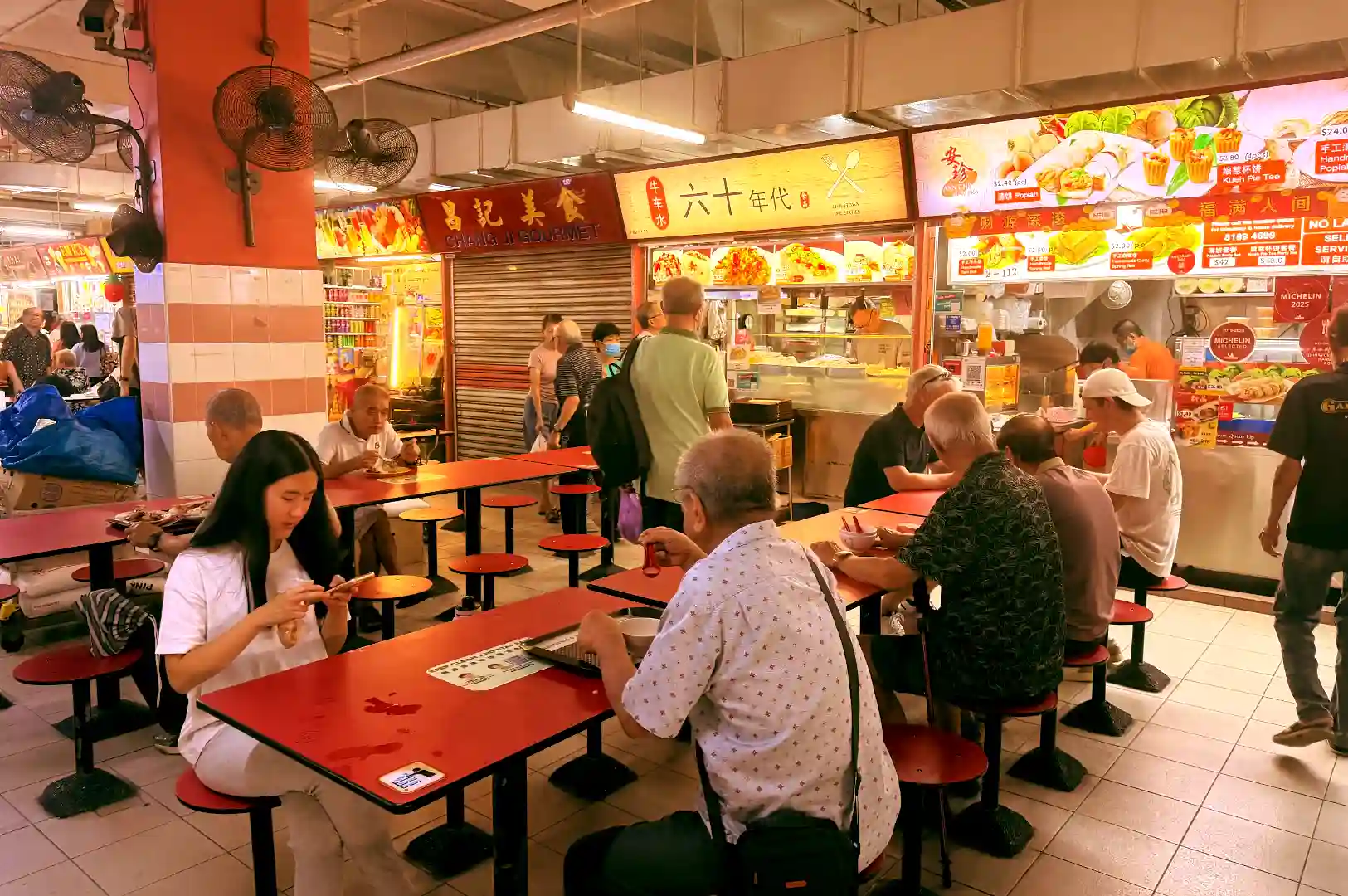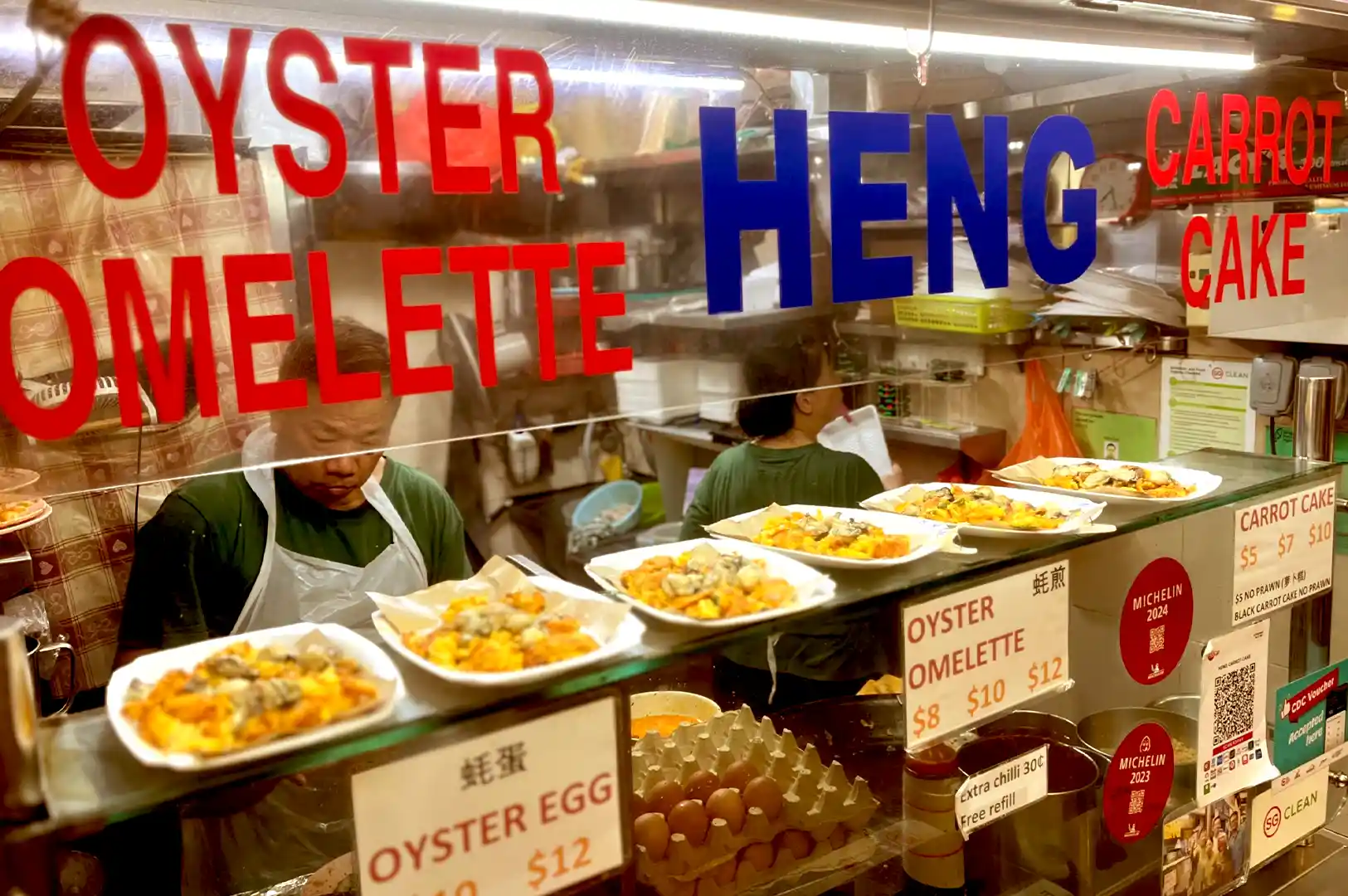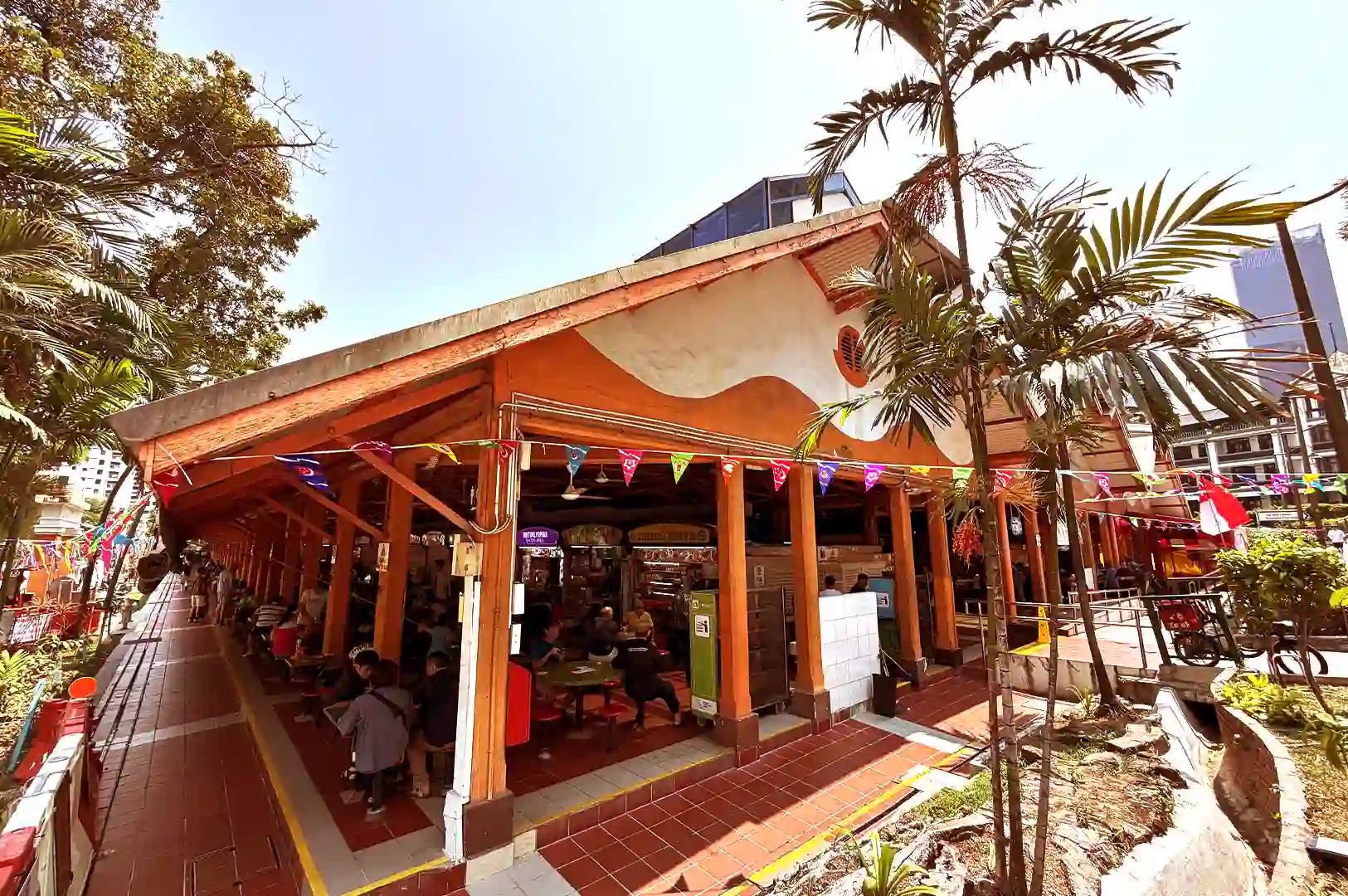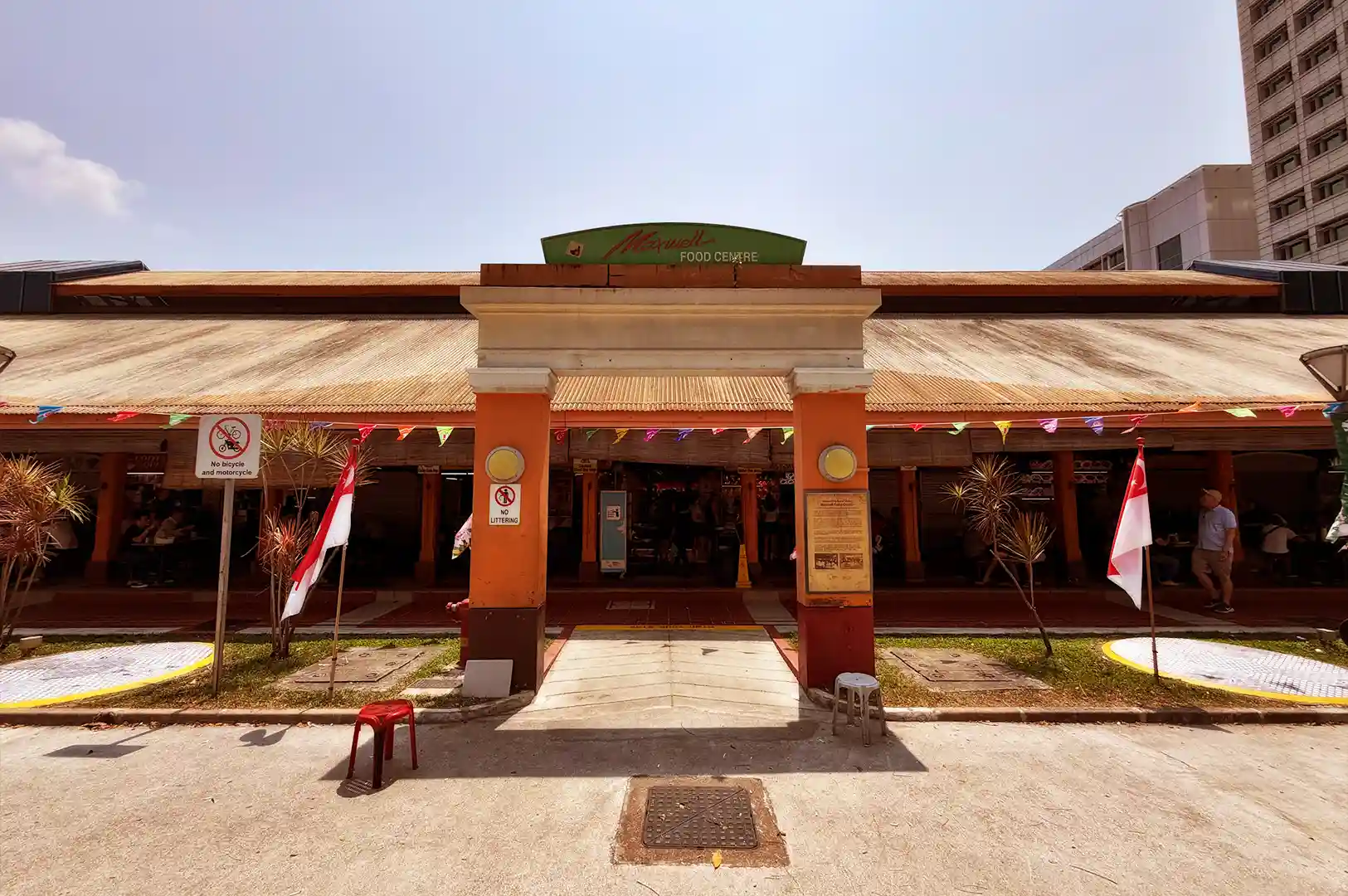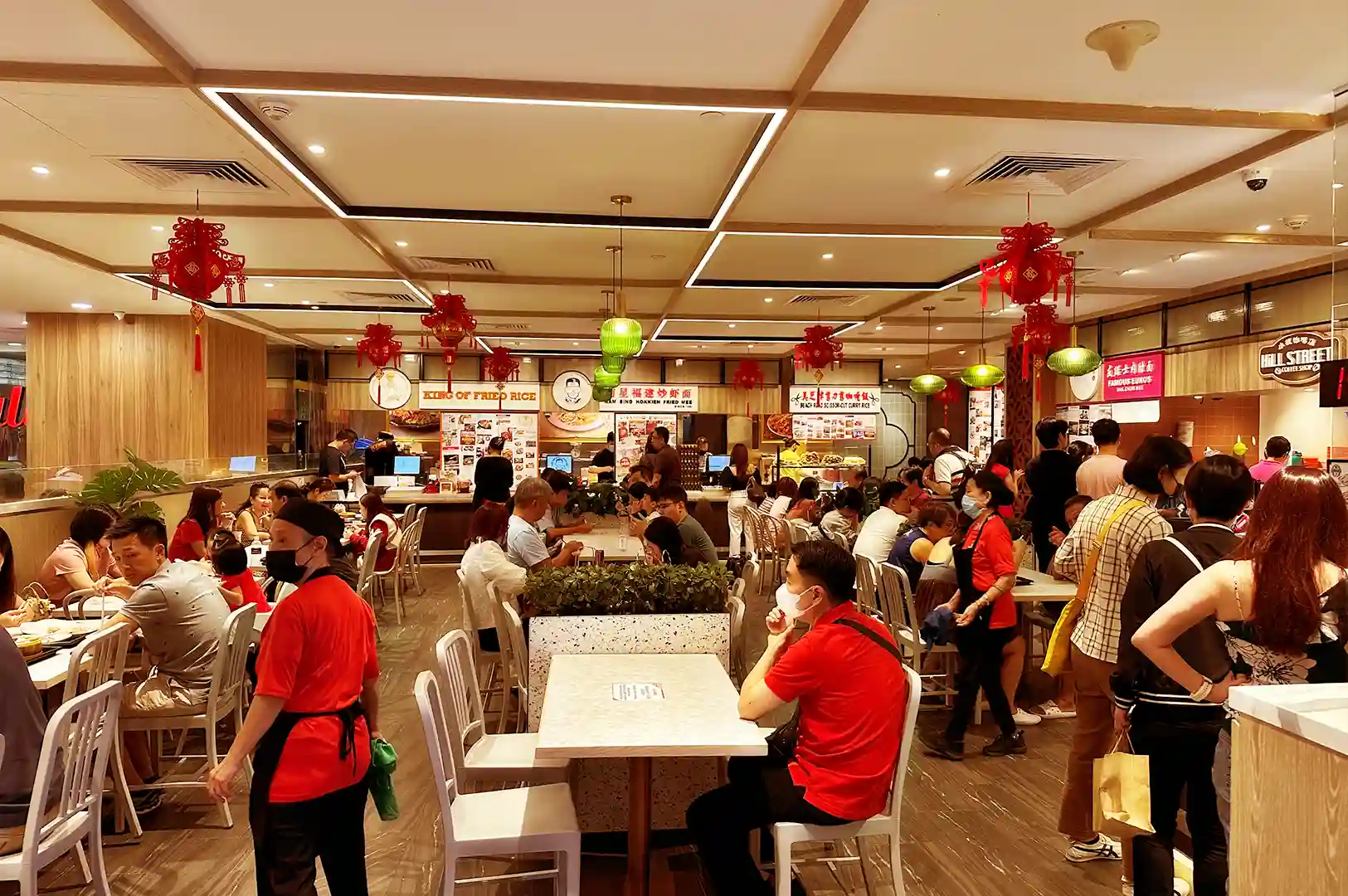

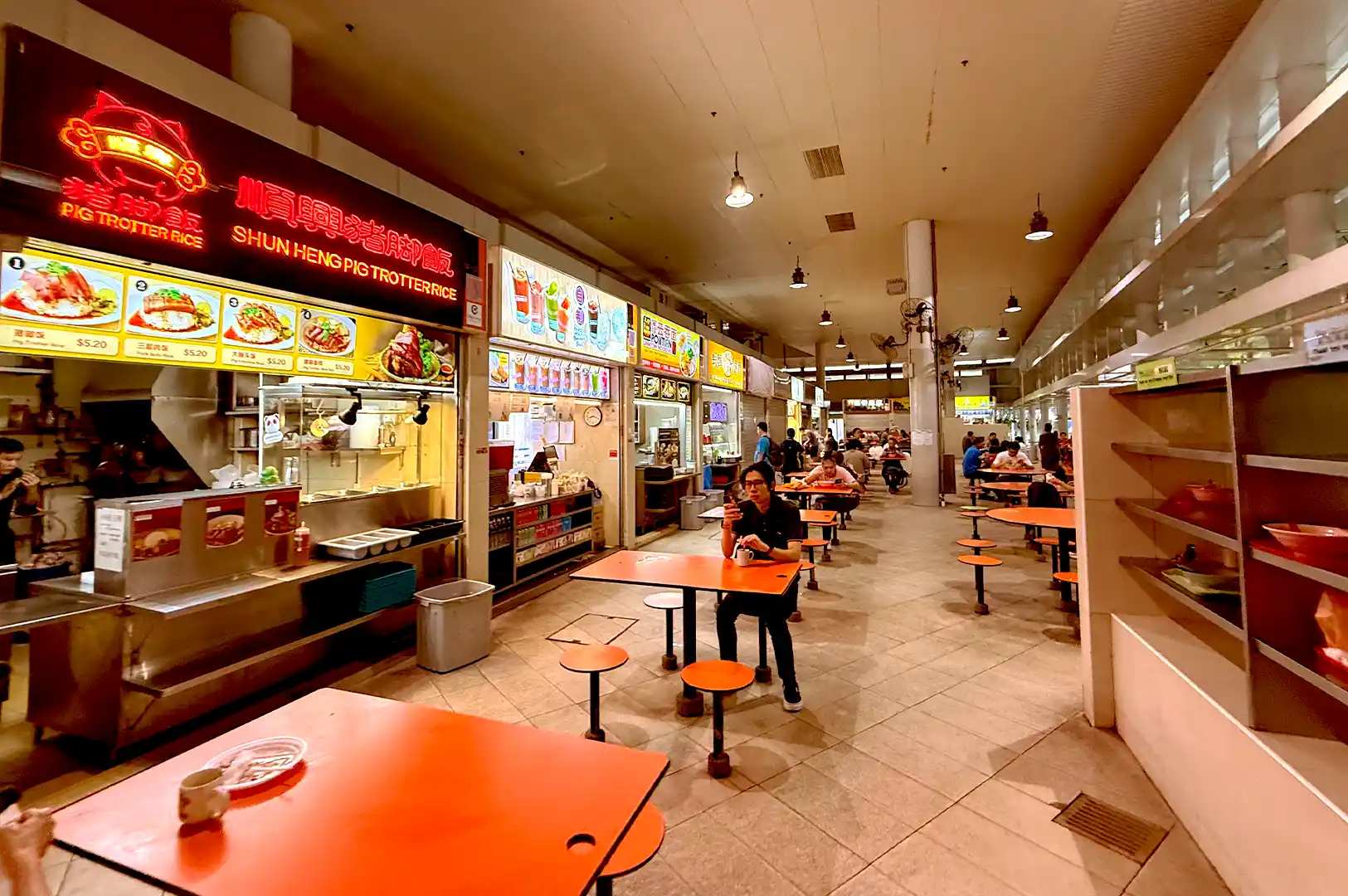
The space begins before the tables are full.
There is a quiet period when the centre is neither empty nor crowded.
Footsteps pass through the walkways. Stall shutters lift. Lights remain on above counters while the first preparations take place. The movement is familiar, repeated each day without needing to announce itself.
The centre settles into its daily pattern.
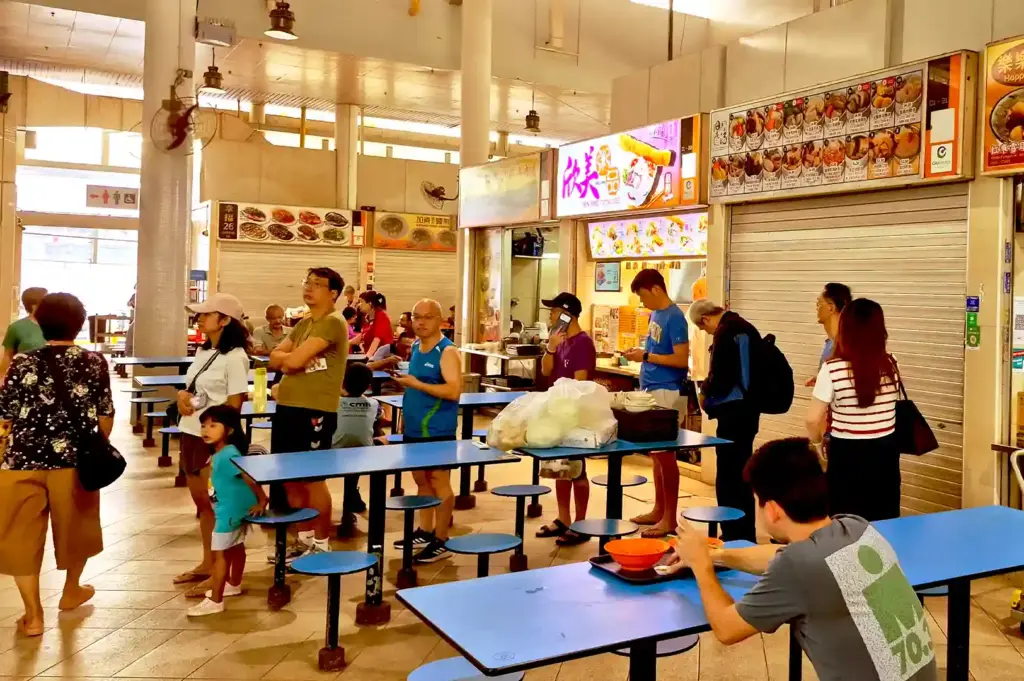
Bedok Interchange Hawker Centre is arranged around simple movement. Stalls line the edges while tables occupy the shared space between them. People arrive from different directions, pause at counters, then continue toward seats.
Queues form and disappear. Trays move from stall to table. Empty spaces appear briefly before being filled again.
Each stall carries its own rhythm.
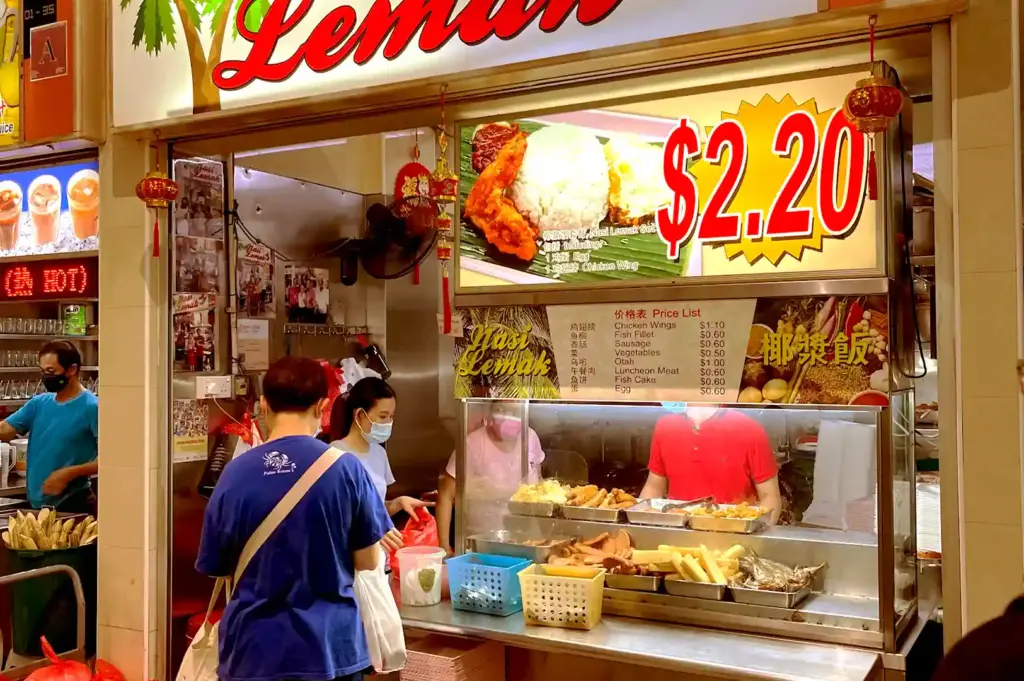
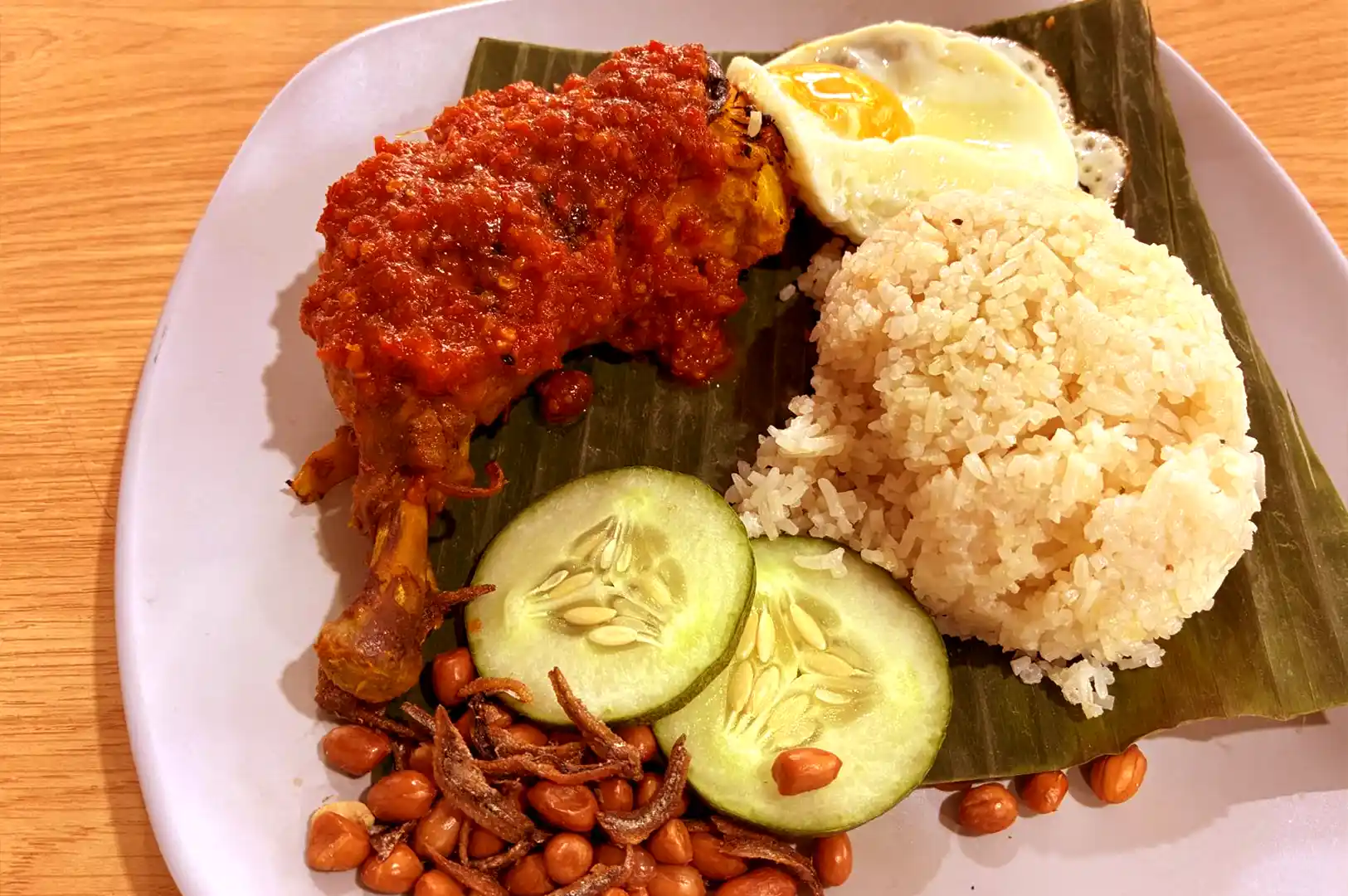
Nasi lemak and b appear within this larger routine. Rice is arranged, ingredients are added, noodles are prepared, and bowls or plates leave the counters in steady succession. The dishes follow their own sequences, but both become part of the same surrounding movement.
Small traces remain before the next cycle.
The tables hold short moments. A meal finished. A conversation paused. A tray left briefly before returning to its place.
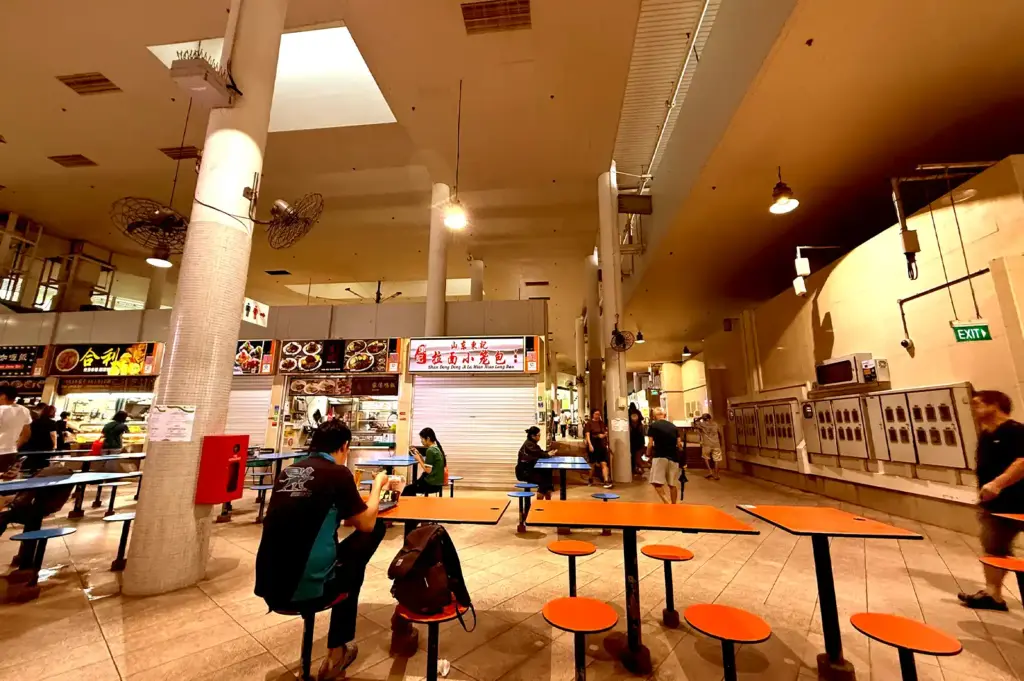
As the day continues, the atmosphere changes through volume rather than structure. The same paths remain. The same counters continue. Only the number of people moving through the space shifts.
Bedok Interchange Hawker Centre is shaped by these repeated exchanges—the arrival, the waiting, the eating, and the clearing that follows.
Continue exploring the quiet movements of everyday hawker spaces here: