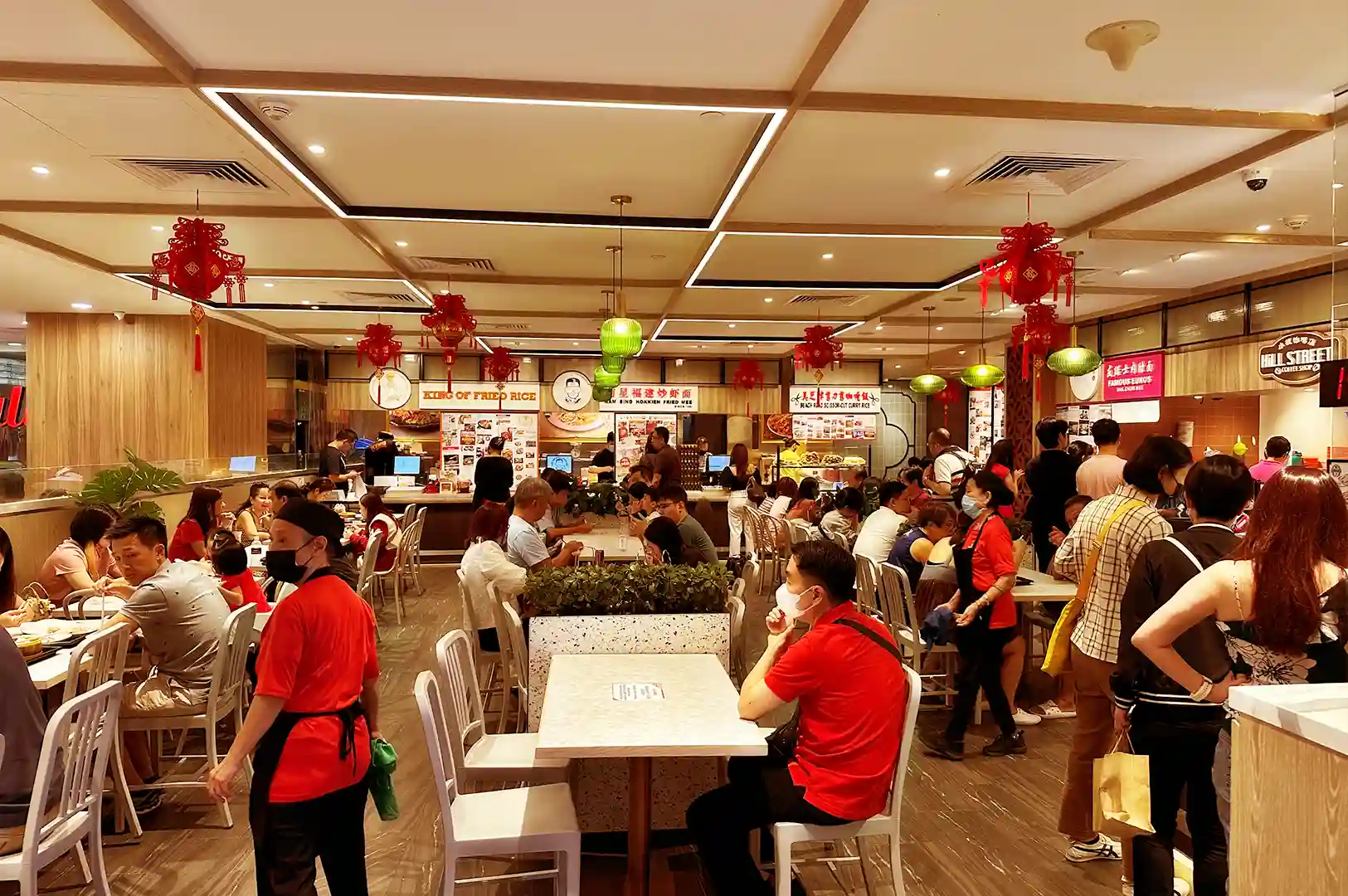

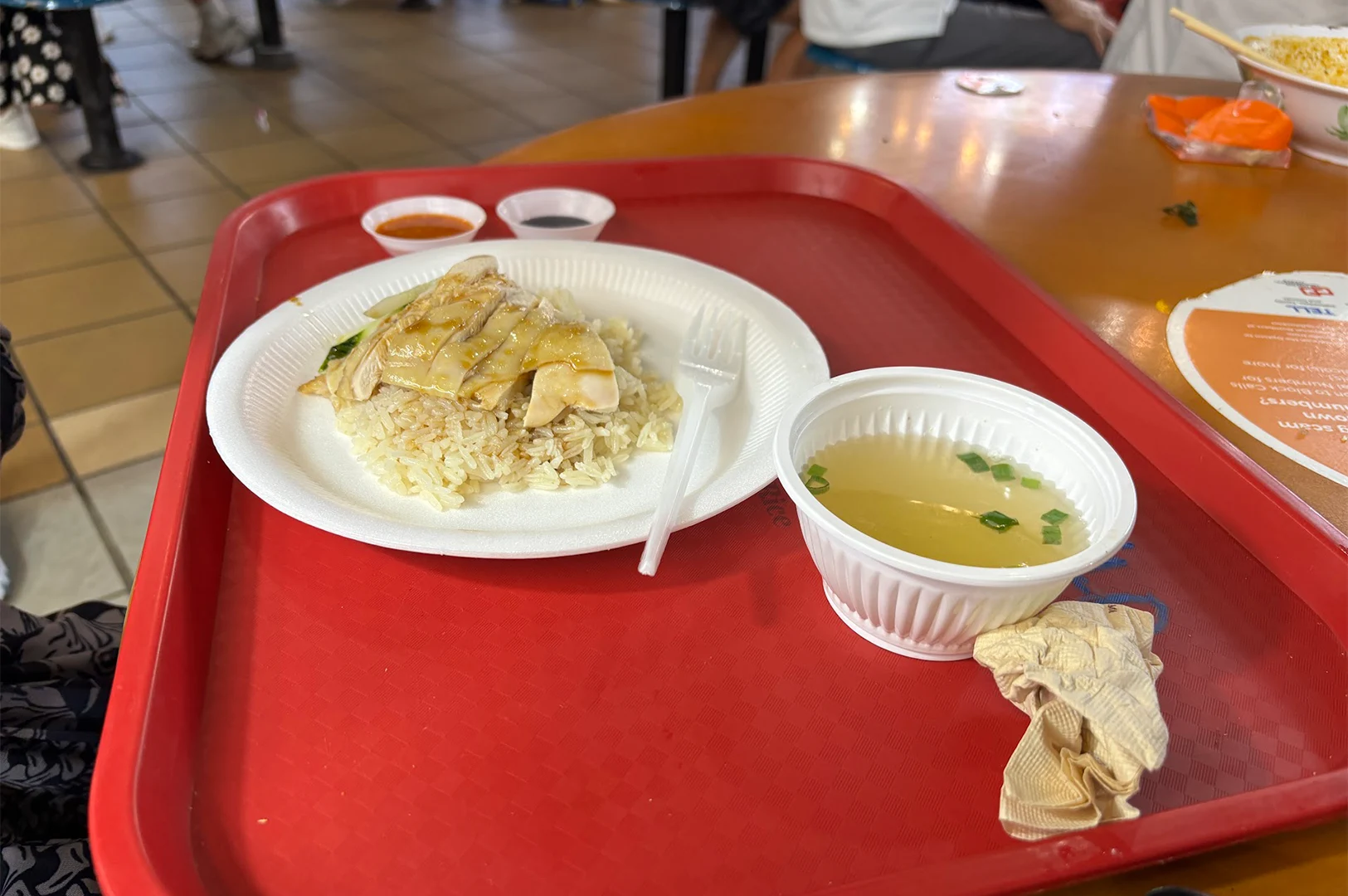
The first marks are easy to miss.
A table looks clean after it has been wiped. A counter appears ready for the next order. A tray returns to the stack without drawing attention. Everything seems reset, but the surface still carries evidence of what has passed across it.
I began noticing this during quieter visits, when there was more time to look at what remained between cycles.
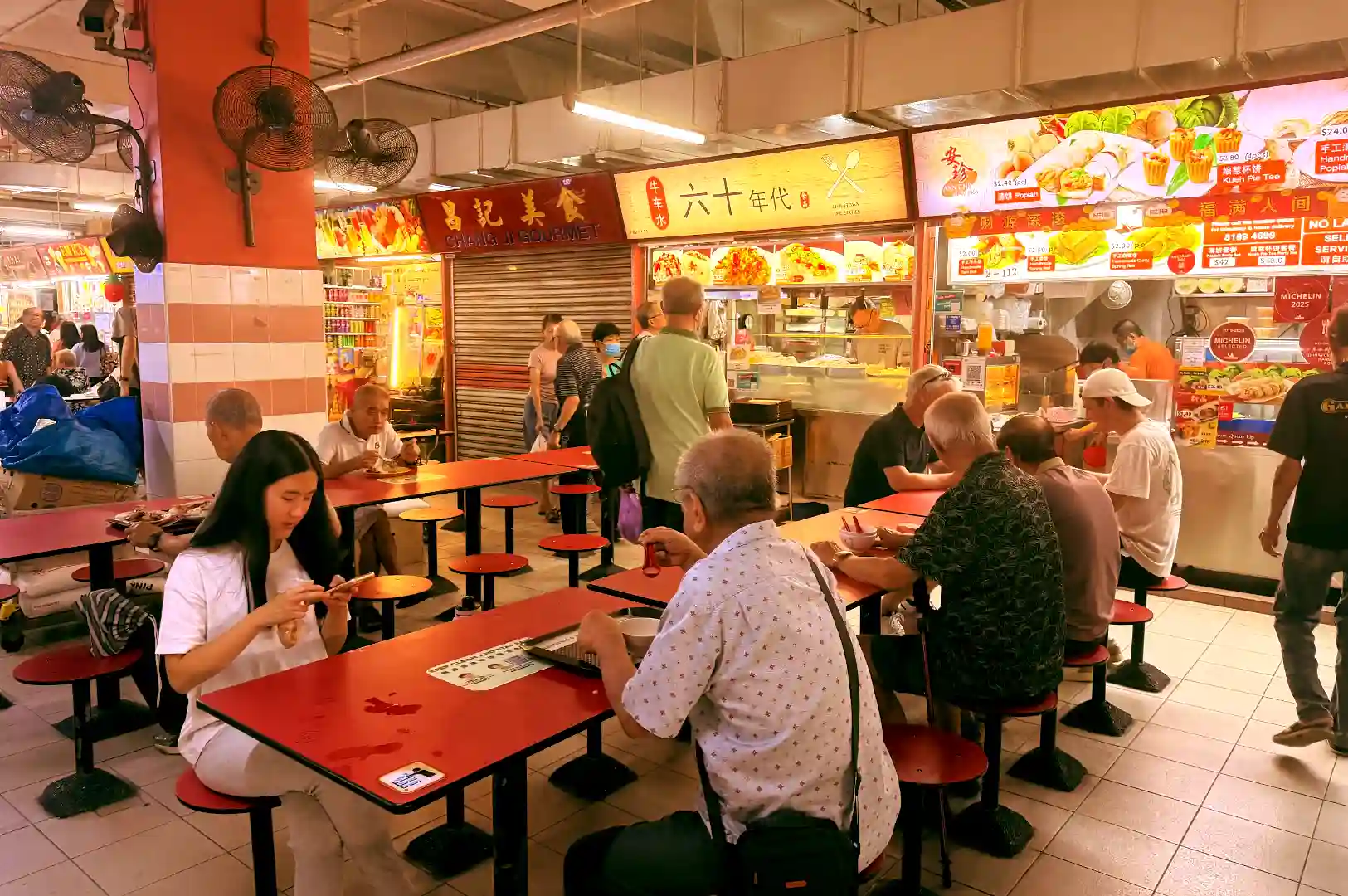
The edge of a table had softened where hands often rested. A plastic chair showed faint scratches along the back, made by years of being pulled, shifted, and stacked. Near one stall, the counter surface was dull in the exact place where bowls were set down before serving.
These marks did not interrupt the work.
They were part of it.
At a hawker stall, repetition leaves a record. Ladles return to the same container. Trays slide across the same section of counter. Chopsticks tap lightly against bowls. Cloths pass over stainless steel again and again, removing what is recent but never fully erasing what has settled into the material.
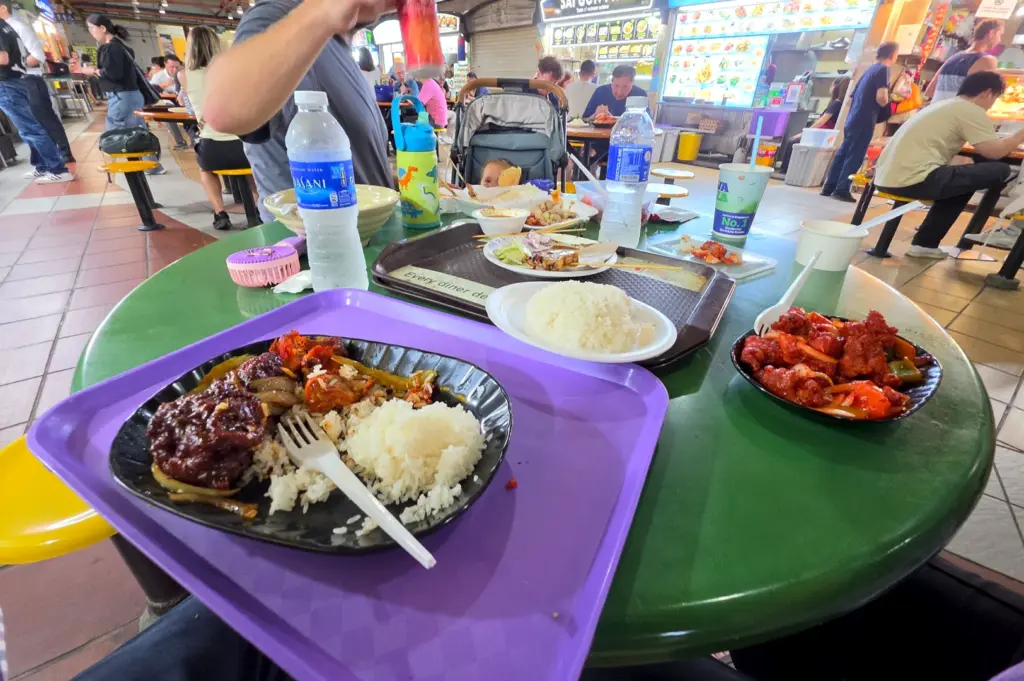
During a rush, these surfaces disappear beneath activity.
Only in the lull do they become visible again. The counter clears. The table dries. The tray stack lowers. What remains is not damage in the dramatic sense, but proof of repeated function.
This kind of physical evidence also appears in Maxwell Food Centre: Morning Cycles Held Steady, where the focus shifts to repeated preparation, stall rhythm, and the small systems that continue before the crowd arrives. It offers a useful companion to this piece, showing how surfaces and actions gather meaning through daily repetition.
I think of wear as a form of measurement.
Not precise, but honest. It shows where people lean, where stallholders work, where food is placed, where trays return. It reveals the parts of a hawker centre that are used most often.
A new surface can tell us very little.
A worn one has already begun keeping time.