
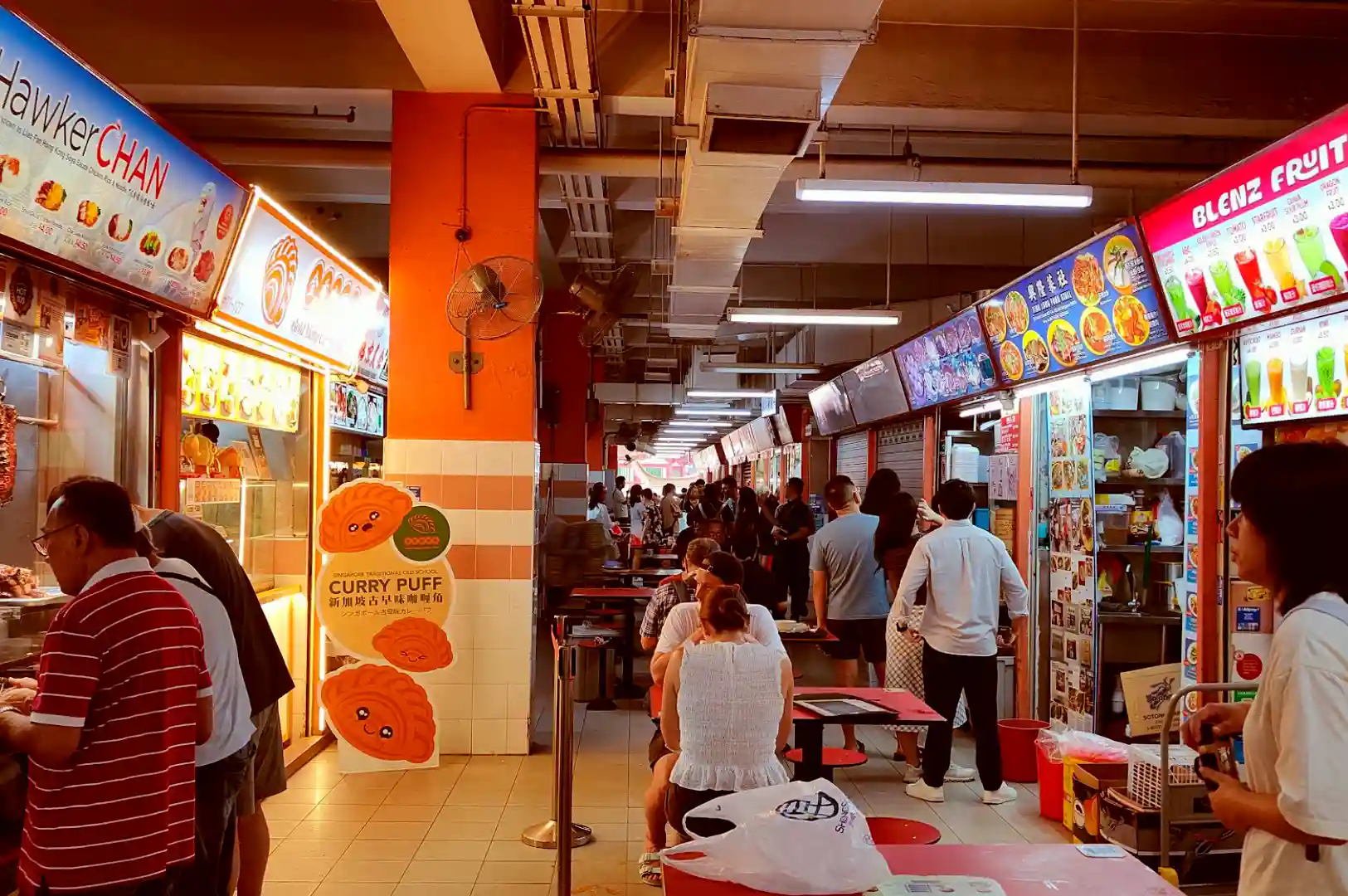
From above, the scale becomes easier to read.
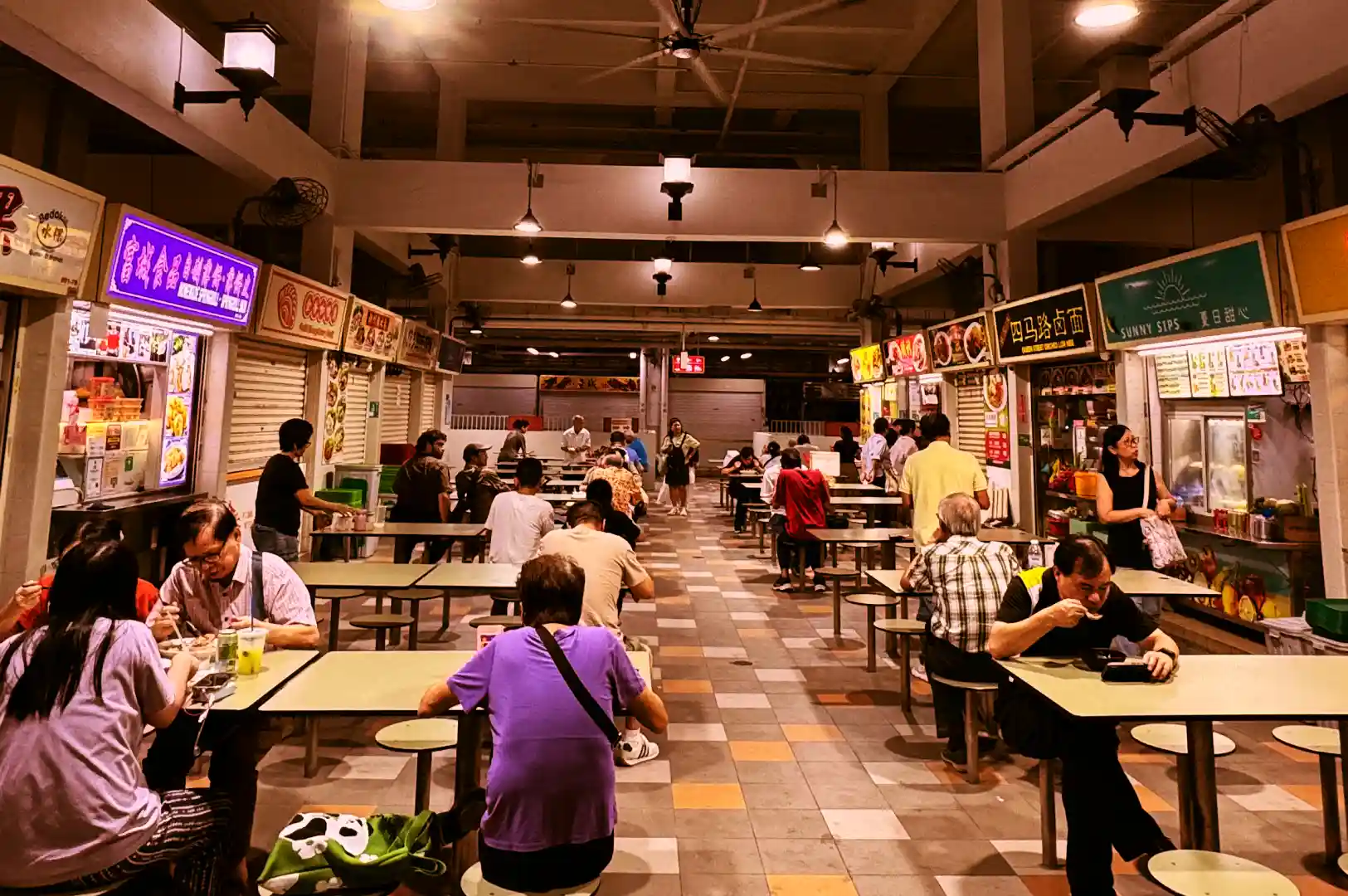
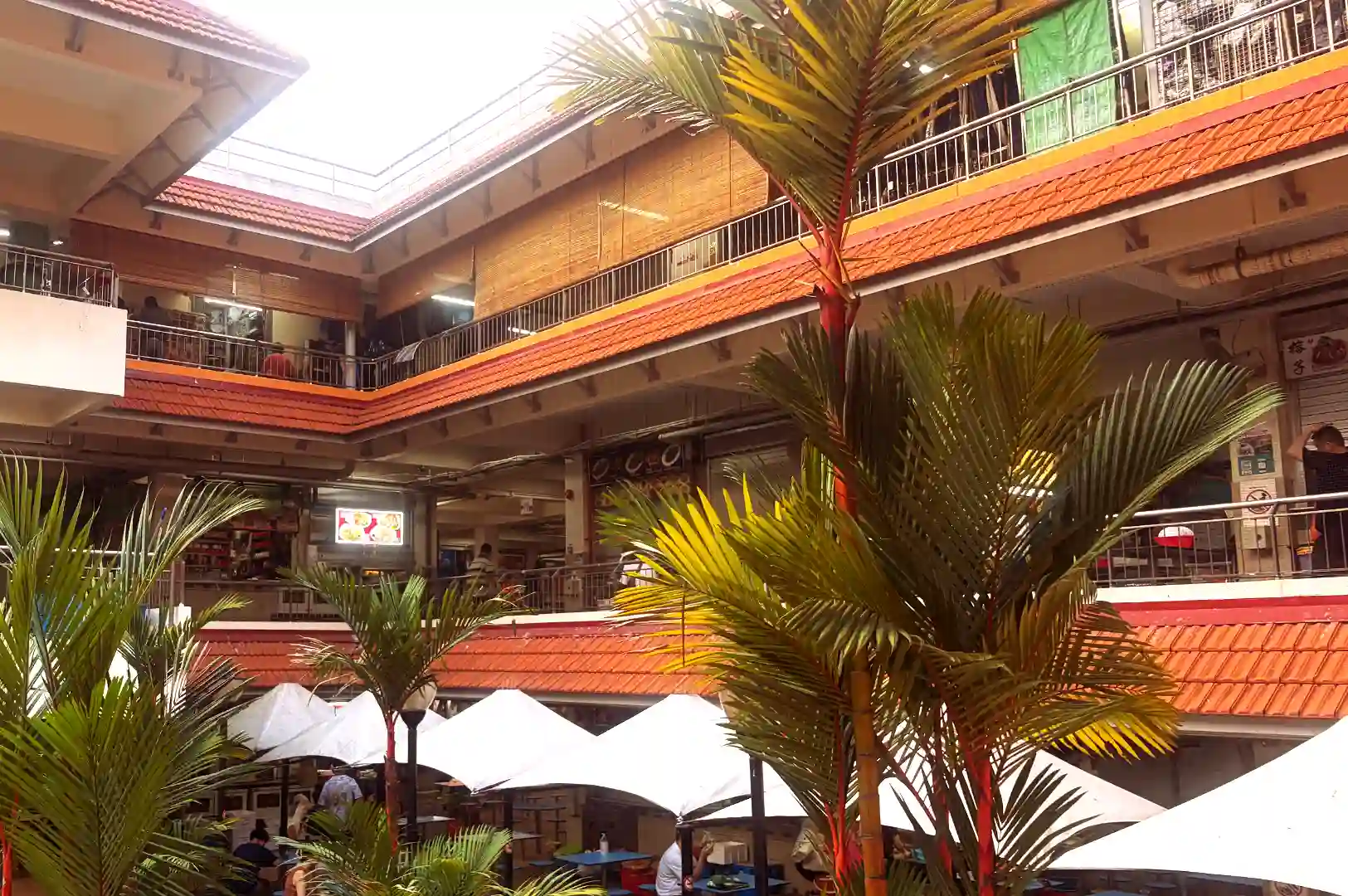
Chinatown Complex Food Centre is organised around a large central field of tables, with rows of stalls extending along the surrounding edges. From the upper levels, the arrangement becomes almost diagrammatic: lines of movement, clusters of diners, open paths between them.
People enter from different directions and quickly disappear into the larger pattern. A queue gathers at one stall while another table is being cleared several metres away.
Movement changes when seen from above.
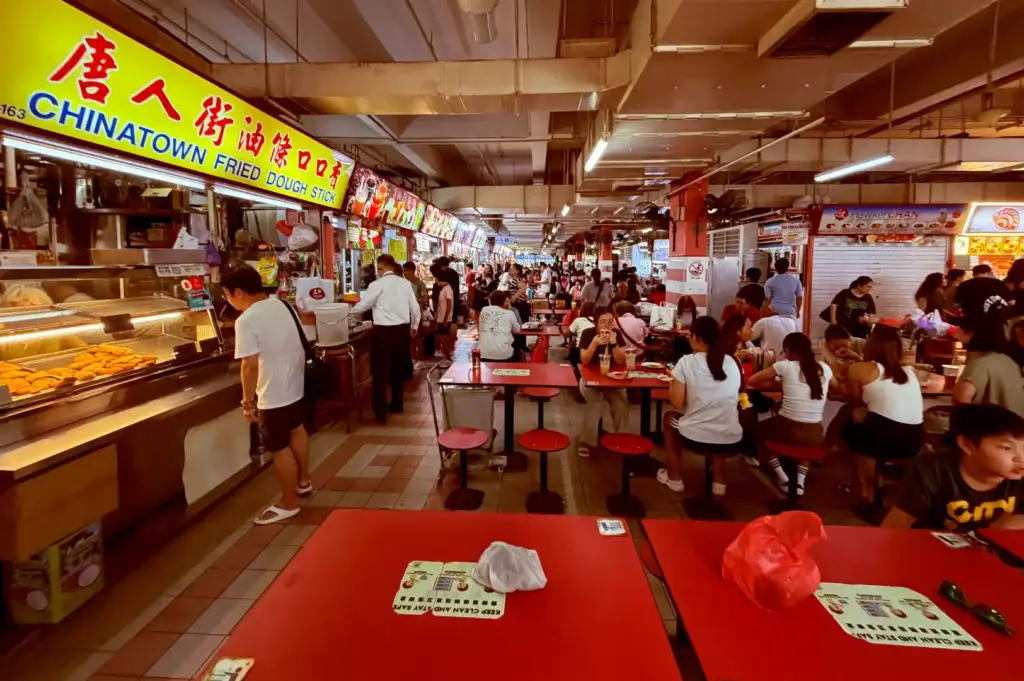
At ground level, each journey feels separate. From the stairs, the paths begin to overlap. Someone carries a tray towards an open table. Another person walks back towards the counters. A chair moves slightly as a diner makes room.
The system is easier to see than the individual action.
The view changes, but the movement remains familiar in another photographic view of daily life here.
The scale also changes the way food appears. Bowls, plates, and trays become small markers within the larger movement of the centre. Eating becomes part of the layout, rather than the centre of the photograph.
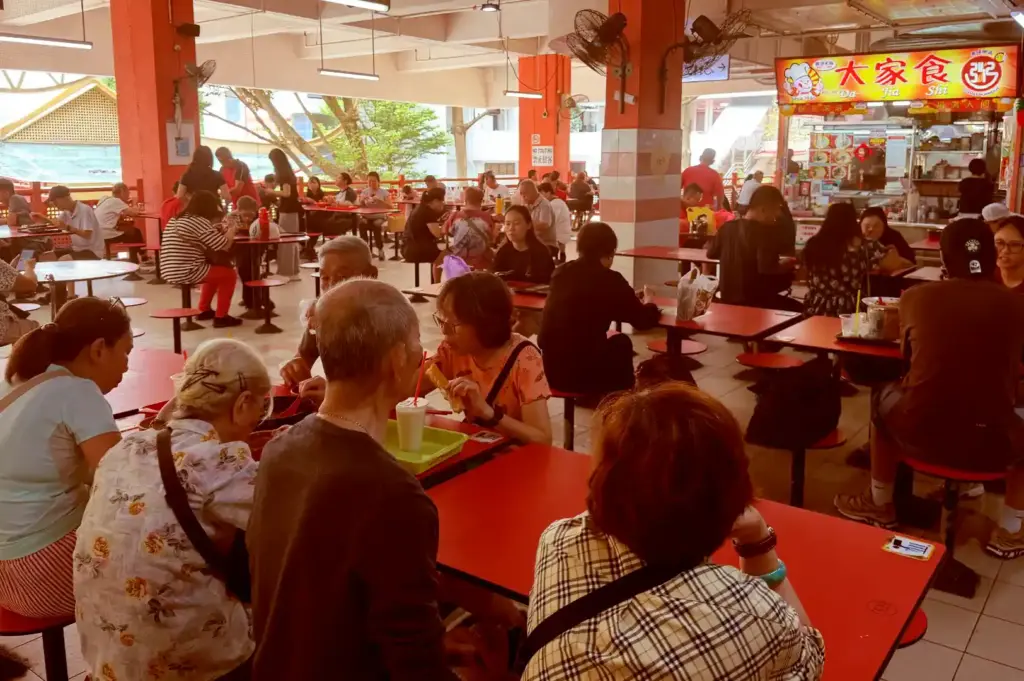
The rows hold their shape while people move through them.
The arrangement remains consistent across the day. What changes is the density. Empty spaces fill. Queues lengthen. Tables clear and return to use.
This wider view recalls the importance of Chinatown Complex as a place built to gather many food stalls and diners into one large shared space. Its scale is not only architectural; it determines how people move, wait, eat, and leave.
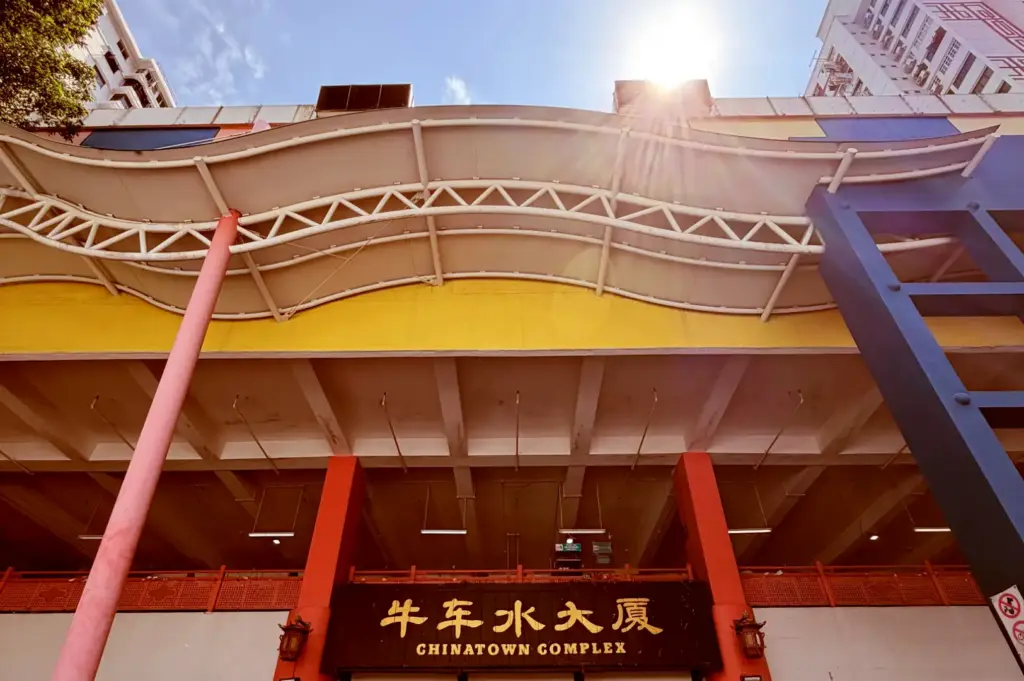
From a distance, many separate meals become one rhythm.
From above, the individual routines remain visible but connected.
A tray carried across the floor. A hand raised to signal a seat. A table filling slowly.
The centre works because all these small movements can happen at once.