

The last order is not the end of the day.
After the final customer leaves, the stall does not immediately become still. The pace changes, but the work continues. What happens next is quieter and less visible, yet it is just as important as the preparation that happens before opening.
The first task is often returning everything to its place.
Tools are washed and placed back where they belong. Containers are emptied, cleaned, and arranged for the next morning. Surfaces that carried hours of preparation are wiped down until they are ready to begin again.
Nothing is left by accident.
A stall that appears simple during operating hours depends on a careful reset after closing. The arrangement of ingredients, the position of equipment, and the cleanliness of each surface all contribute to how the next day begins.
This is not simply cleaning.
It is preparation for another cycle.

During the day, the workspace is constantly changing. Ingredients move. Tools travel between stations. Orders interrupt the original arrangement. By evening, the stallholder begins reversing that movement, bringing the workspace back to a familiar starting point.
The reset reveals the structure behind the stall.
Every item has a reason for being there. Every surface has a purpose. The process of closing reflects the same discipline seen during service, only at a slower pace.
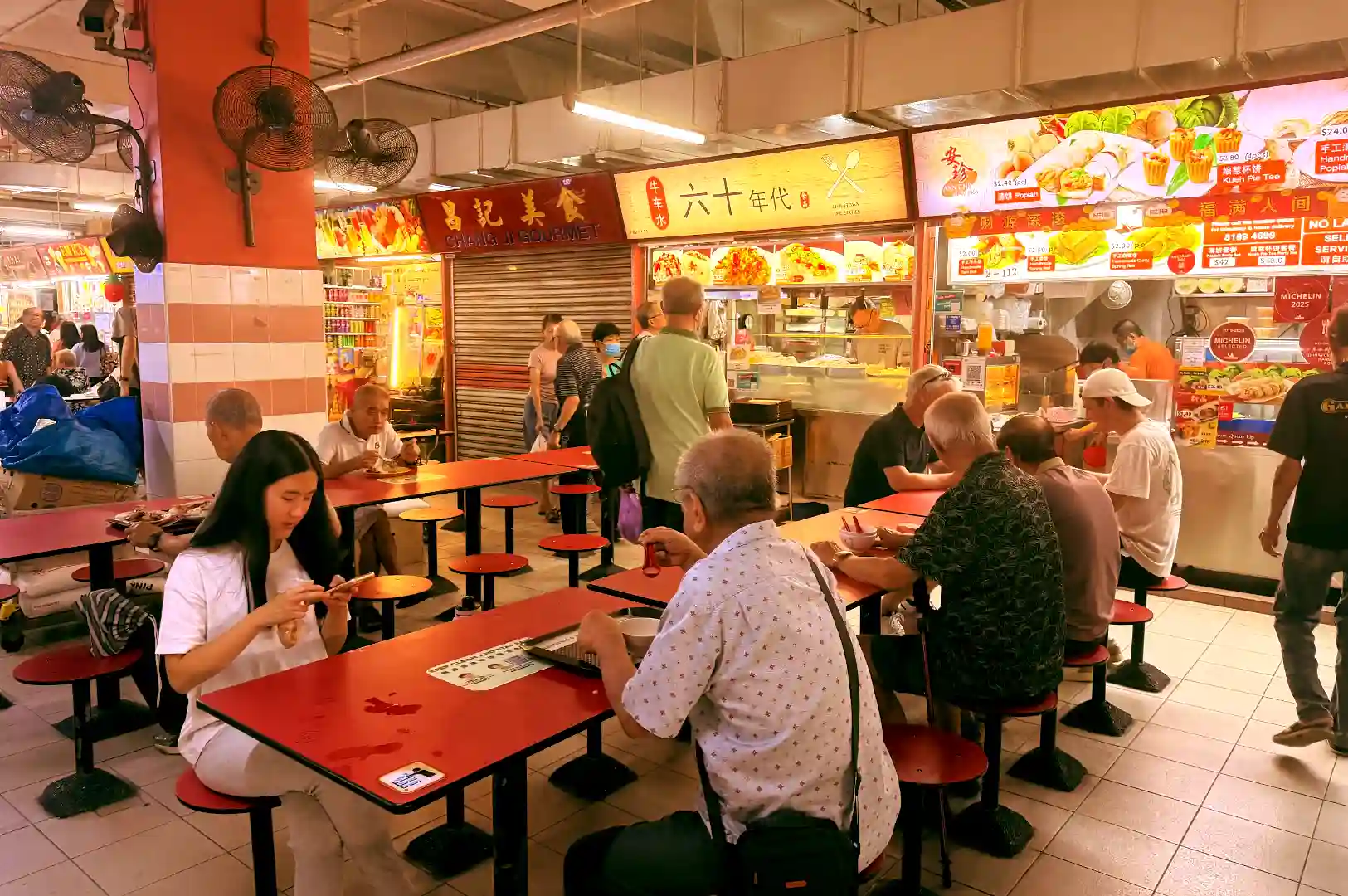
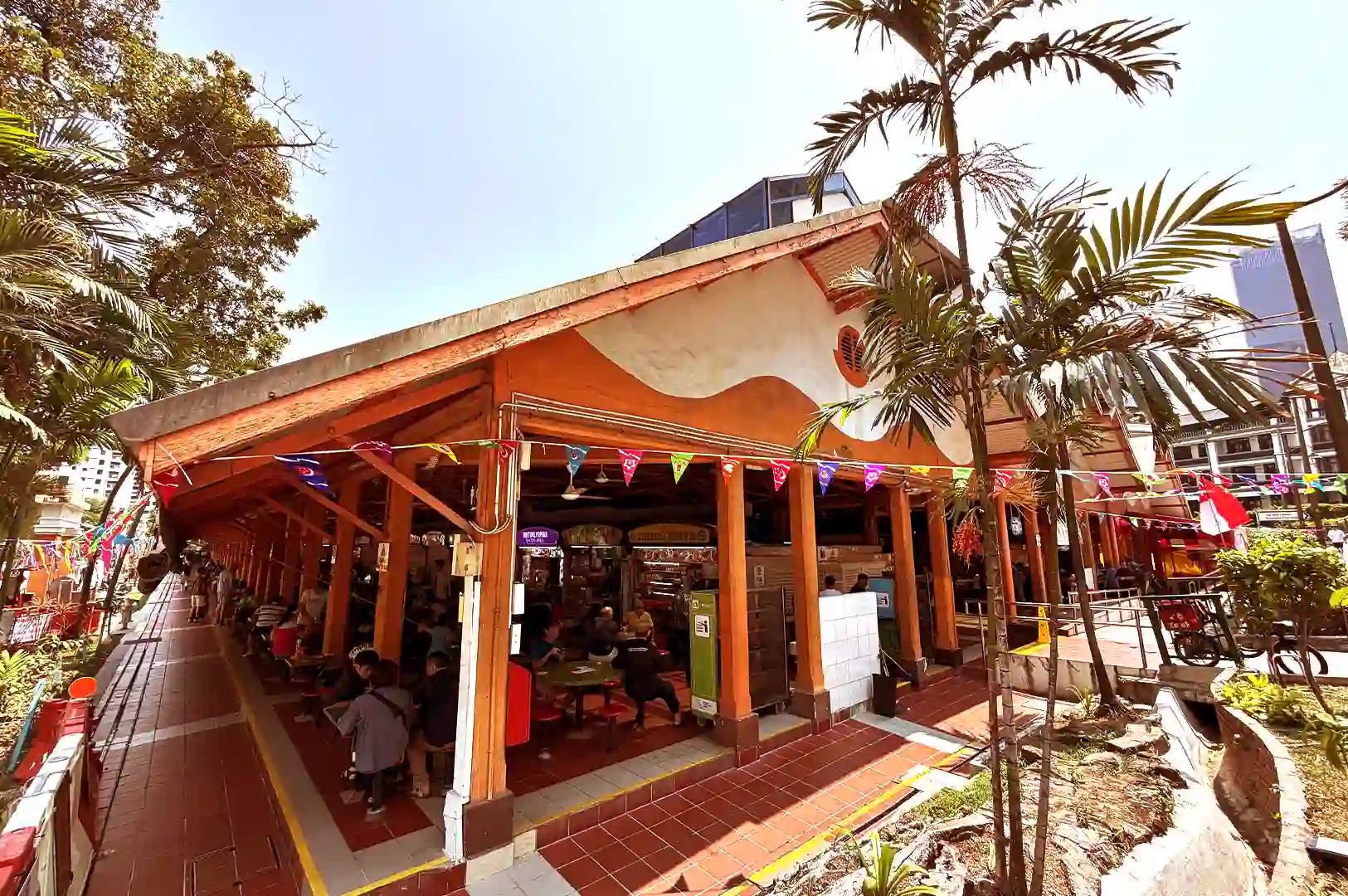
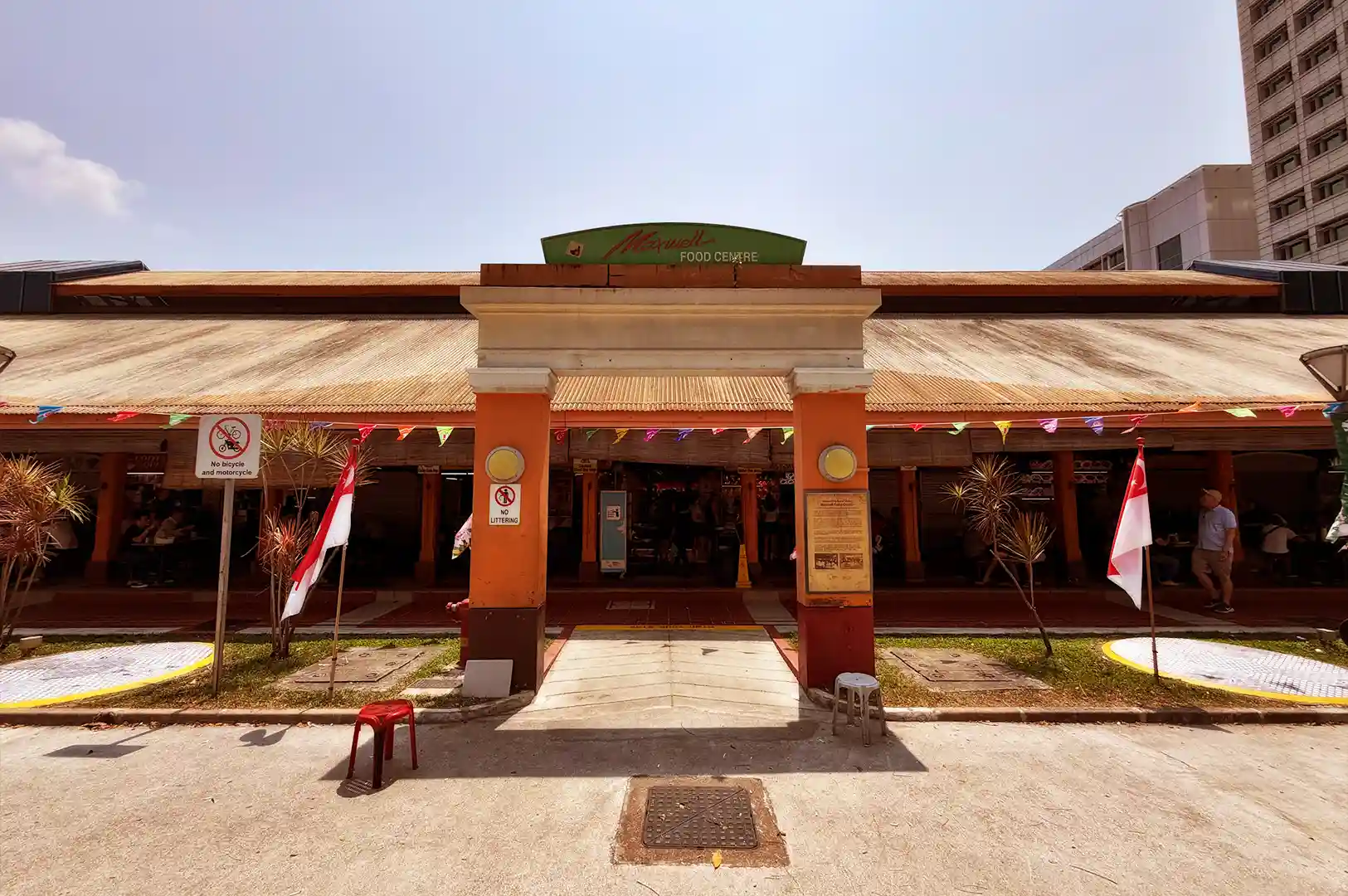
This is similar to what can be observed in Maxwell Food Centre: Morning Cycles Held Steady, where the focus is on how preparation creates the foundation for another day of service. The quiet routines before customers arrive show the same attention to order and repetition that continues long after the stall closes.
What stands out is the connection between ending and beginning.
The stallholder is not simply finishing today’s work. They are creating the conditions for tomorrow’s first order.
The cleaned counter, the arranged tools, and the prepared workspace are all part of the same continuous system.
When the lights finally go off, the stall is not inactive.
It is waiting.
Ready to return to the same sequence when morning arrives.