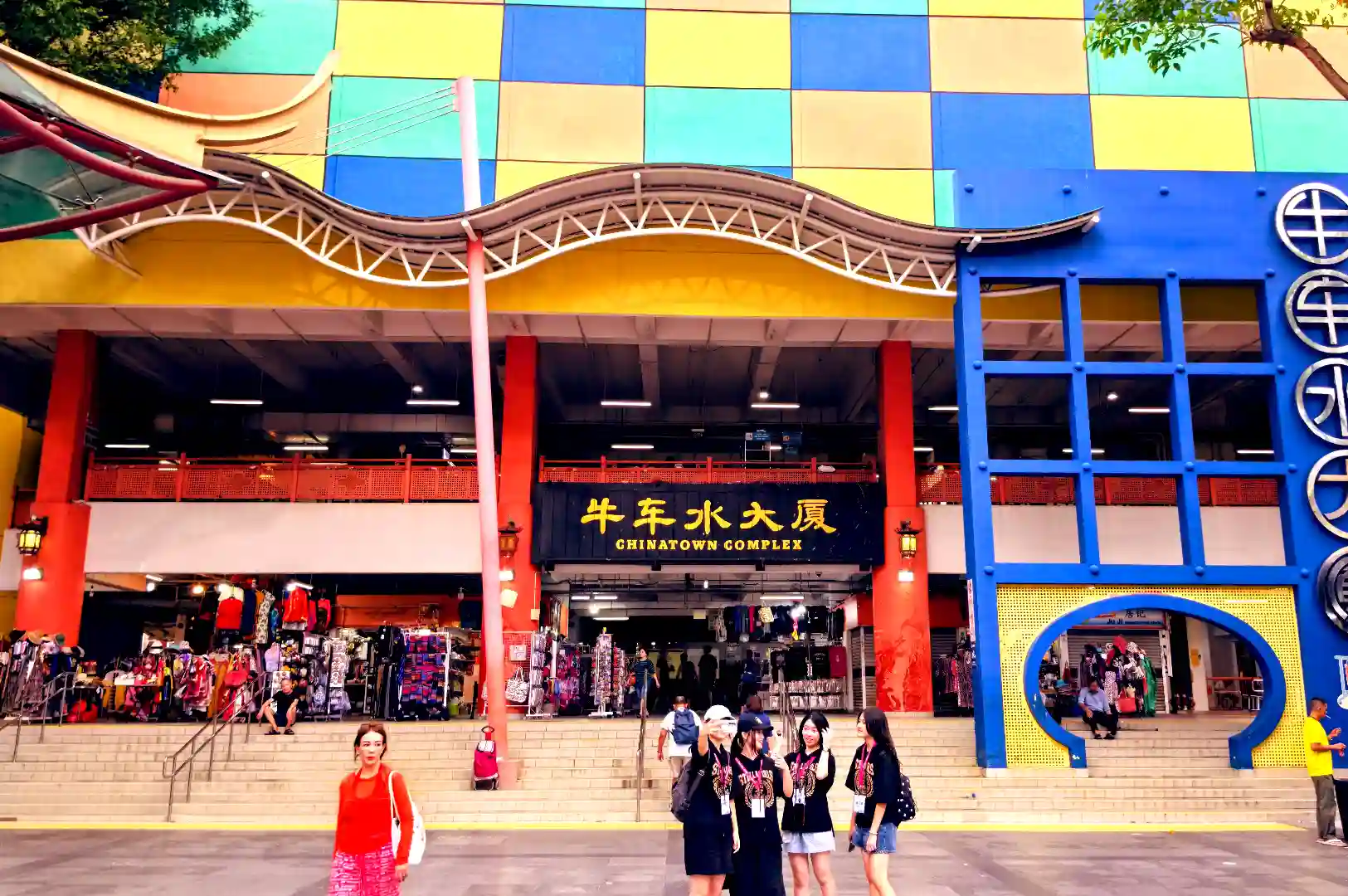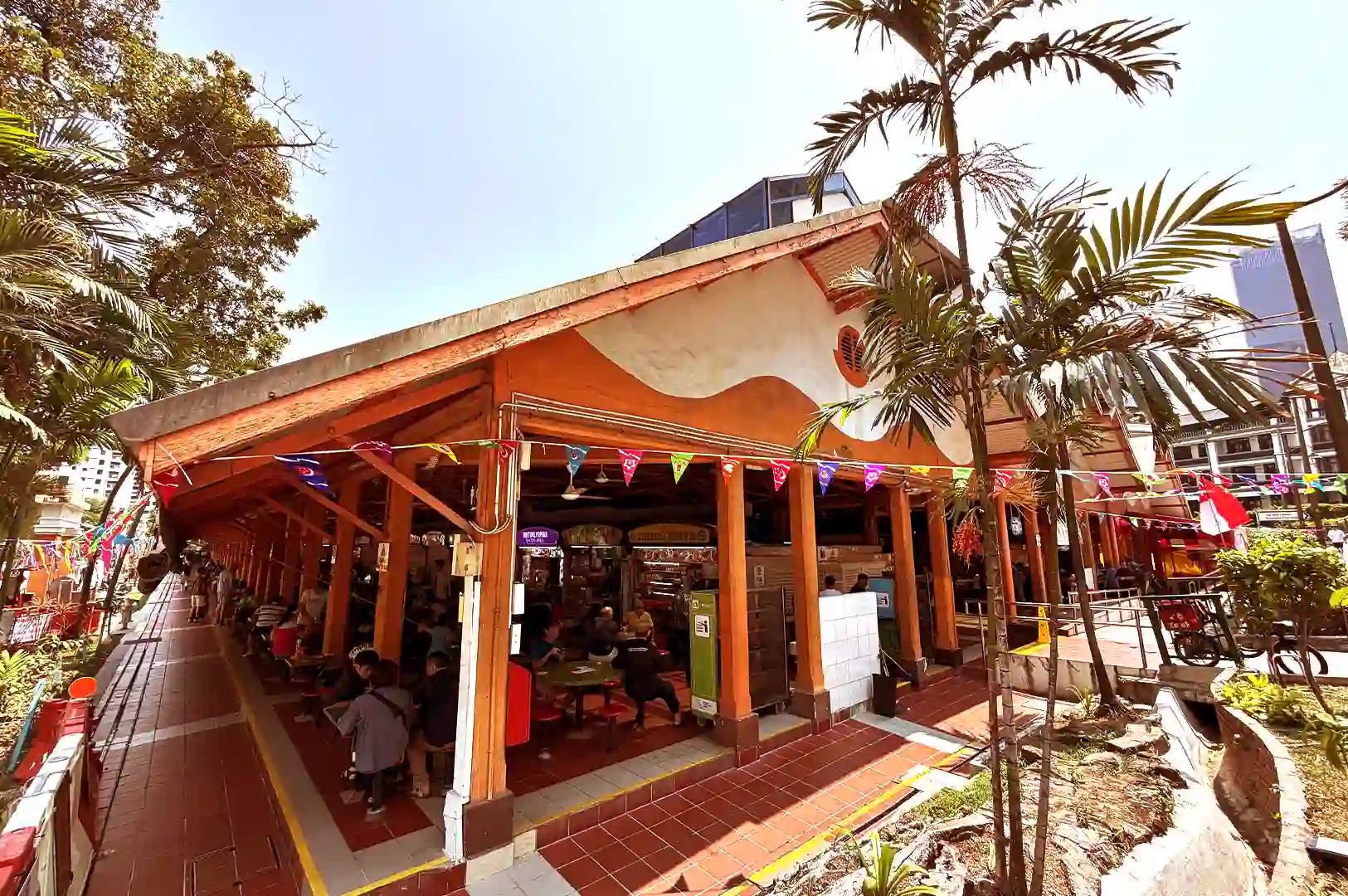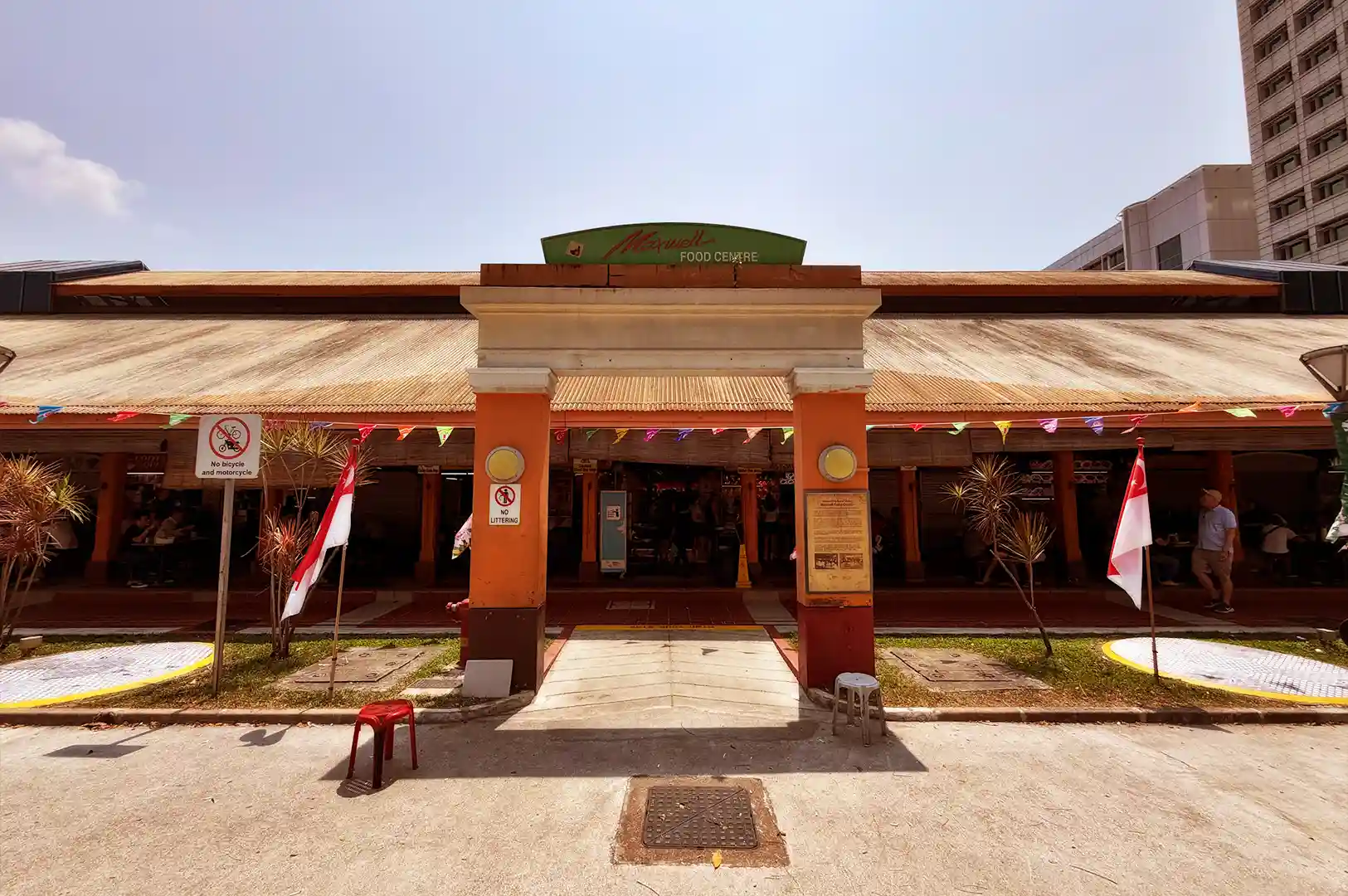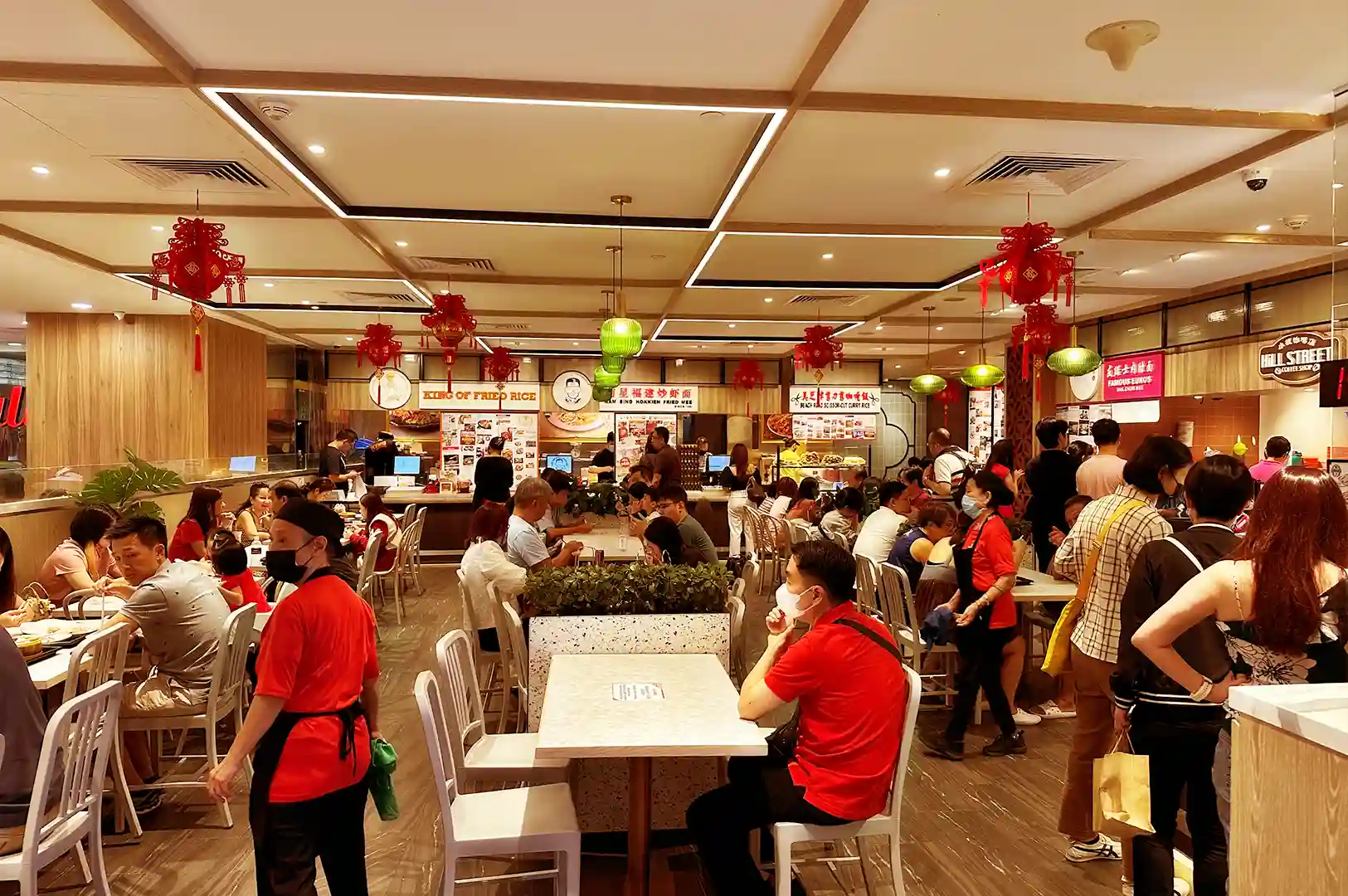

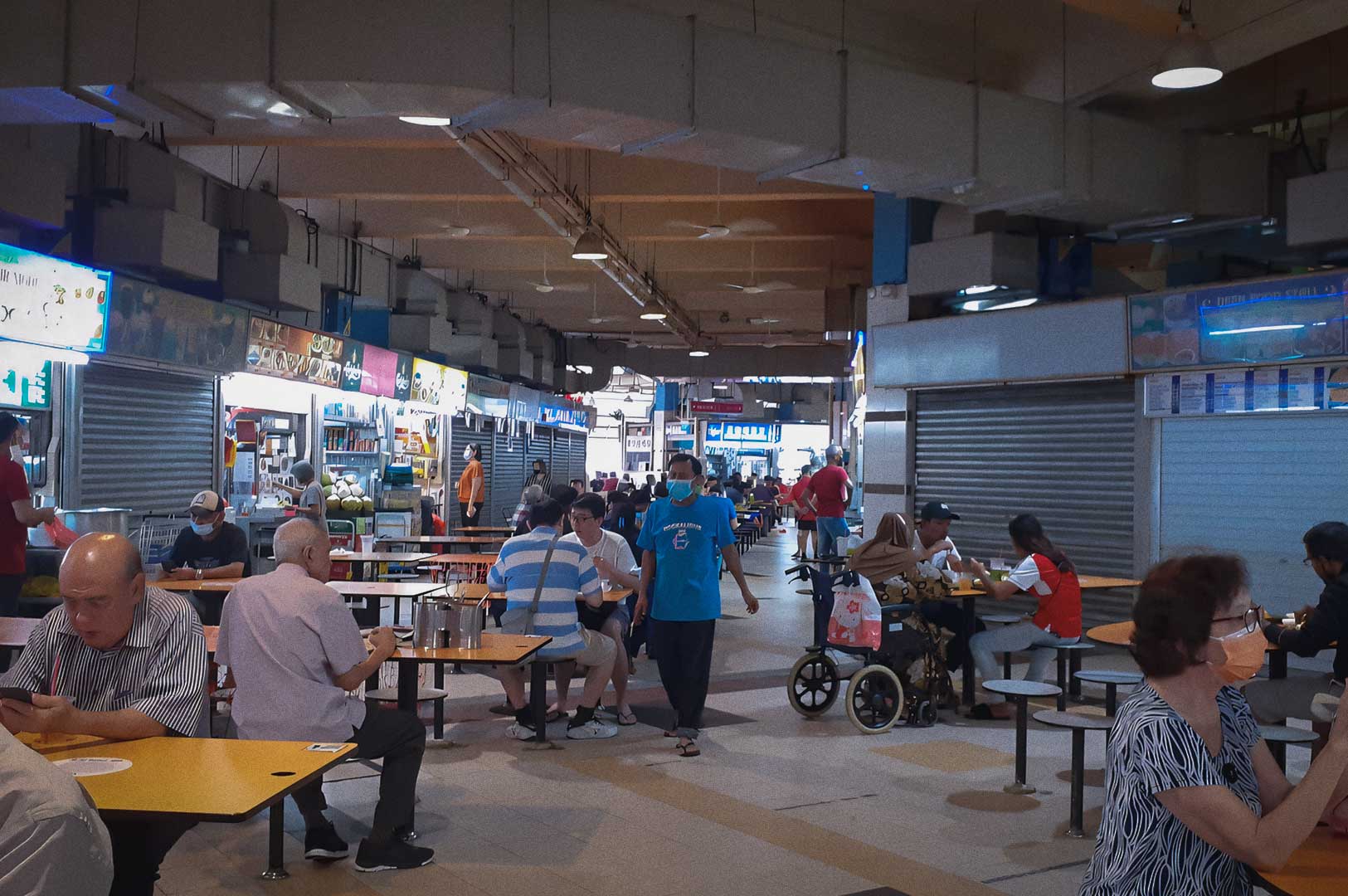
The approach stays porous; movement begins before the threshold.
Tekka Centre operates on overlap. Deliveries edge in as shutters lift. Diners arrive in short waves, threading between stalls that open at different tempos. The building holds this staggered start without pause; circulation lanes stay clear, sightlines long, exits readable.
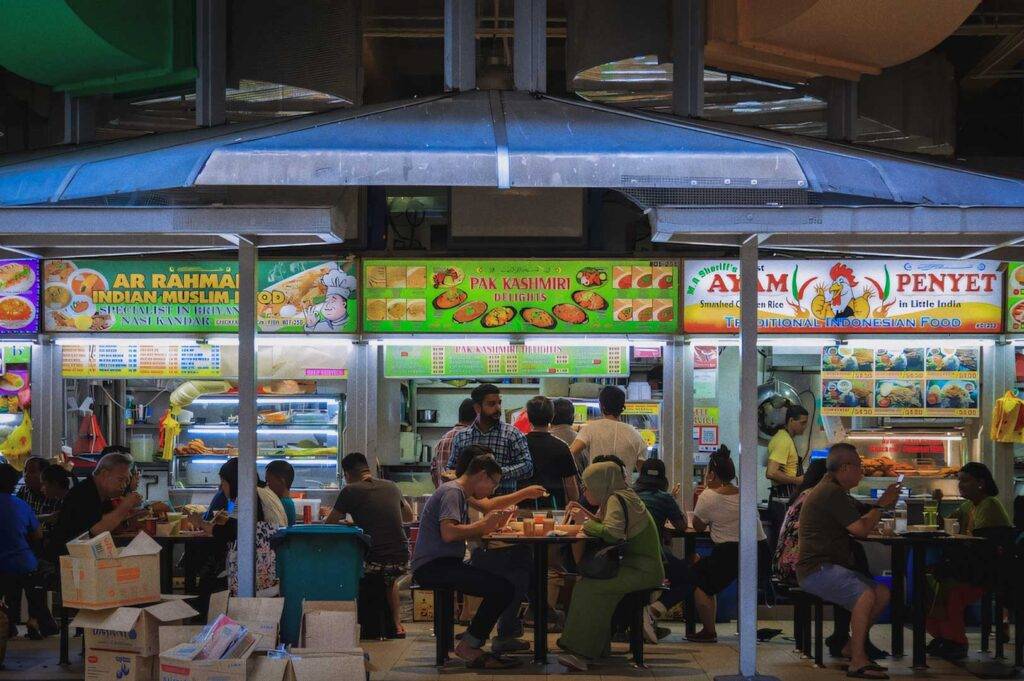
Alignment does the work; queues settle where the floor allows.
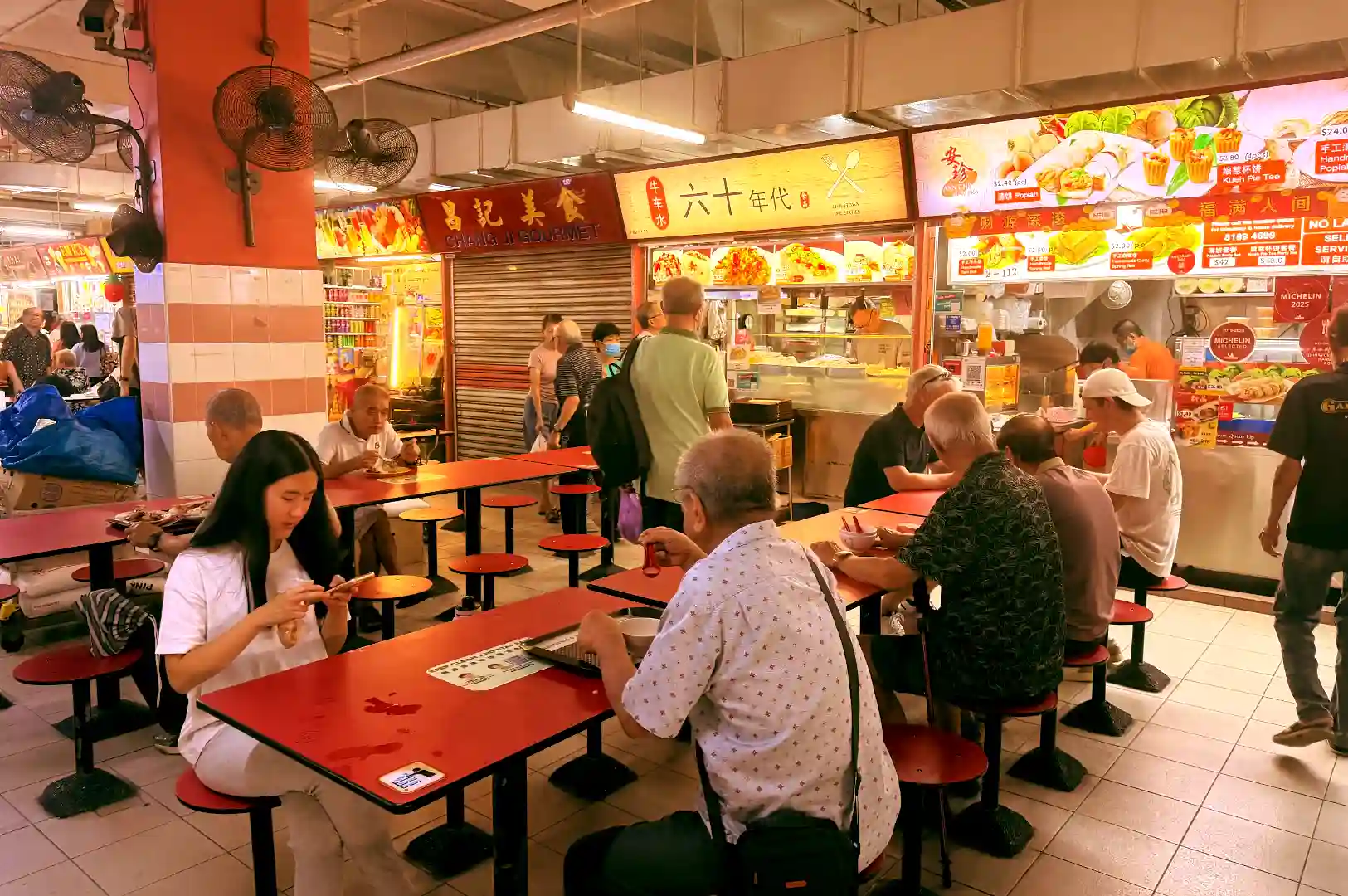
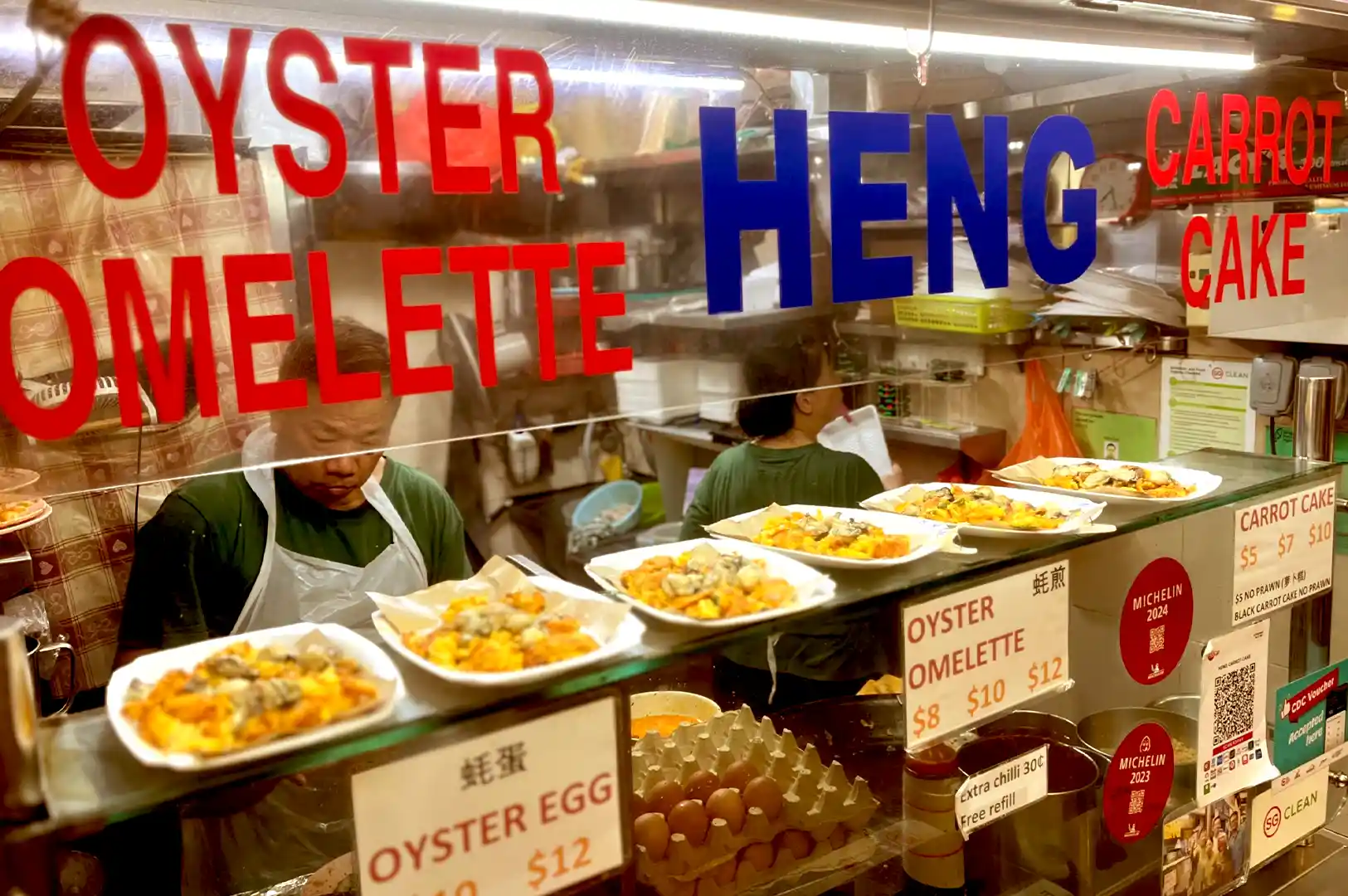
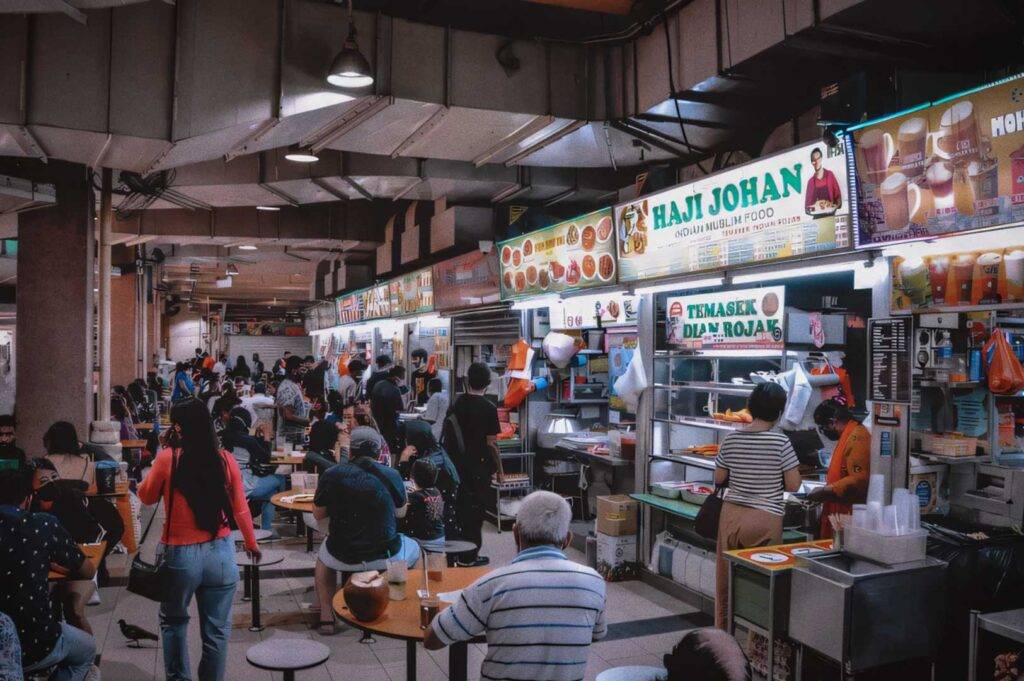
Inside, the plan is repetitive by design. Stall fronts align to a shared depth, allowing queues to form without obstructing passage. Work surfaces face outward; preparation remains visible but contained. Utensils hang within arm’s reach. Trays move in one direction—collect, eat, return—without instruction. The system teaches itself through use.
Fish ball noodles appear as part of the rhythm rather than a focal point. Bowls pass from counter to table, steam dissipating as they cross the aisle. Condiments are reached for, replaced, reached for again. Nothing lingers longer than needed.
Pauses are brief; reset follows.
Seating is dense but legible. Tables are shared without negotiation. Cleaning cycles between peaks are efficient: wipe, stack, reopen. Sound levels rise and fall predictably, shaped by lunch hours and prayer times nearby.
Tekka Centre doesn’t ask for attention. It maintains throughput. Its clarity comes from repetition held steady across the day, allowing many routines to run at once without friction.