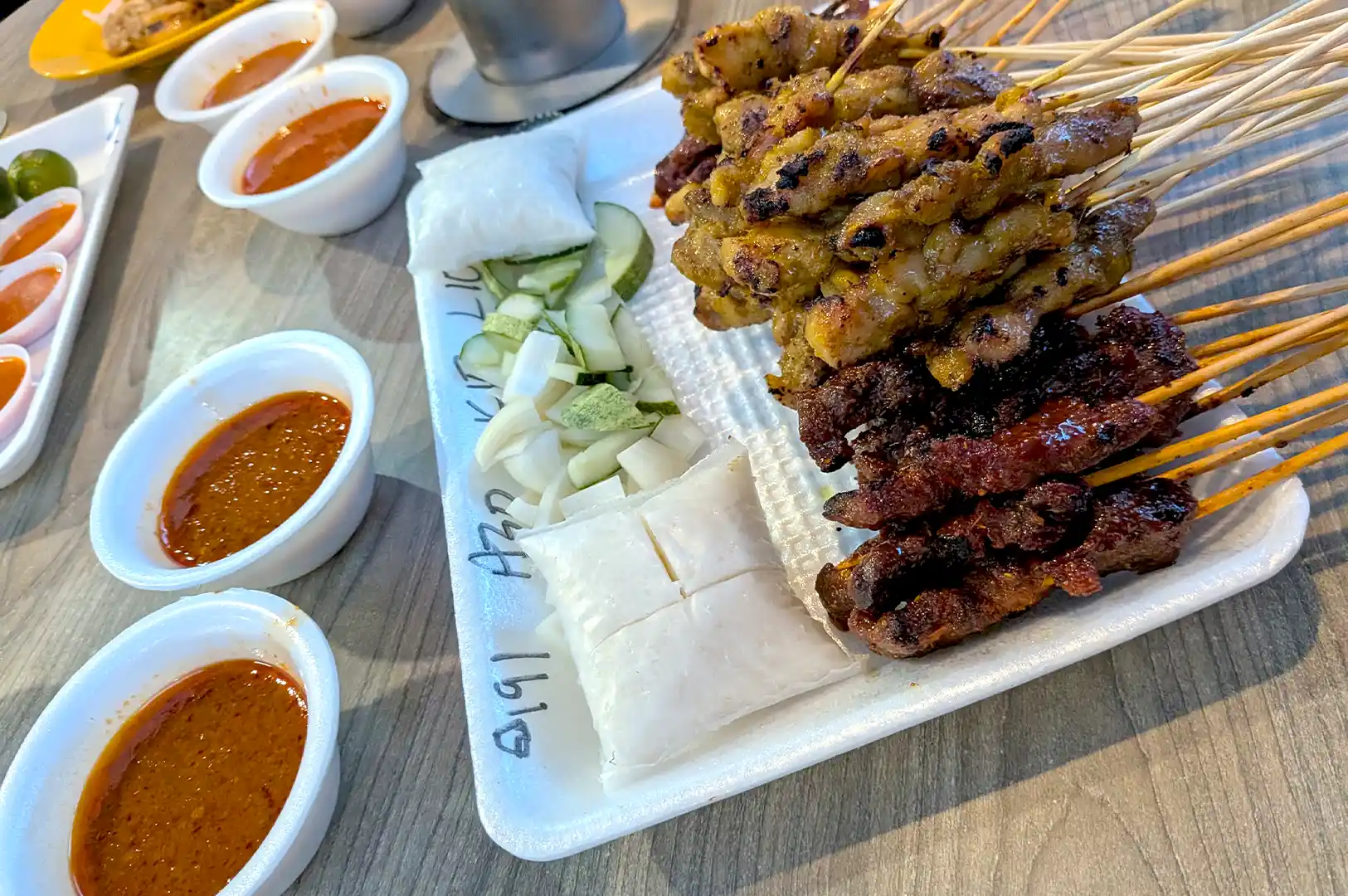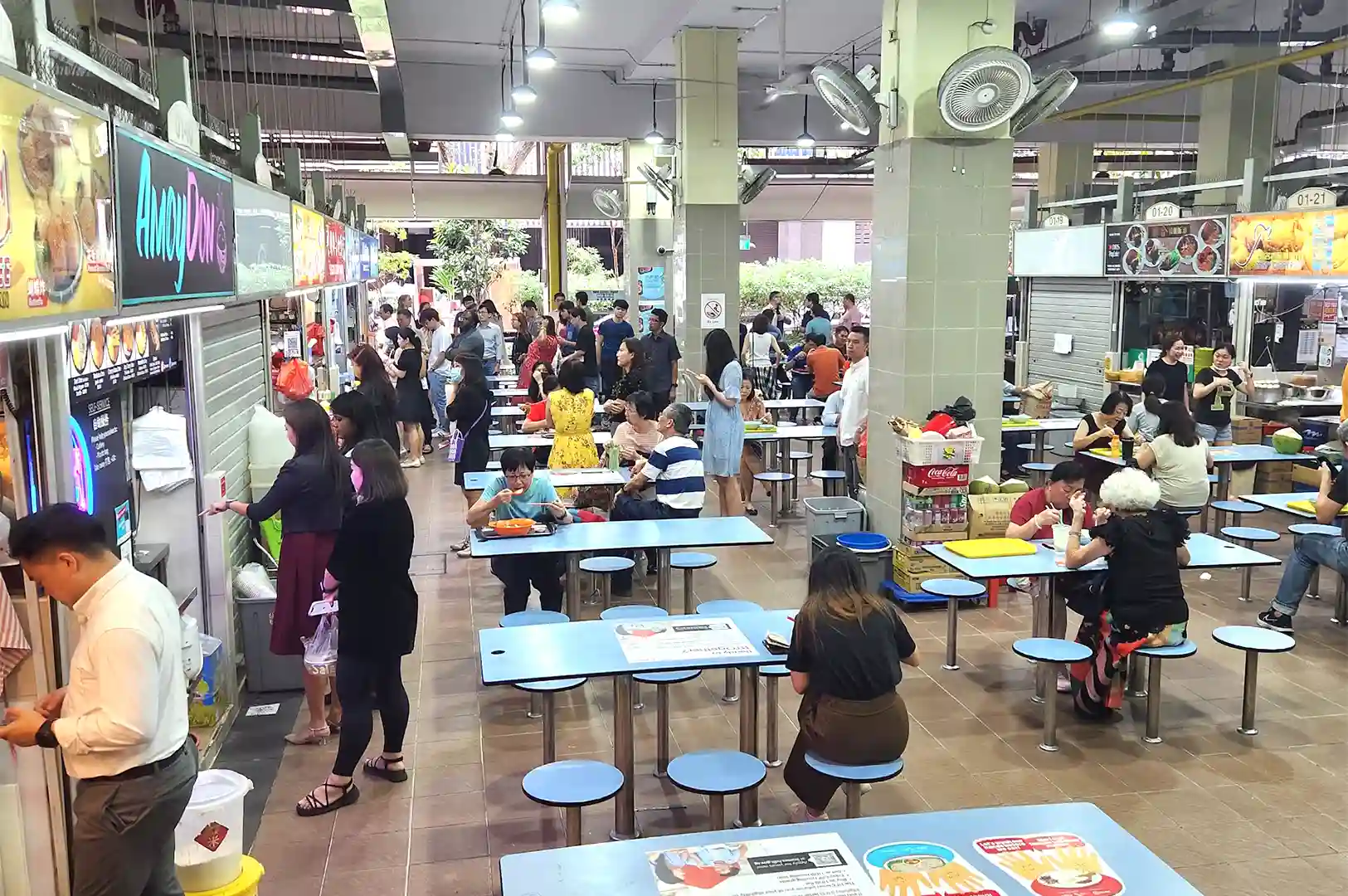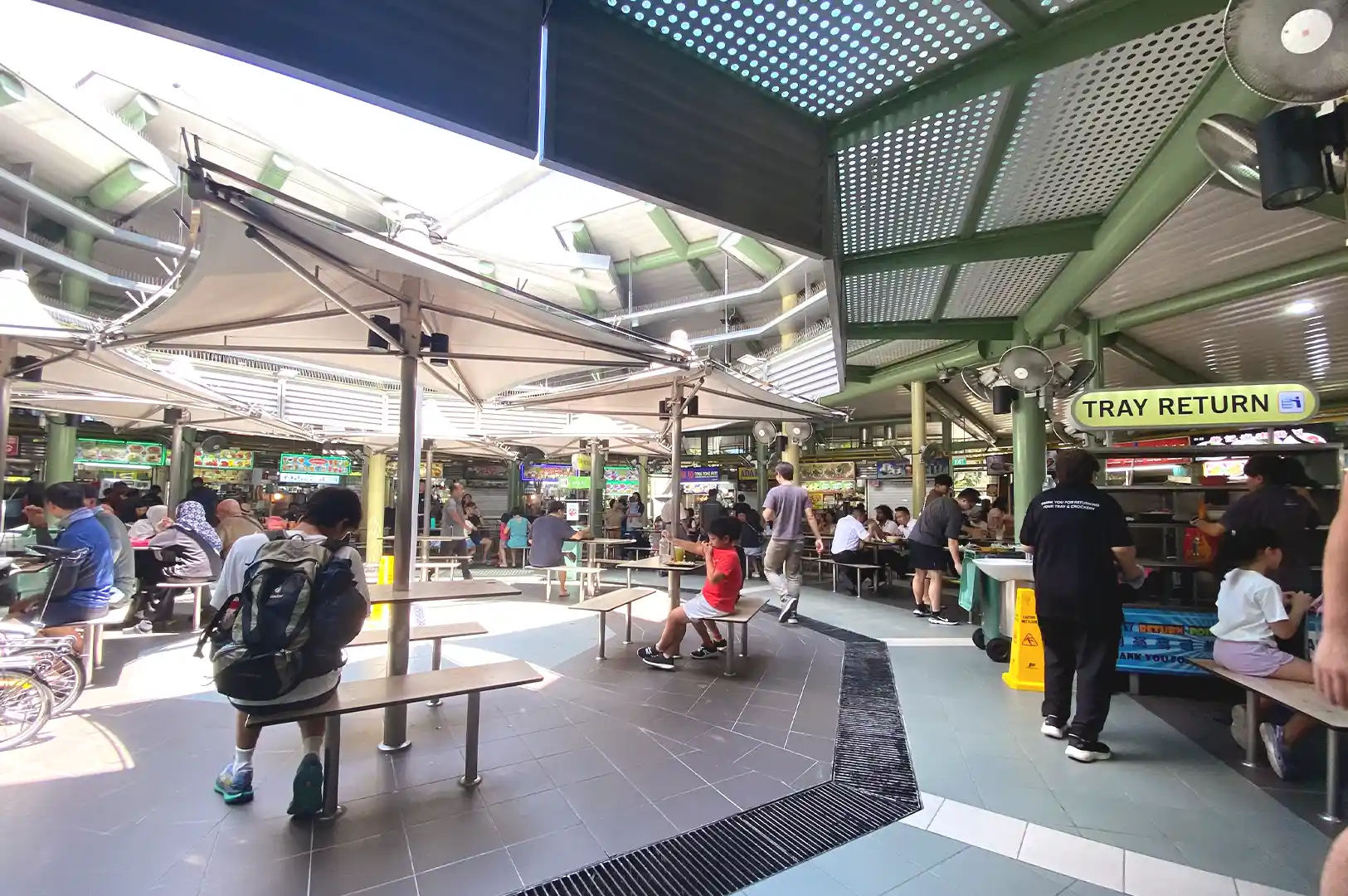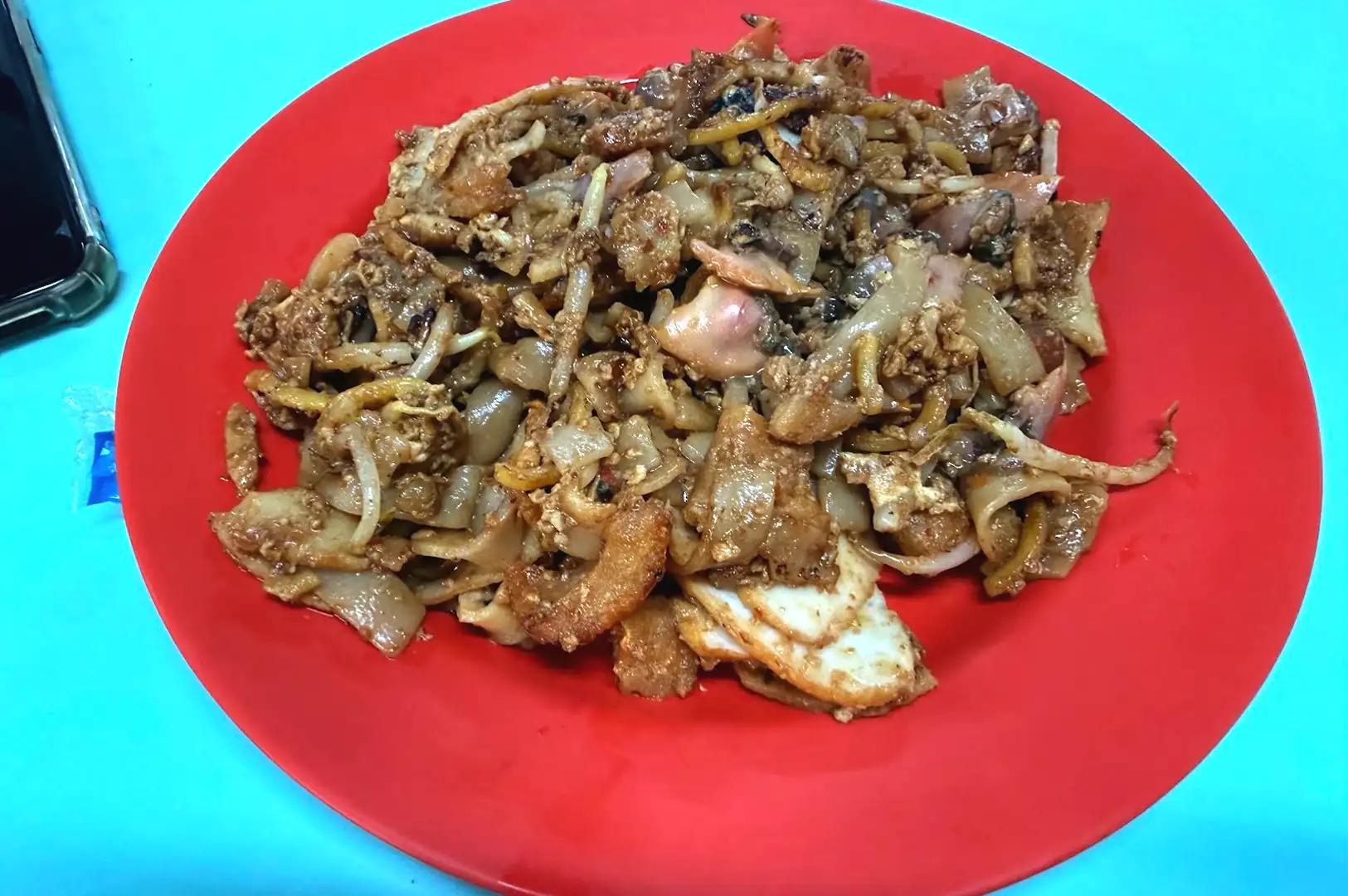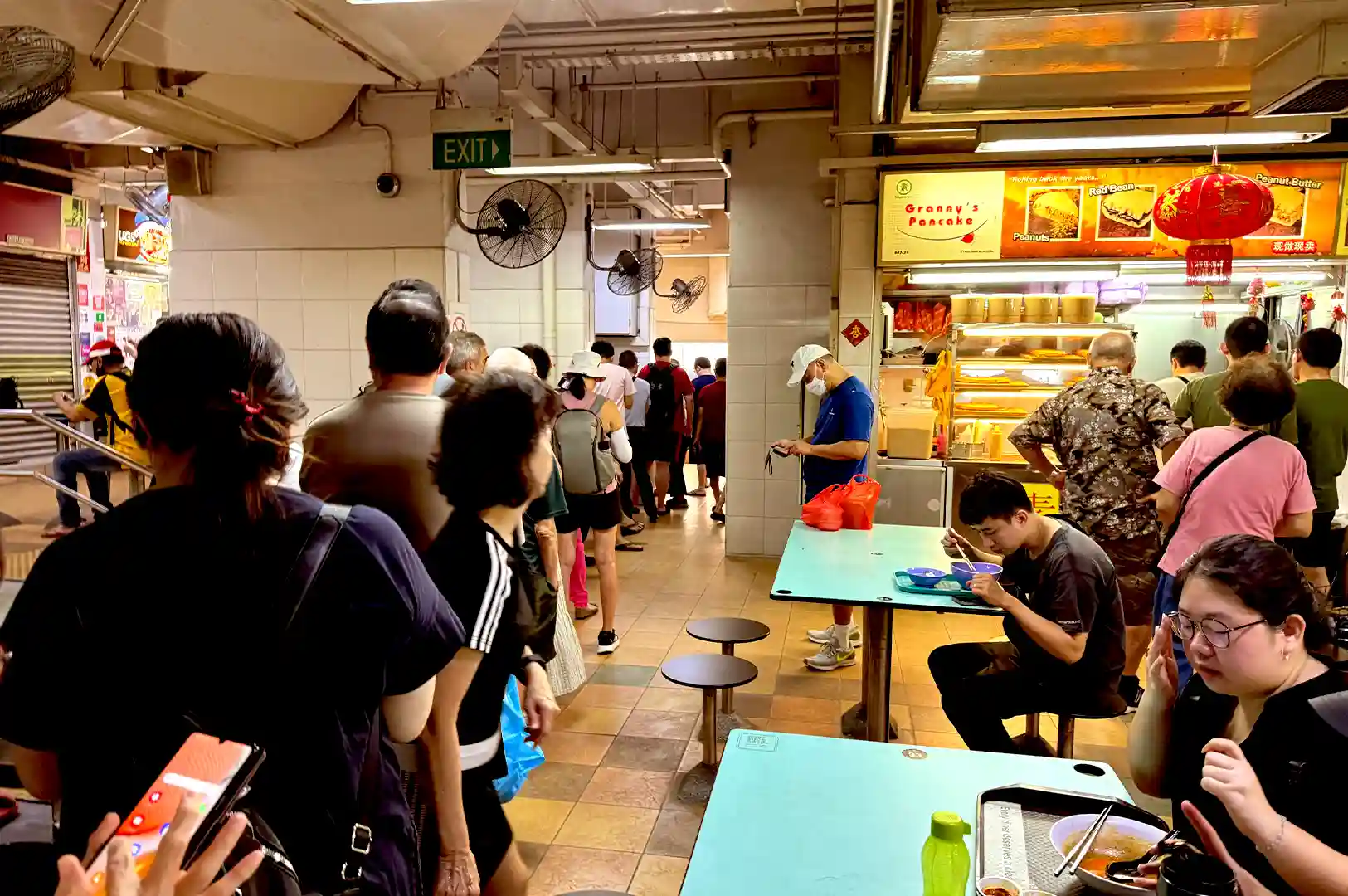

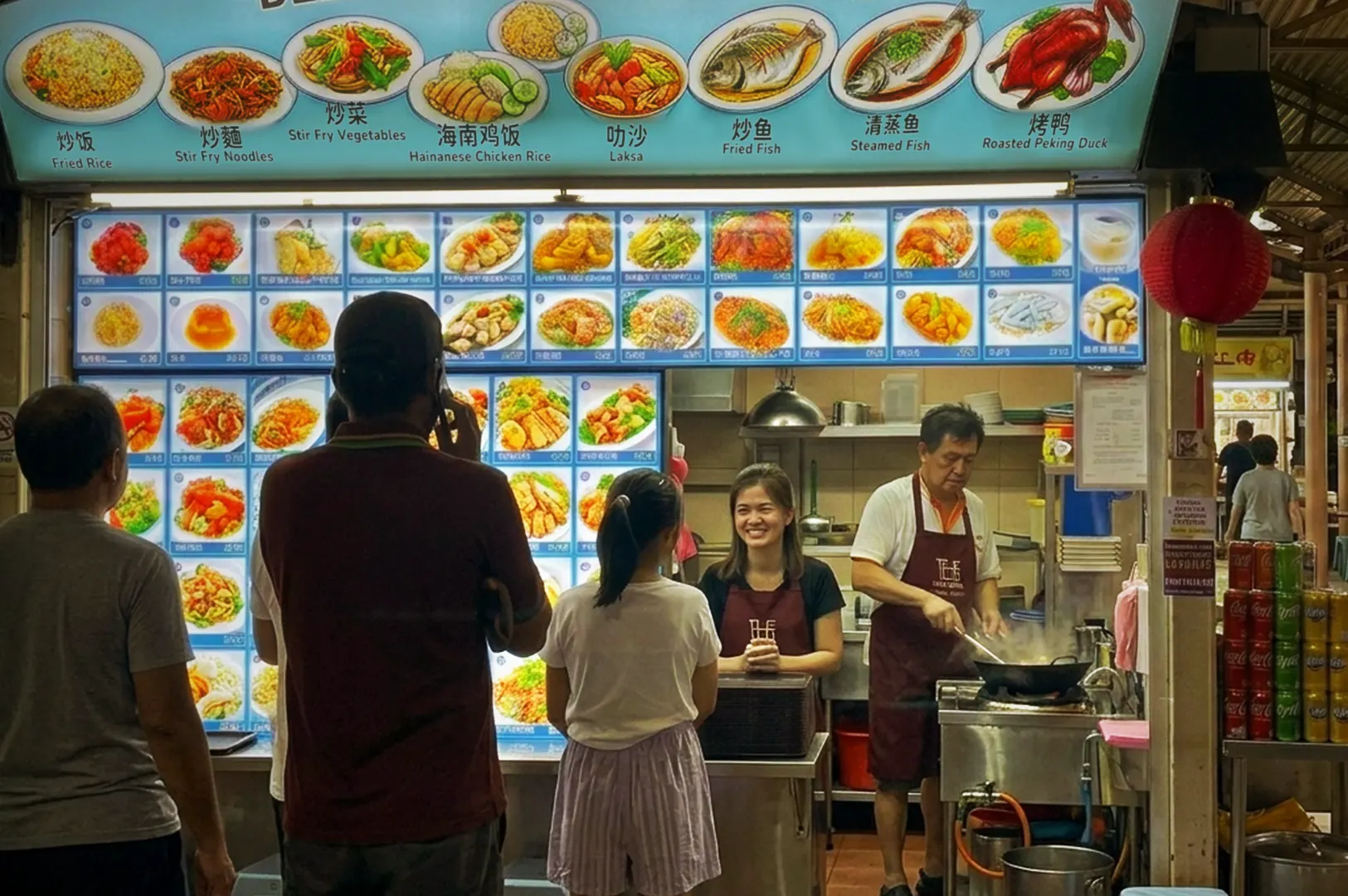
We arrive and choose not to announce ourselves.
The camera stays lowered at first. Not out of hesitation, but as a way of allowing the stall to continue as it would without us. The space already has its own pace, its own structure. Entering too quickly—moving closer, asking questions, shifting positions—can change that balance before it has revealed itself.
So we wait.
The first few minutes are not for photographing. They are for understanding distance. How far we can stand without interrupting movement. Where the line of sight sits without crossing into the workflow. The aim is not invisibility, but neutrality—being present without becoming part of the process.
When we begin, we do so from where nothing needs to adjust.
The hands continue at their usual speed. The tools remain where they are. Orders are called, prepared, completed. If the stall alters because of us—if a glance lingers, if a motion hesitates—we step back. The image is secondary to the condition in which it is taken.
We do not direct.
There are no requests to repeat a gesture, no attempt to isolate a moment. What we capture is what occurs on its own. The frame is built around what is already happening, not constructed to create something new. In this way, the photograph becomes a record, not an intervention.
Over time, the stall begins to ignore us.
This is when the images become clearer. Not visually, but structurally. Movements return to their natural pace. The workflow settles back into its original rhythm. What we see then is closer to how the stall exists without observation.
We leave without marking our exit.
No final shot staged to conclude the sequence. No interaction to signal that the process is complete. The stall continues, unchanged by our presence, and that is the condition we aim to preserve.
If this way of observing feels familiar, you might find yourself drawn to moments where presence becomes quieter over time. In Maxwell Seen Slowly: Five Stalls We Keep Returning To, we revisit the same spaces without altering them, allowing repetition and distance to reveal what persists across visits.
What remains is not the photograph alone, but the assurance that nothing had to shift for it to exist.