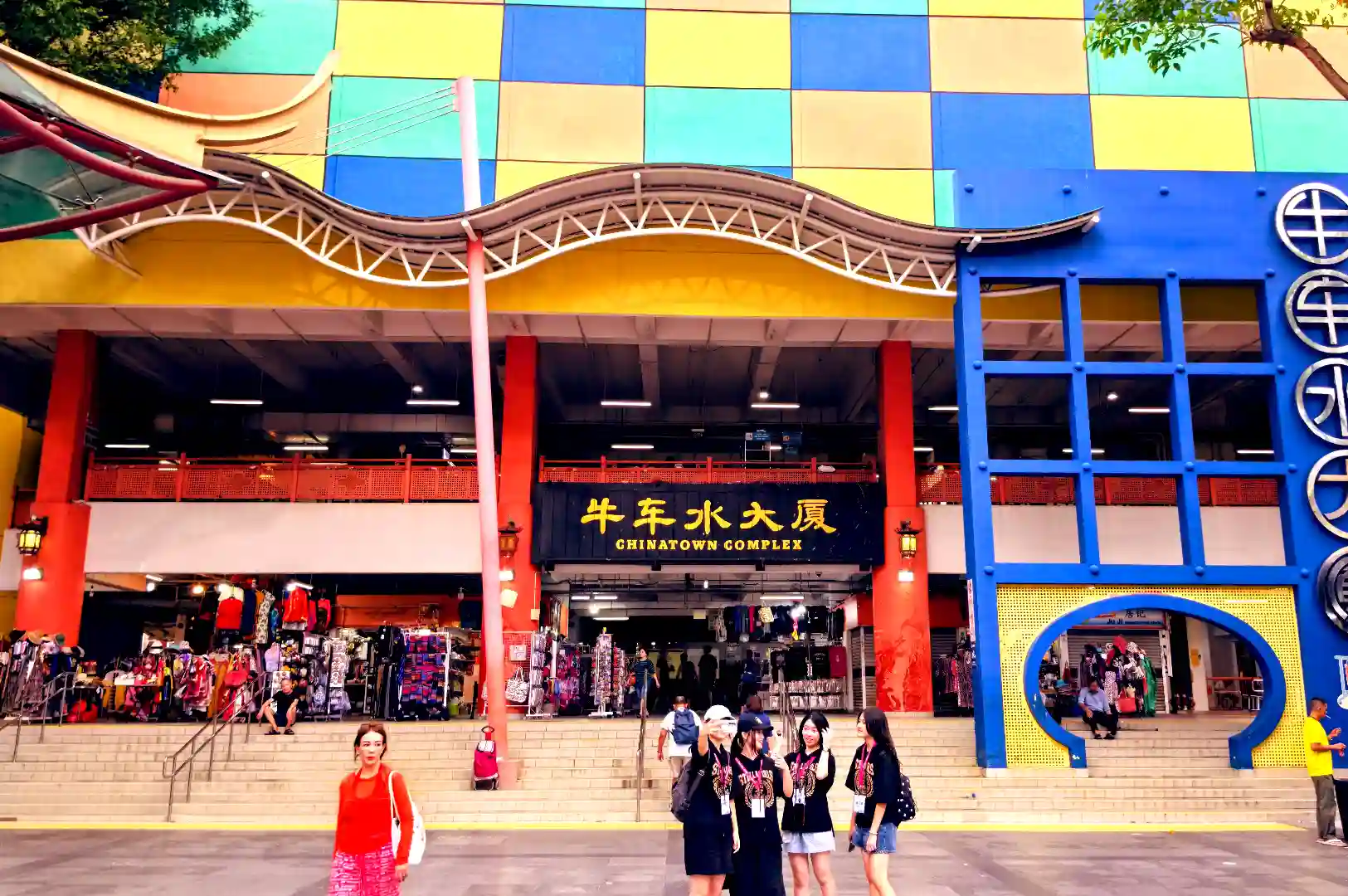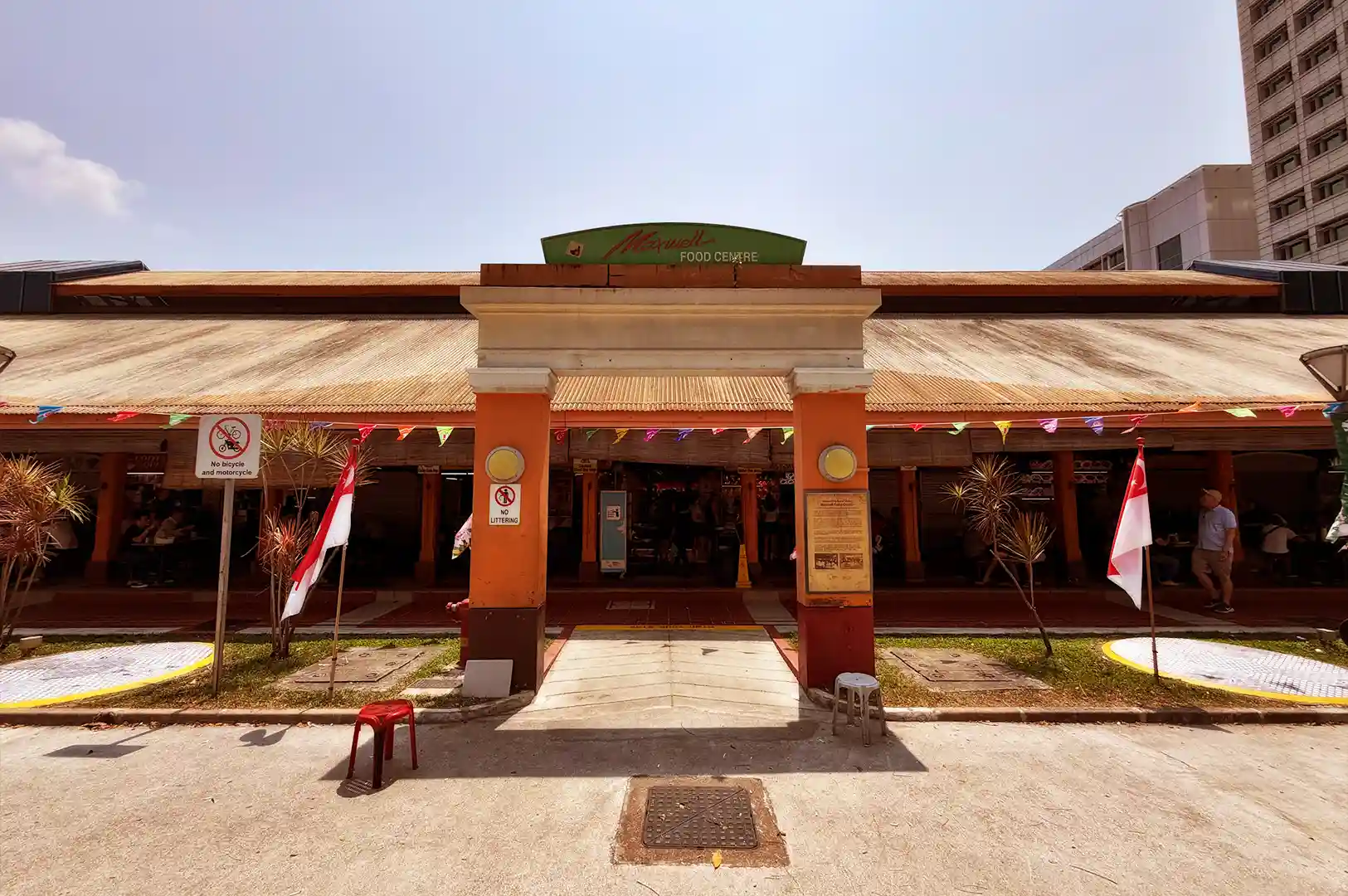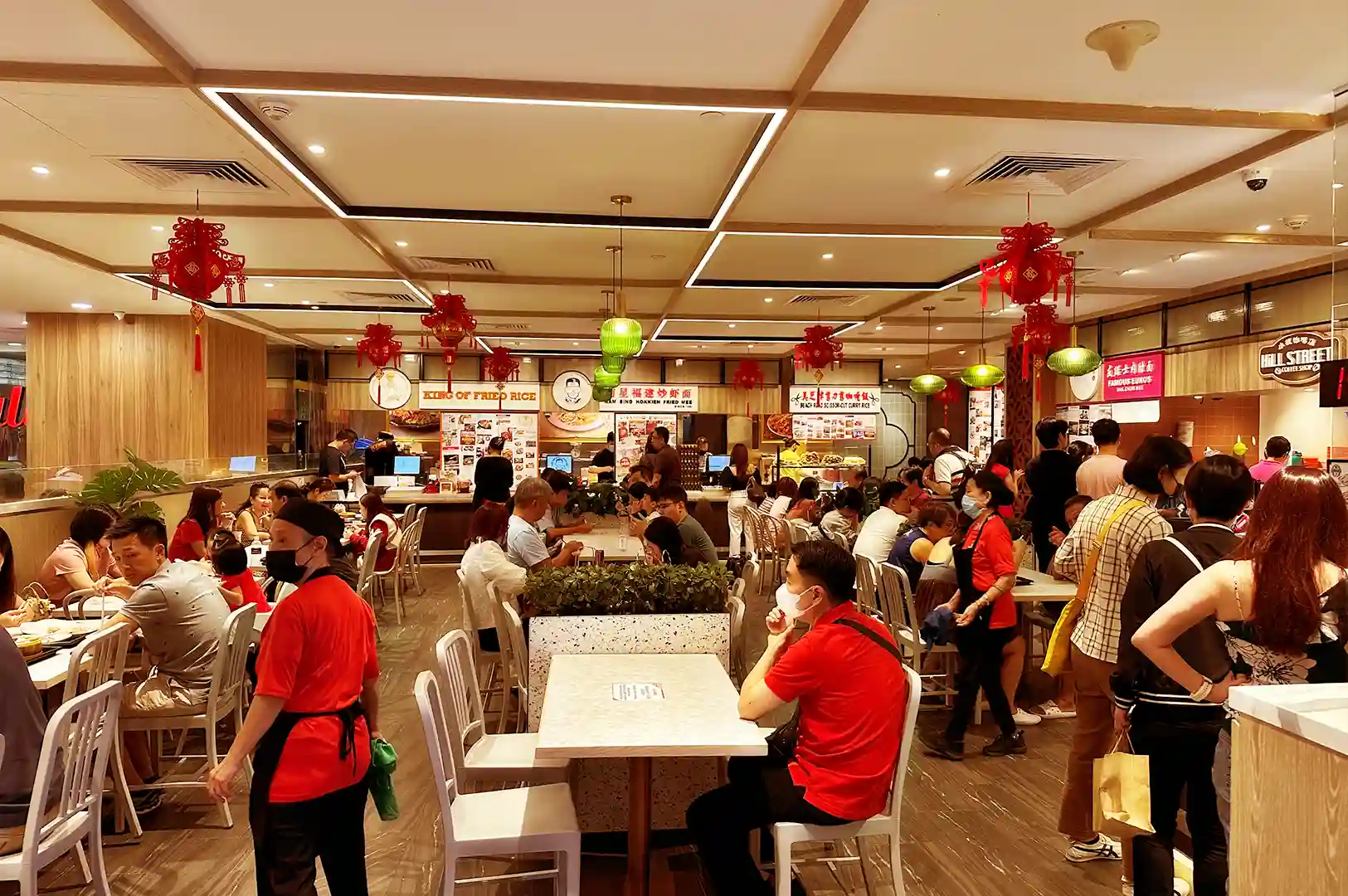

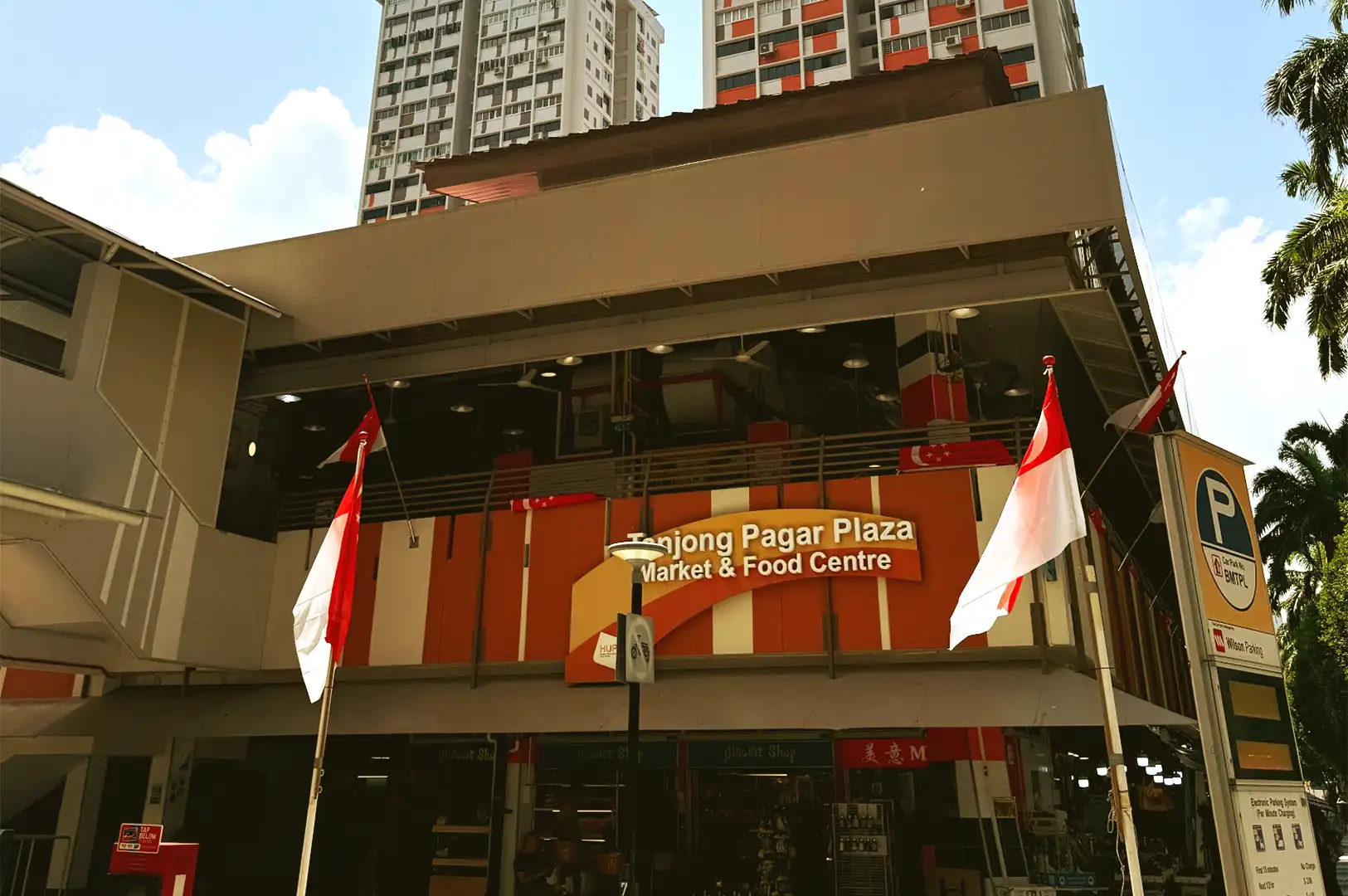
The structure begins before the first order.
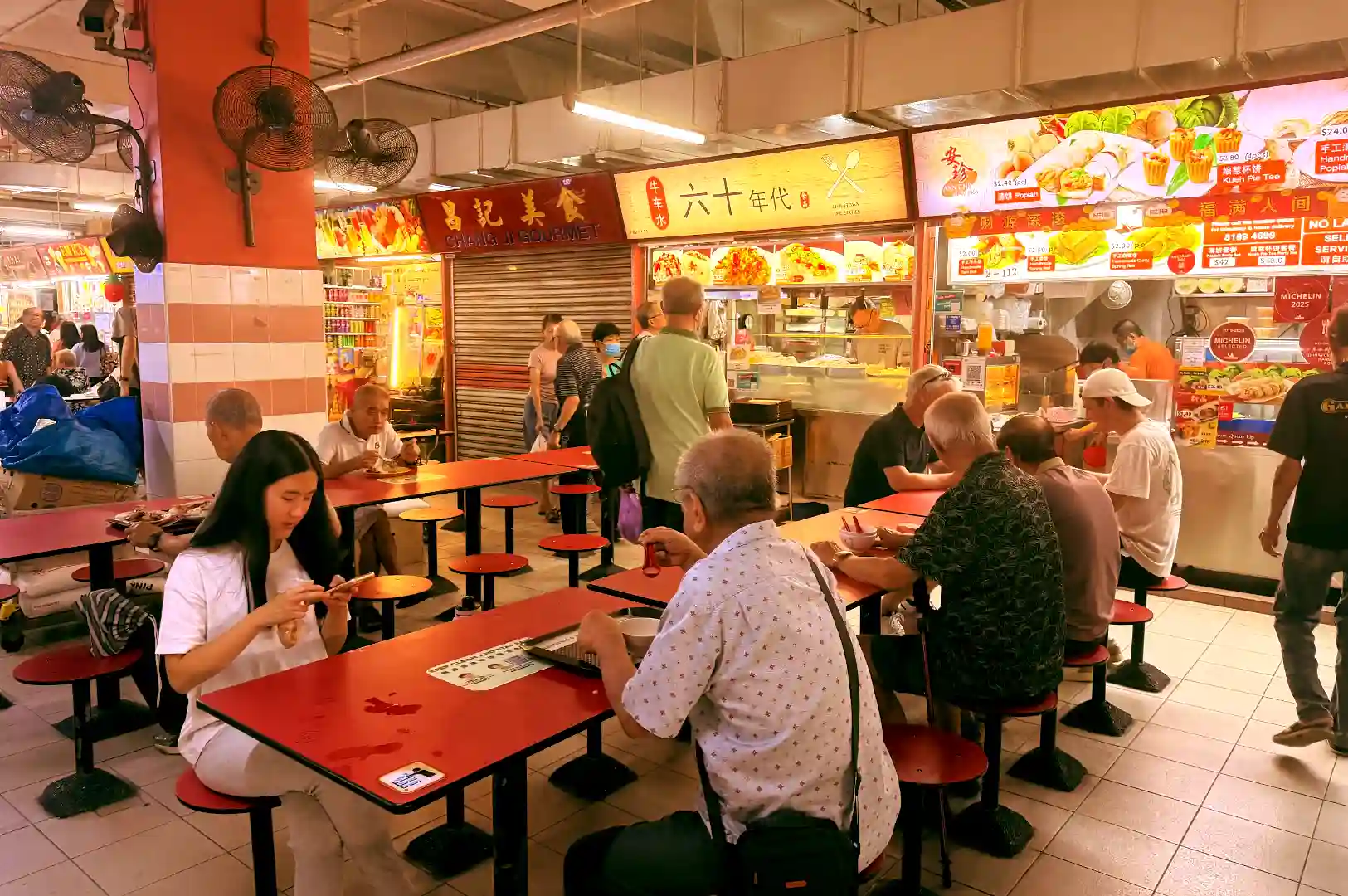
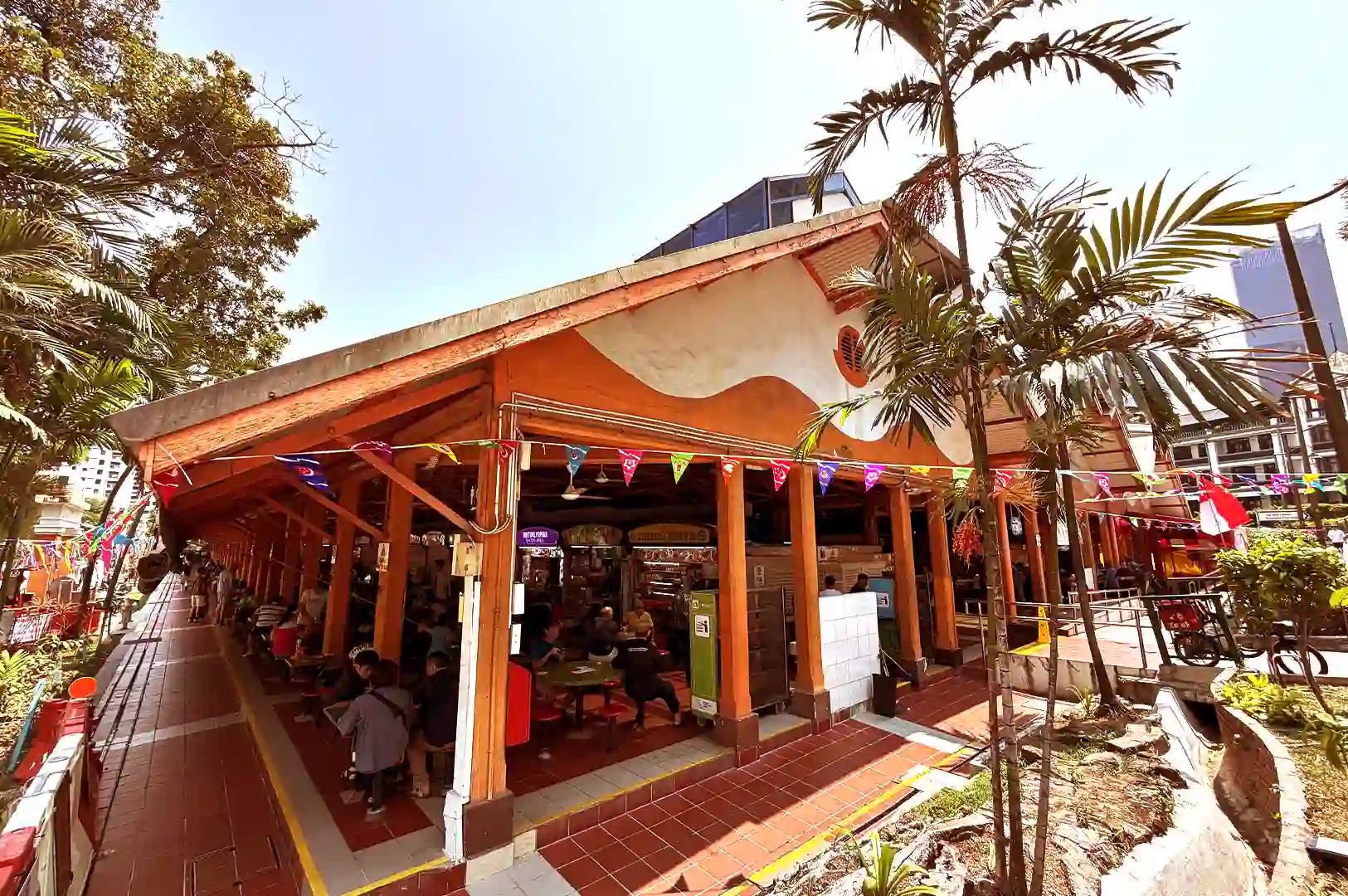
Tanjong Pagar Plaza Market & Food Centre operates through a clear daily rhythm. Movement enters from the surrounding blocks, passes through the open walkways, and settles into the shared space between counters and tables.
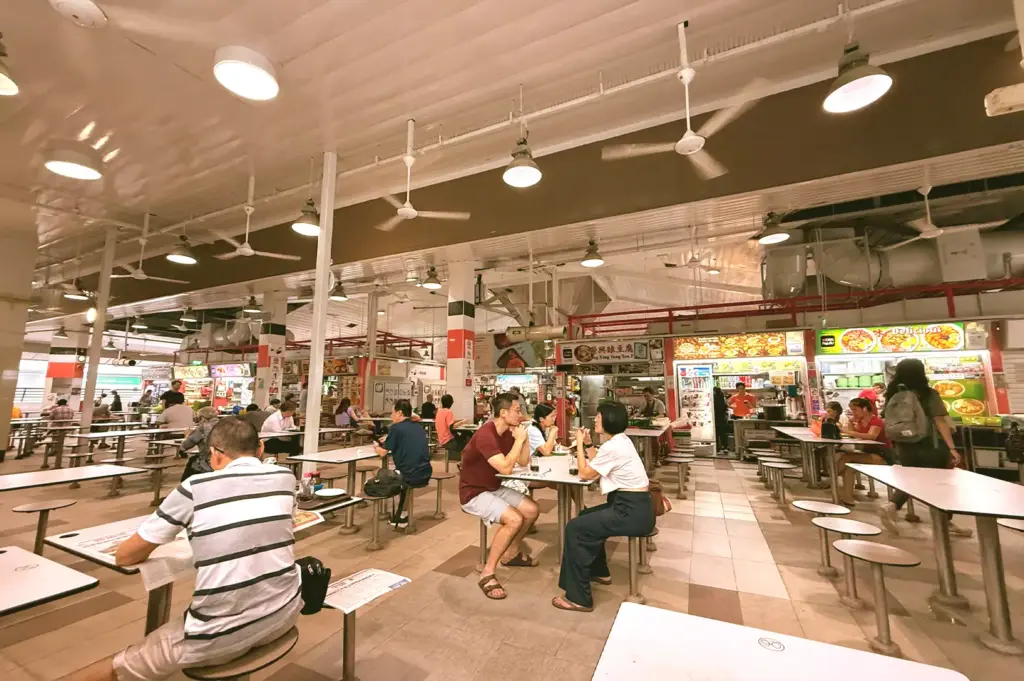
Each section has its own function.
The layout is direct. Stalls line the edges, while seating occupies the centre. Queues gather close to counters, then disperse once orders are collected. The same paths repeat throughout the day—approach, wait, receive, return.
Preparation remains visible within this system. Chicken rice follows a steady sequence of cutting, arranging, and serving.
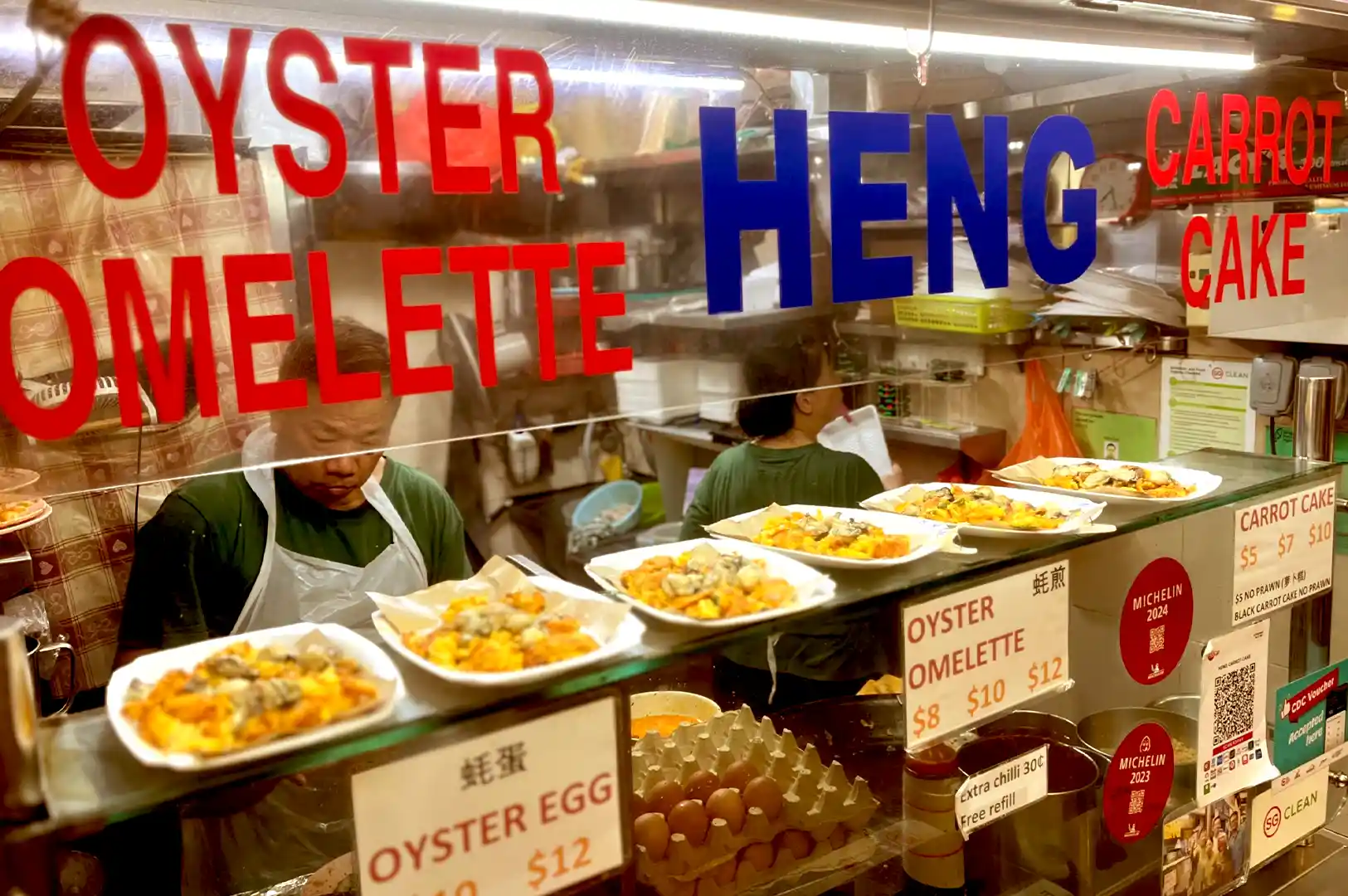
Carrot cake follows another rhythm, shaped through heat, turning, and adjustment on the cooking surface. Both dishes depend on repeated actions carried out within a limited space.
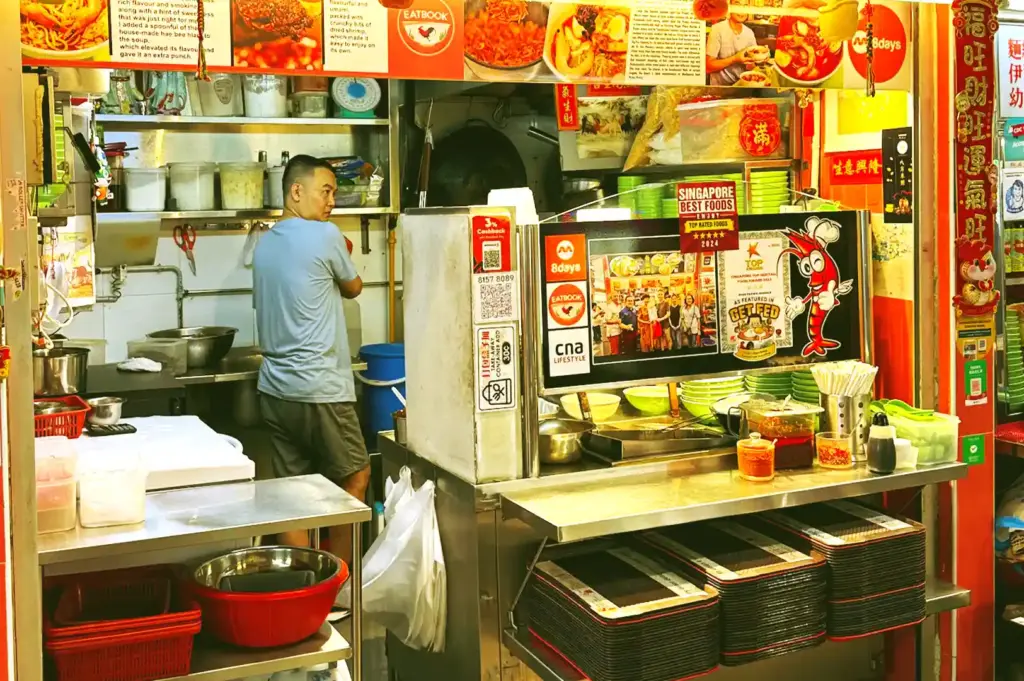
Work continues within defined spaces.
The centre does not move at one speed. Some counters remain active while nearby tables pause. Trays cross between stalls and seats. Chairs shift. Surfaces are cleared and prepared again.
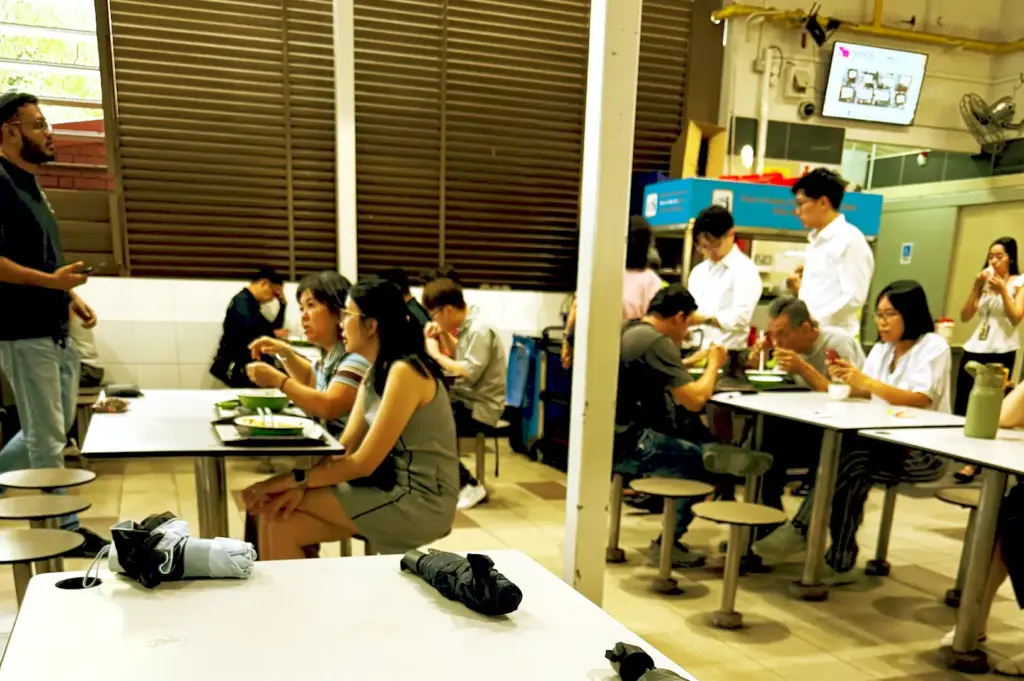
Use leaves temporary marks.
Tables hold brief arrangements—cups, plates, utensils, and unfinished conversations. These disappear gradually as the next cycle begins.
Tanjong Pagar Plaza Market & Food Centre functions through repetition. Each stall maintains its own process while contributing to the wider movement of the space.
The system remains familiar because each action returns to its place.
For another observation of shared tables and daily hawker routines, explore this feature.