
A countertop rarely looks important.
During service, attention naturally goes elsewhere. The food takes focus. Orders are called. Hands move quickly between ingredients and tools. The surface beneath everything becomes part of the background.
But when the pace slows, the countertop begins to tell its own story.
I started noticing the marks left behind after years of preparation. Small scratches near the cutting area. Faded patches where containers are placed repeatedly. Darkened sections where heat, moisture, and constant cleaning have changed the surface over time.
These are not signs of neglect.
They are records of work.
Every stall develops its own patterns. A particular section becomes the place where ingredients are portioned. Another area becomes where bowls are arranged before serving. Tools return to the same positions because the workflow has been refined through repetition.
The countertop remembers these movements.
A scratch does not tell us the exact moment it appeared. A stain does not reveal which dish caused it. But together, these marks show where work happens most often.
They map the habits of the person behind the stall.
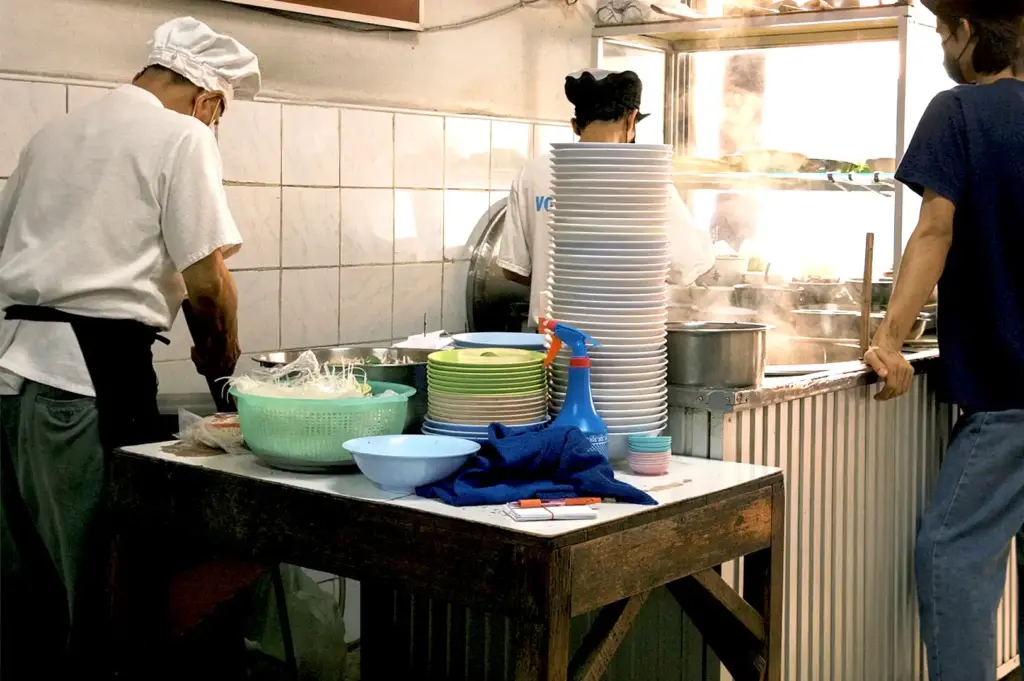
During busy hours, these details disappear beneath activity. The surface is constantly occupied. Ingredients move across it. Orders are assembled. Cleaning happens between tasks.
It is during quieter moments that the evidence becomes visible.
The worn areas reveal efficiency built over time. They show how a workspace adapts to the person using it. What may look like a simple counter is actually a record of thousands of repeated actions.
This same attention to process can be seen in another feature from our archive, where preparation methods and repeated movements reveal how hawker stalls maintain consistency through everyday practice. The story offers another look at the relationship between space, tools, and routine.
A new countertop begins without history.
A used one carries experience.
The marks left behind are not imperfections to remove. They are reminders that the work has continued, day after day, through the same careful movements.