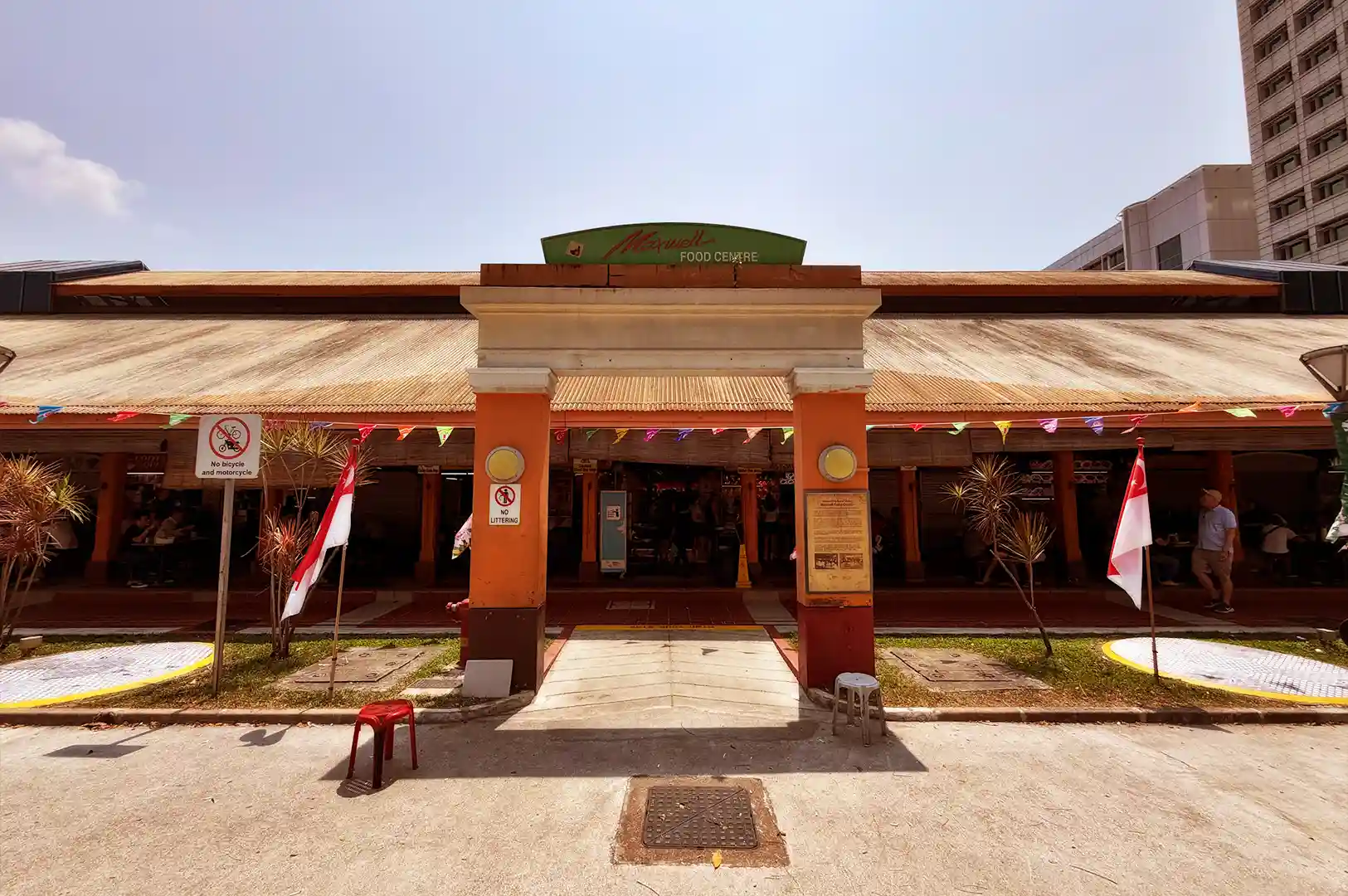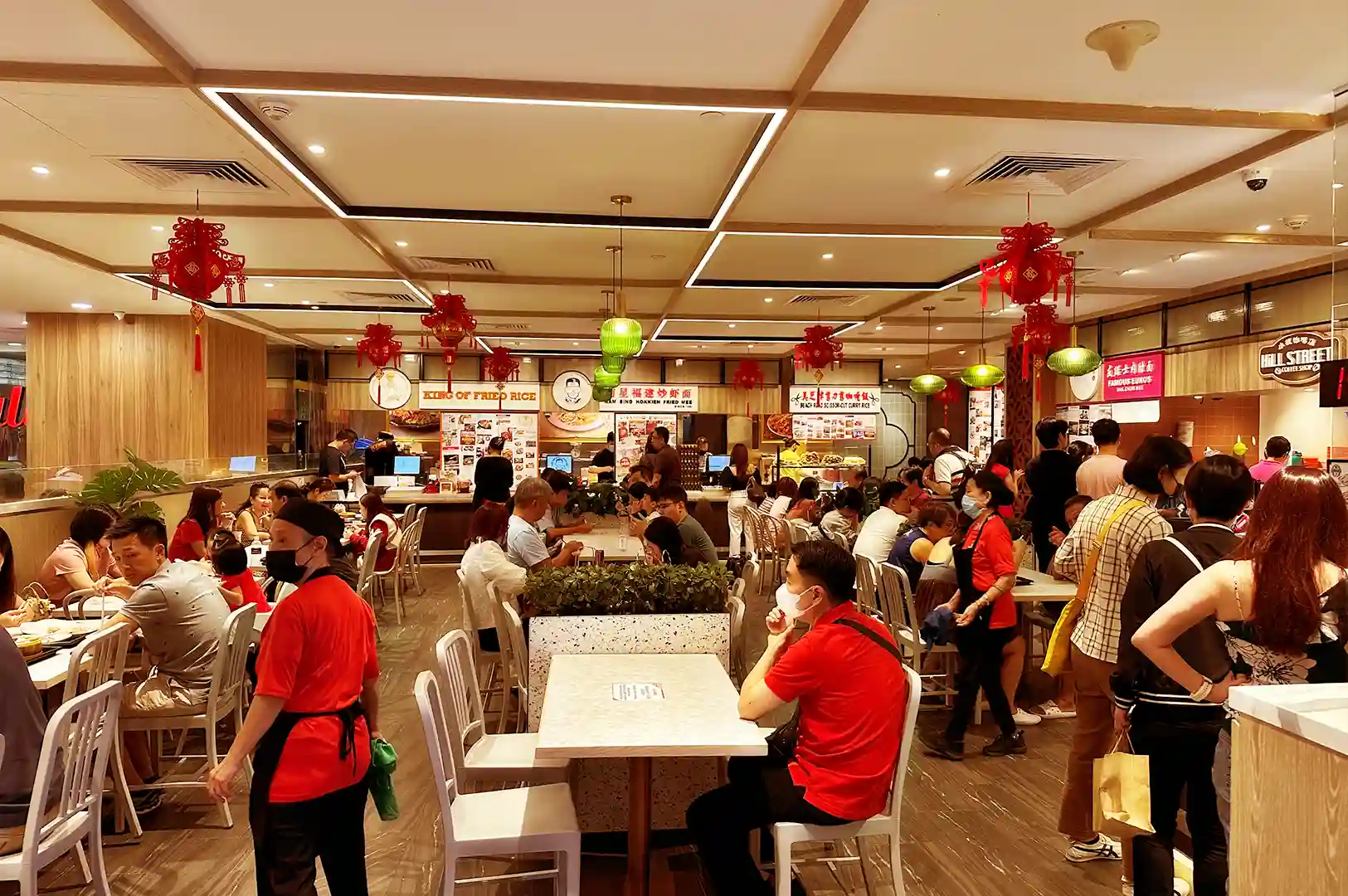

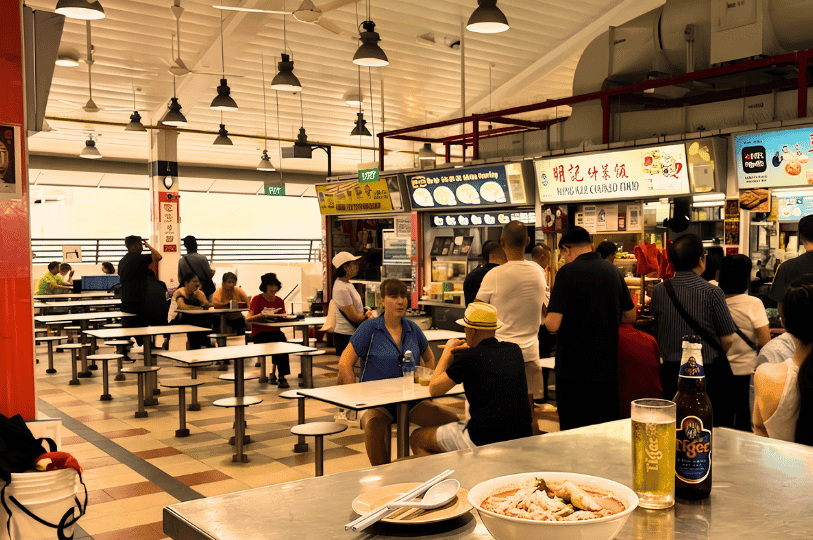
Entry points align with movement from the estate.
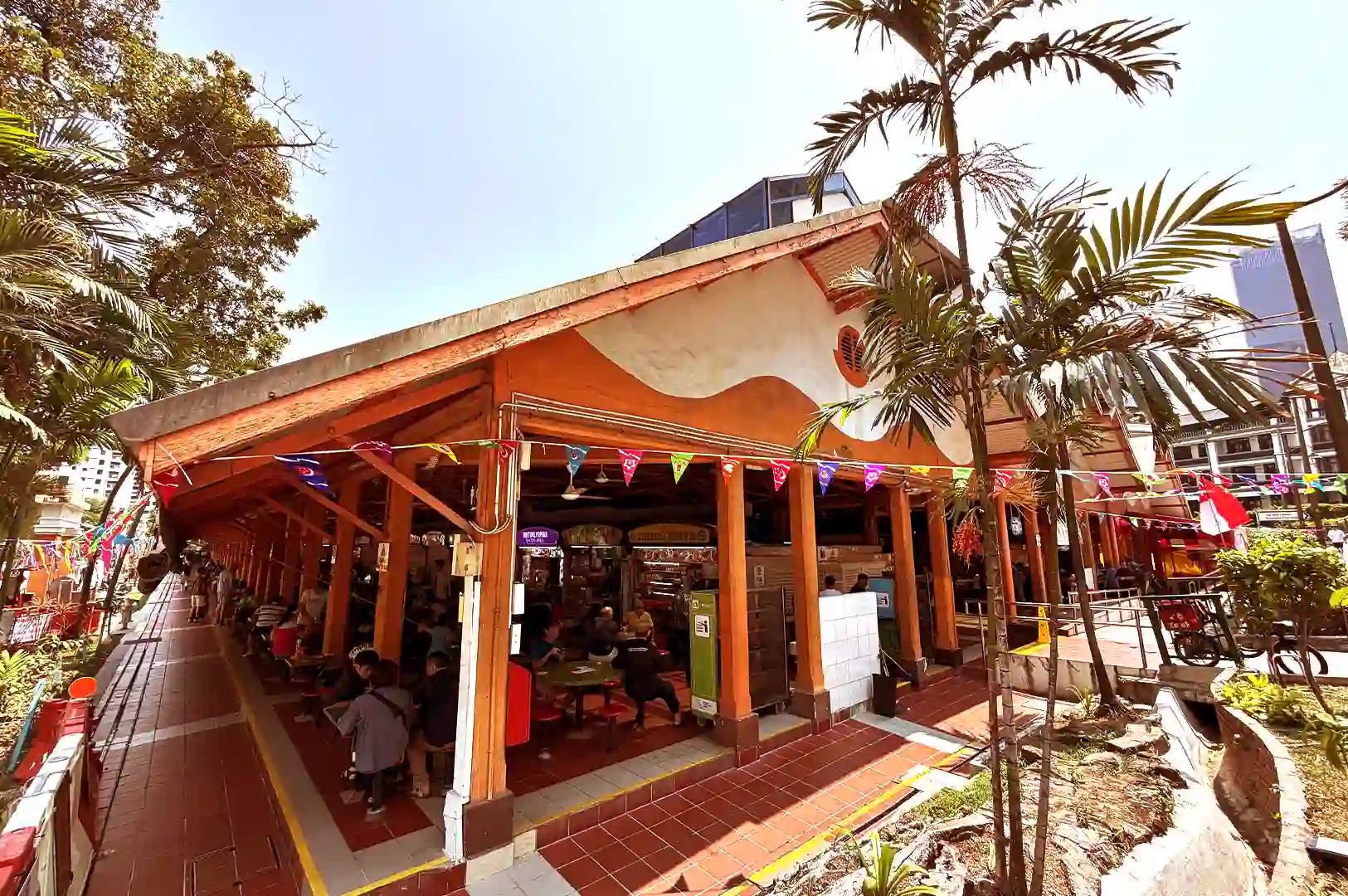
Tanjong Pagar Plaza Market & Food Centre begins with structure. Entry points feed directly into covered walkways, guiding movement inward without pause. The flow is steady rather than concentrated, with arrivals distributed across multiple access points.
Repetition defines navigation.
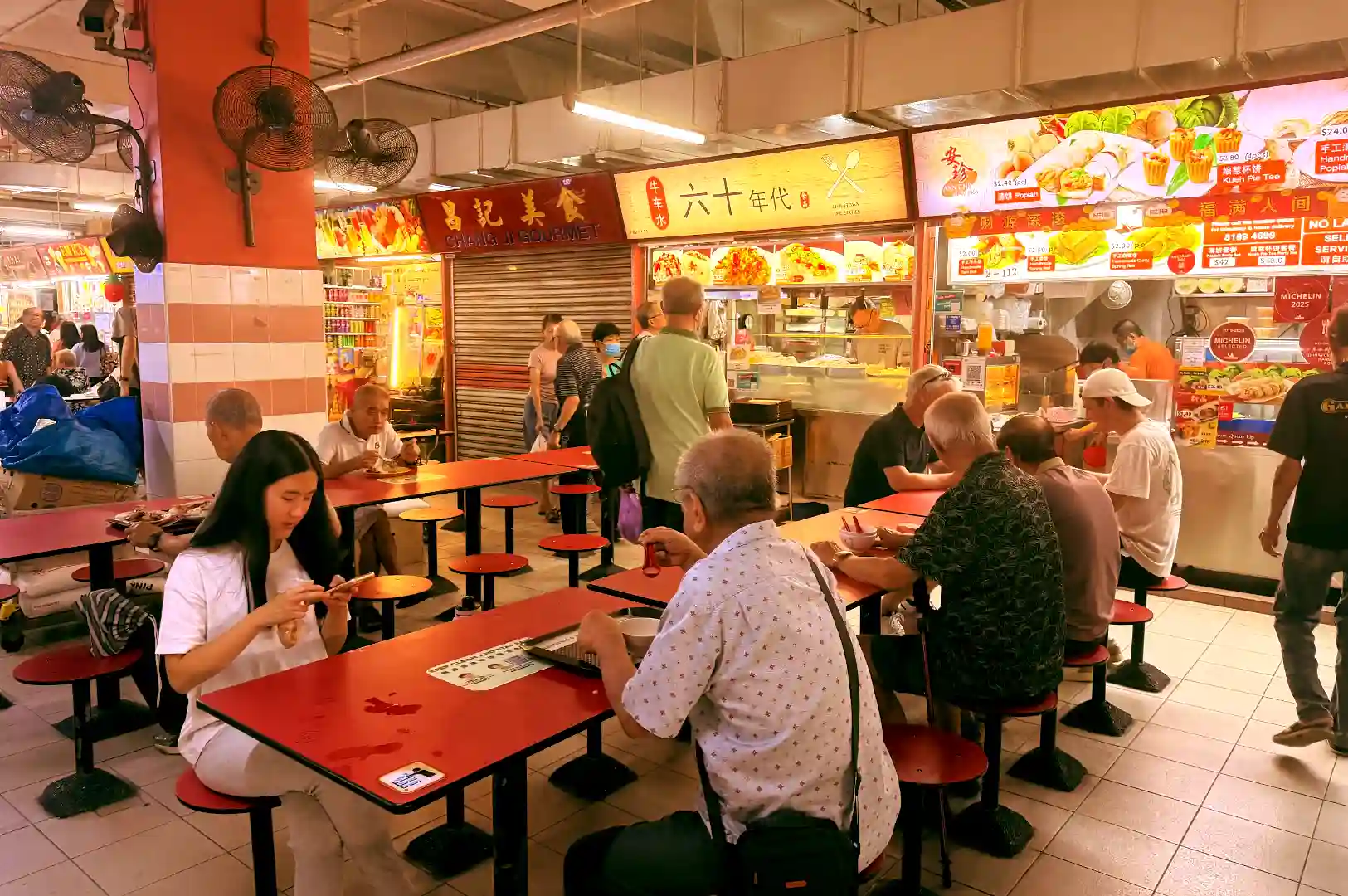
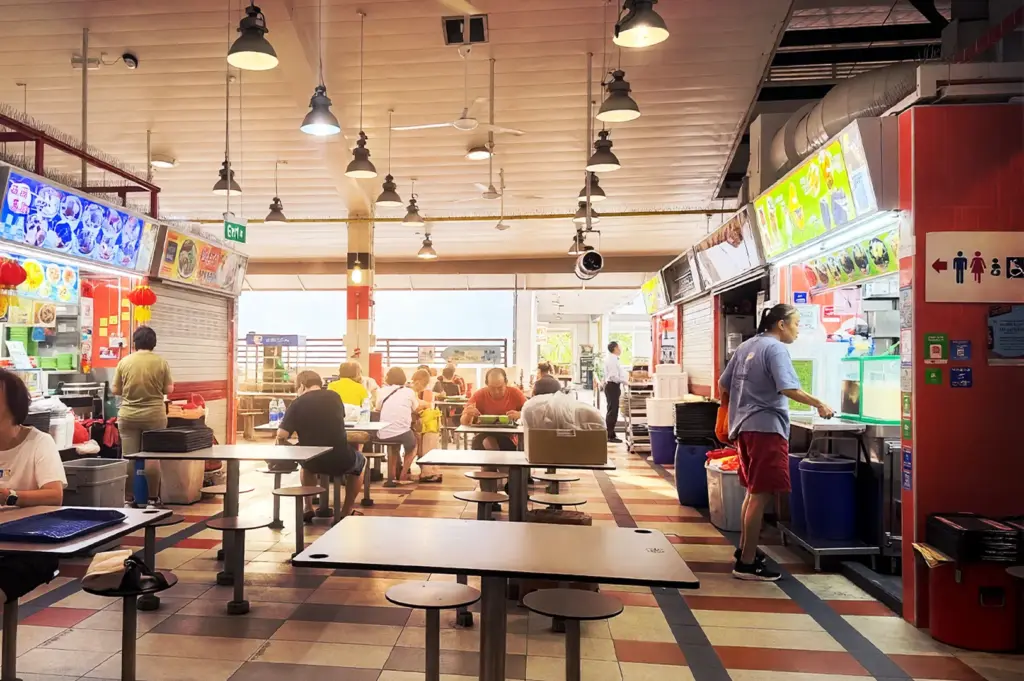
Inside, the layout is organised in parallel rows. Stalls face central aisles with consistent frontage and depth, allowing queues to form close to counters without blocking circulation. Walkways remain usable even at peak periods. Movement follows a clear sequence—approach, order, collect, exit—without requiring adjustment.
At Tanjong Pagar Teo Chew Fishball Noodle, the process fits within this structure. Bowls are assembled in short cycles—noodles portioned, toppings added, soup or sauce adjusted—then passed forward. Each step is contained within a narrow working area. Output matches the pace of incoming orders, preventing backlog from forming.
Turnover is continuous, not simultaneous.
Seating occupies the central field between stall rows. Tables are shared without direction. Diners adjust to available space, filling gaps as they appear. Trays move in a predictable pattern—carried in, used, returned—while cleaning cycles follow closely behind. Surfaces are reset quickly, keeping tables in rotation.
Light enters from open sides, mixed with overhead fixtures. The environment remains consistent throughout the day, with changes driven by volume rather than layout.
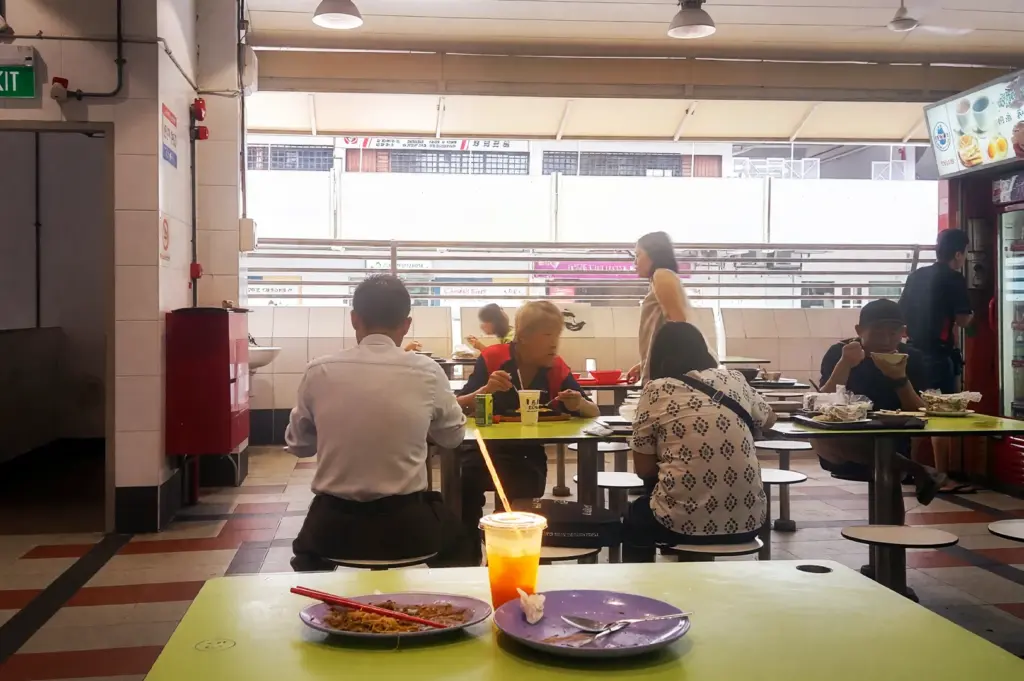
Tanjong Pagar Plaza Market & Food Centre functions through alignment. Each part operates within a defined range, allowing the system to maintain flow without interruption.
If you’ve been following how these patterns repeat across spaces, you might want to pause on how similar rhythms appear elsewhere. One way to see this is through Maxwell, observed slowly over time—a return and familiarity rather than movement.
Tanjong Pagar Plaza Market & Food Centre functions through alignment.
Each element operates within a defined range. The system holds because nothing exceeds it.