
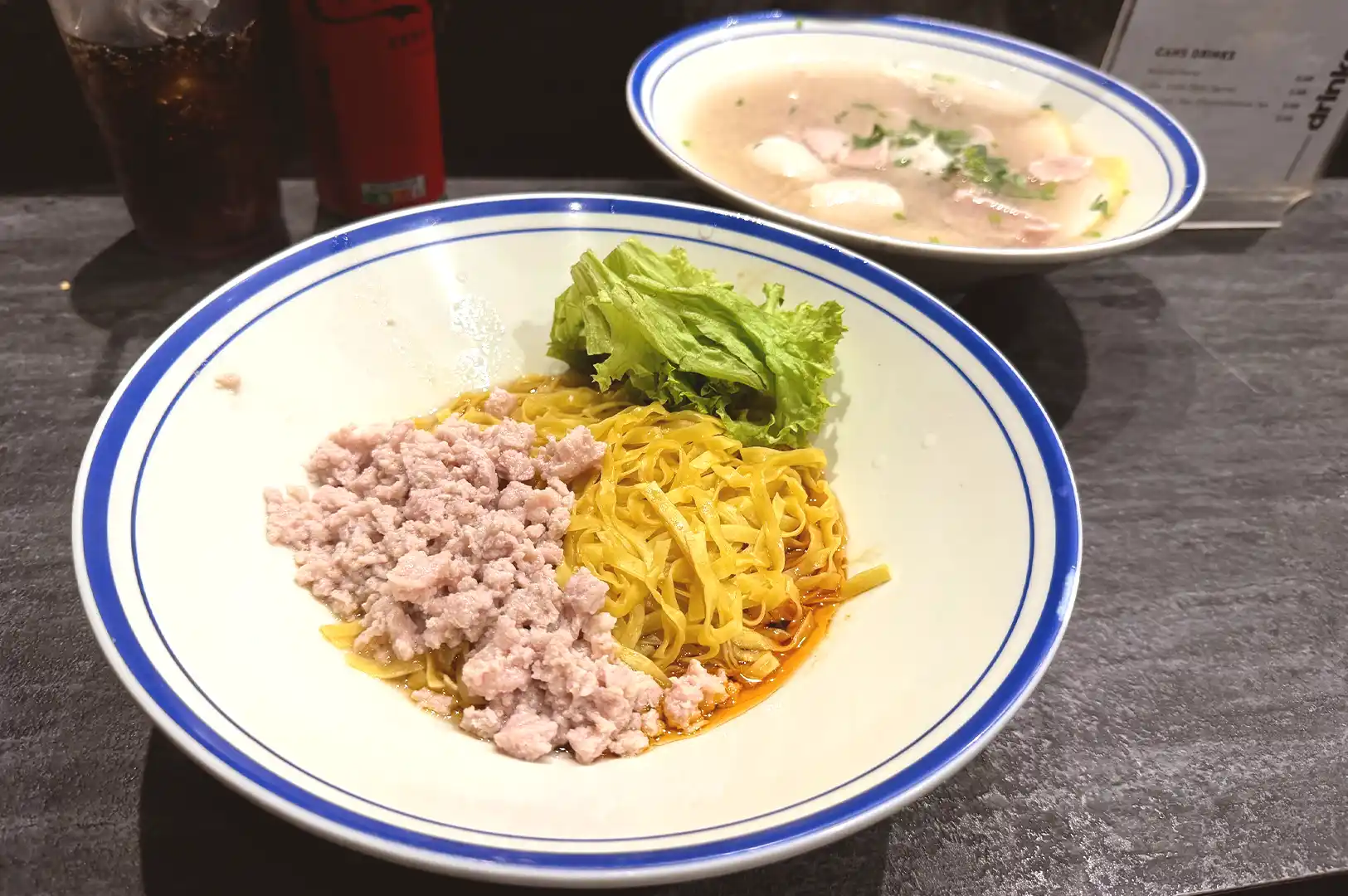
The bowl arrives while the table is still finding its rhythm.
For a moment, nothing happens.
The noodles sit where they were placed. A spoon rests against the edge. Someone shifts a glass to make room. Around the table, voices continue at different distances, chairs move, another plate arrives—quietly.
Bak chor mee occupies the space quietly. The noodles hold their shape until the first lift, sauce gathered beneath the surface and toppings scattered across the bowl—waiting.
For another quiet look at the familiar rhythms surrounding a hawker meal, explore the everyday rhythm of Teochew fishball noodles and bak chor mee preparation.
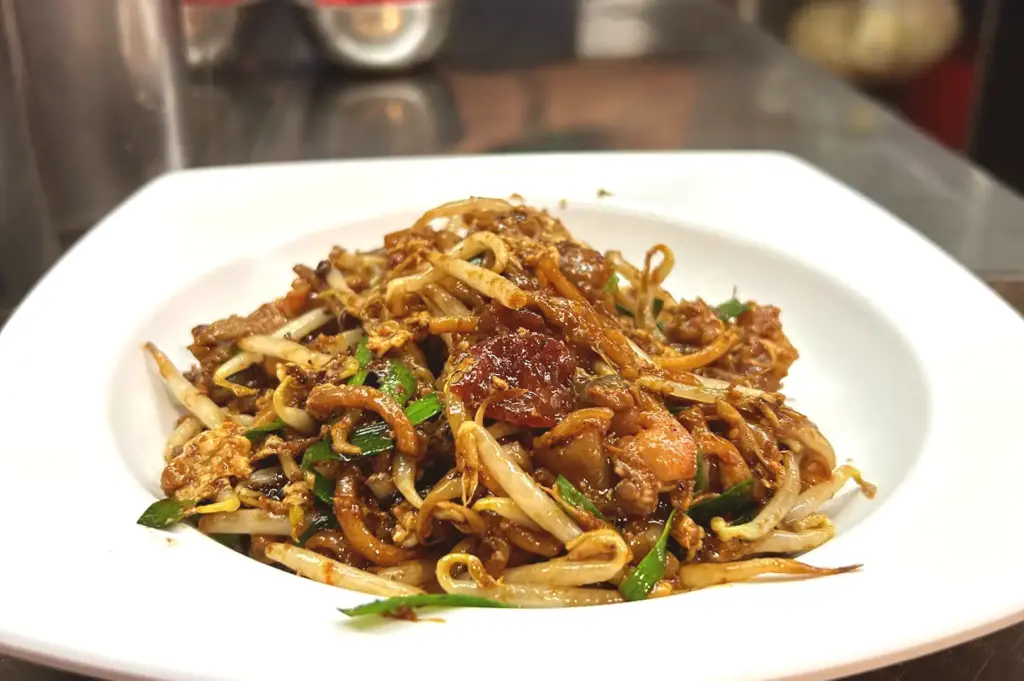
The plate carries traces of movement from the kitchen.
Nearby, char kway teow arrives differently. The noodles spread loosely across the plate, darker in places where the wok has touched them. Bean sprouts remain visible between the strands. A few pieces sit at the edges, left where they landed—unstaged.
The two dishes do not need to share a table to feel connected. Both arrive after a sequence that has already happened elsewhere—hands moving, ingredients shifting, heat passing through, plates being lifted and carried—already done.
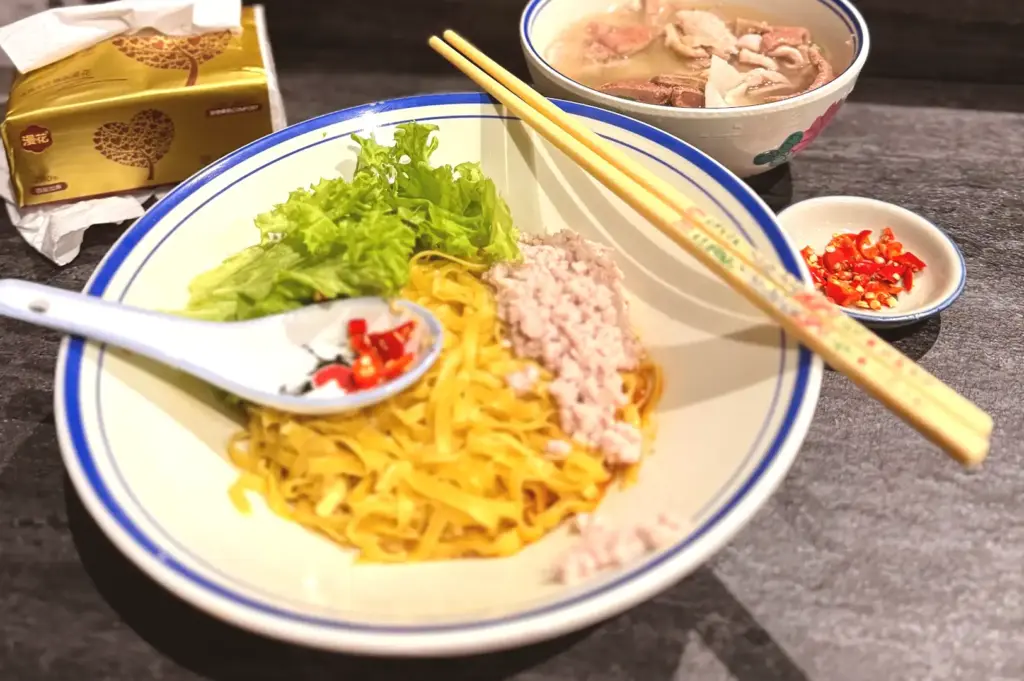
The arrangement changes as soon as eating begins.
A fork enters the noodles. Chopsticks lift a piece from the plate. Someone reaches across, then withdraws. What looked carefully arranged a moment earlier begins to loosen—on contact.
There is no fixed pace to the meal—no script.
Some bites follow quickly. Others wait. A conversation takes over. The plate remains for a while—held.
The dishes become less recognisable as individual arrangements and more a part of the table itself—shared, interrupted, returned to—rejoined.
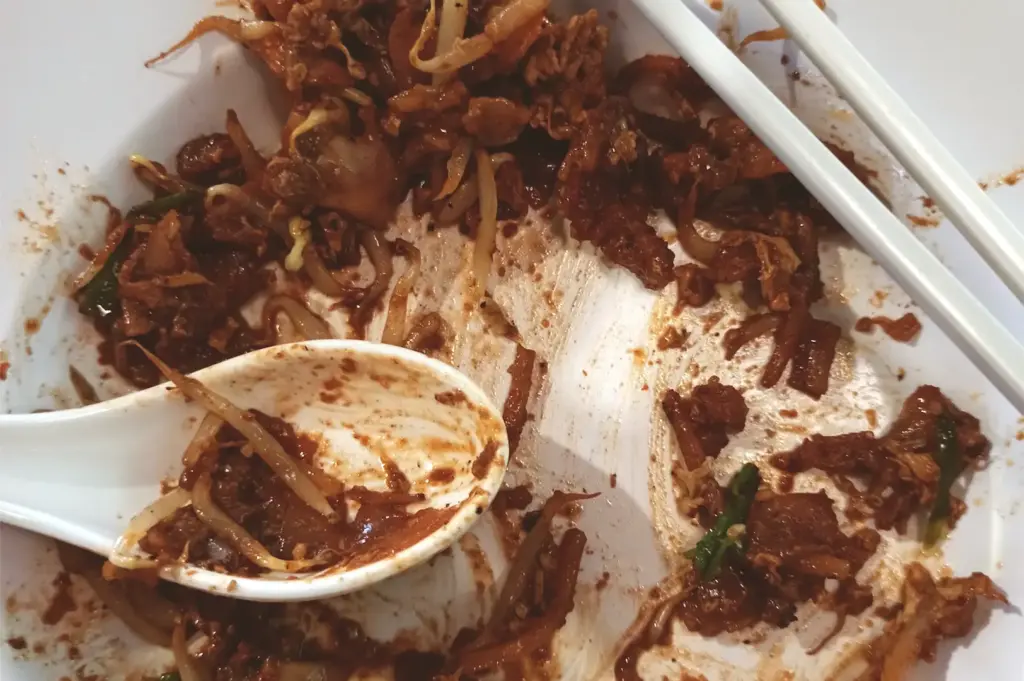
What remains is part of the meal too.
A little sauce at the bottom of the bowl. A few strands left on the plate. Used utensils resting where they were last held—evidence.
The meal has moved on, but the table keeps a small record of it—still there.