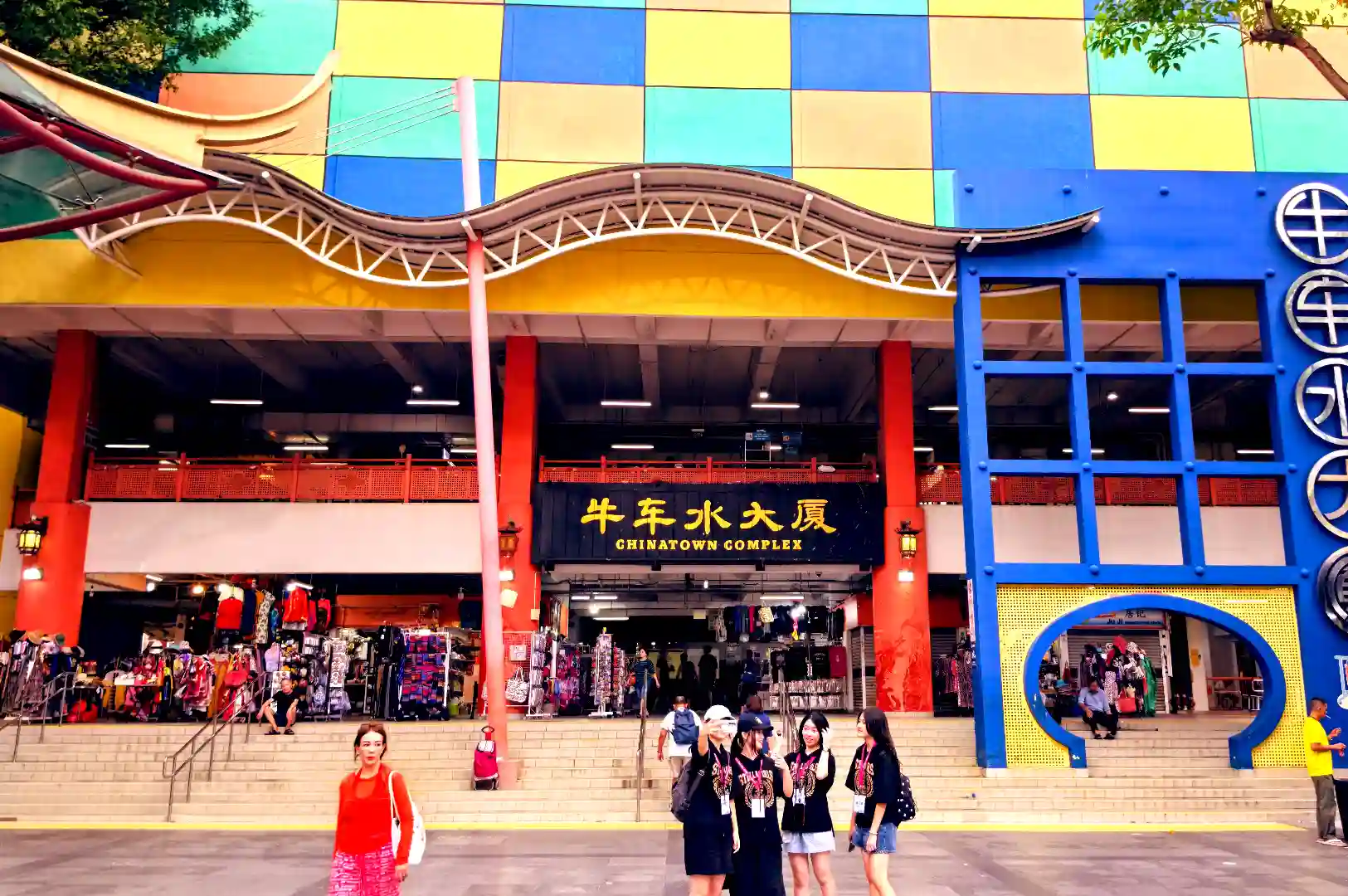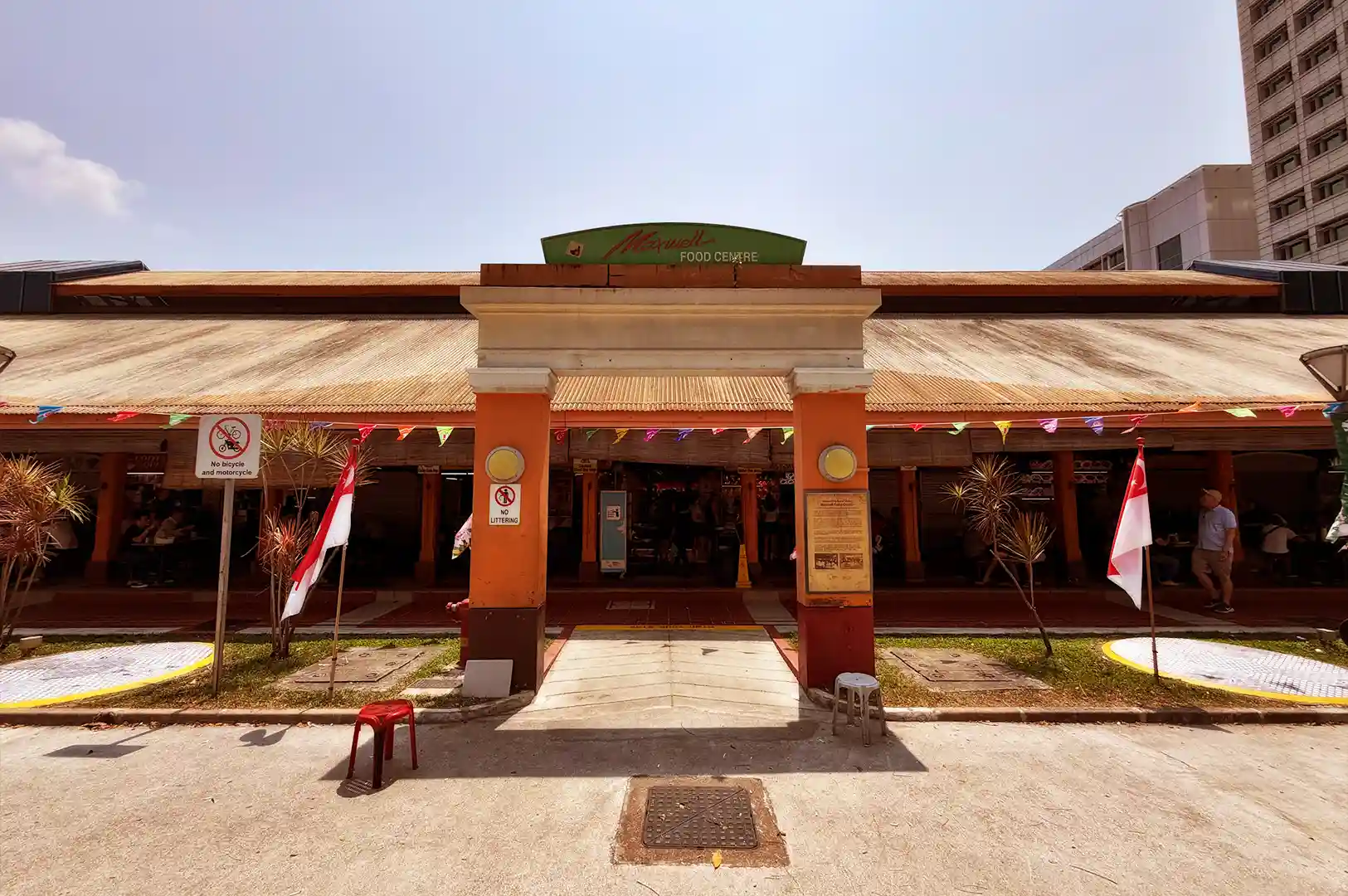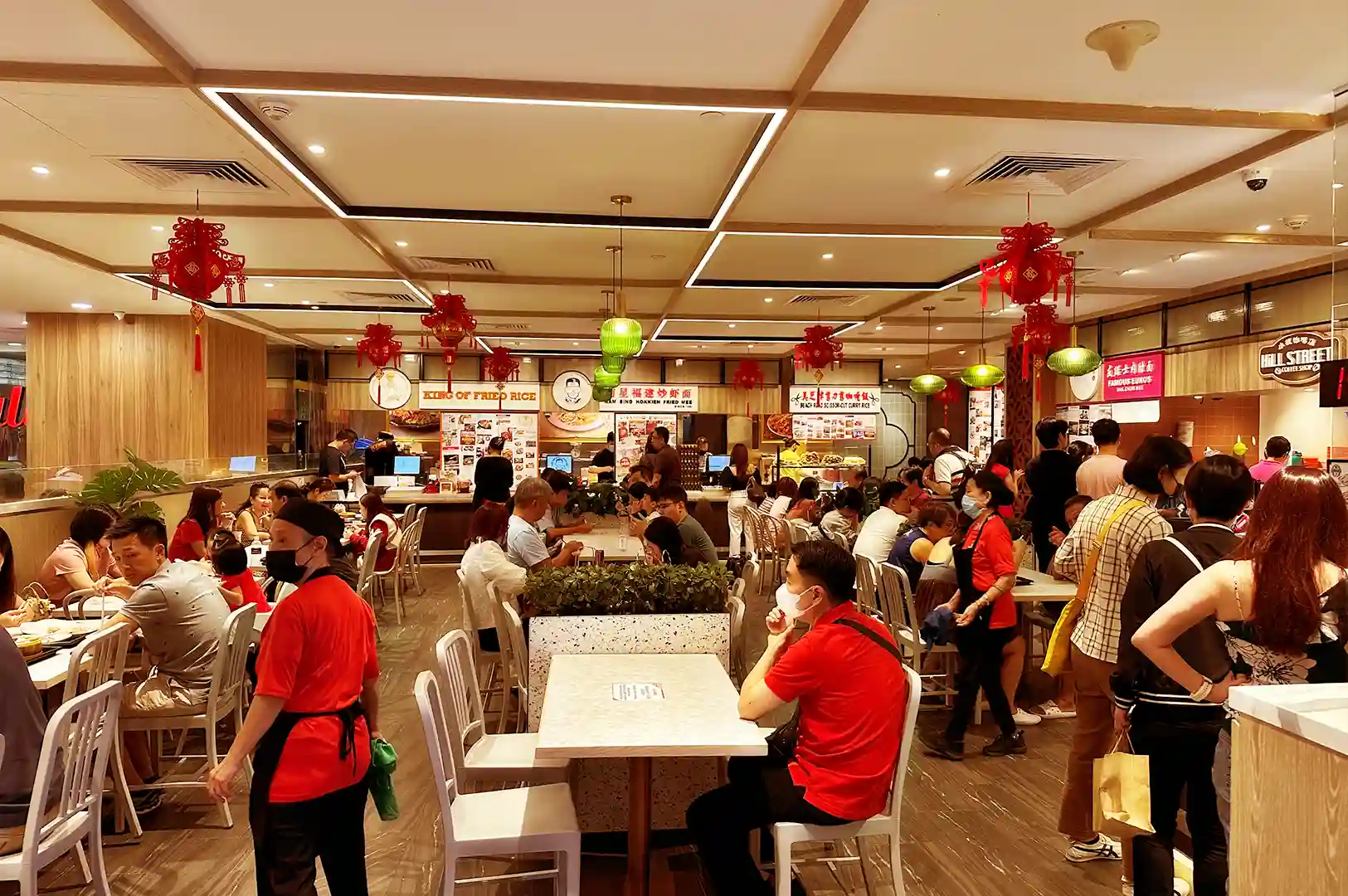

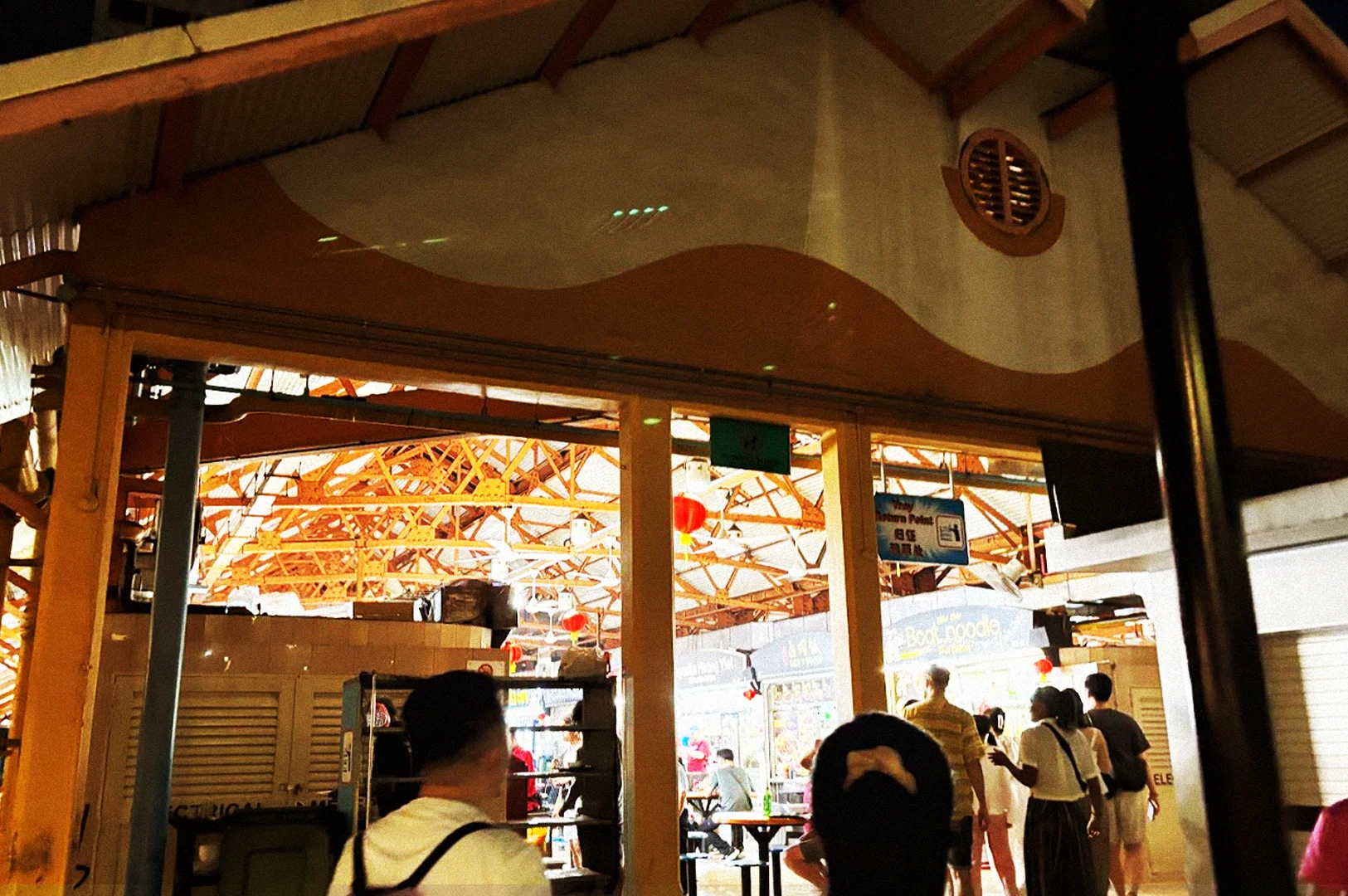
The first arrivals establish the pace.
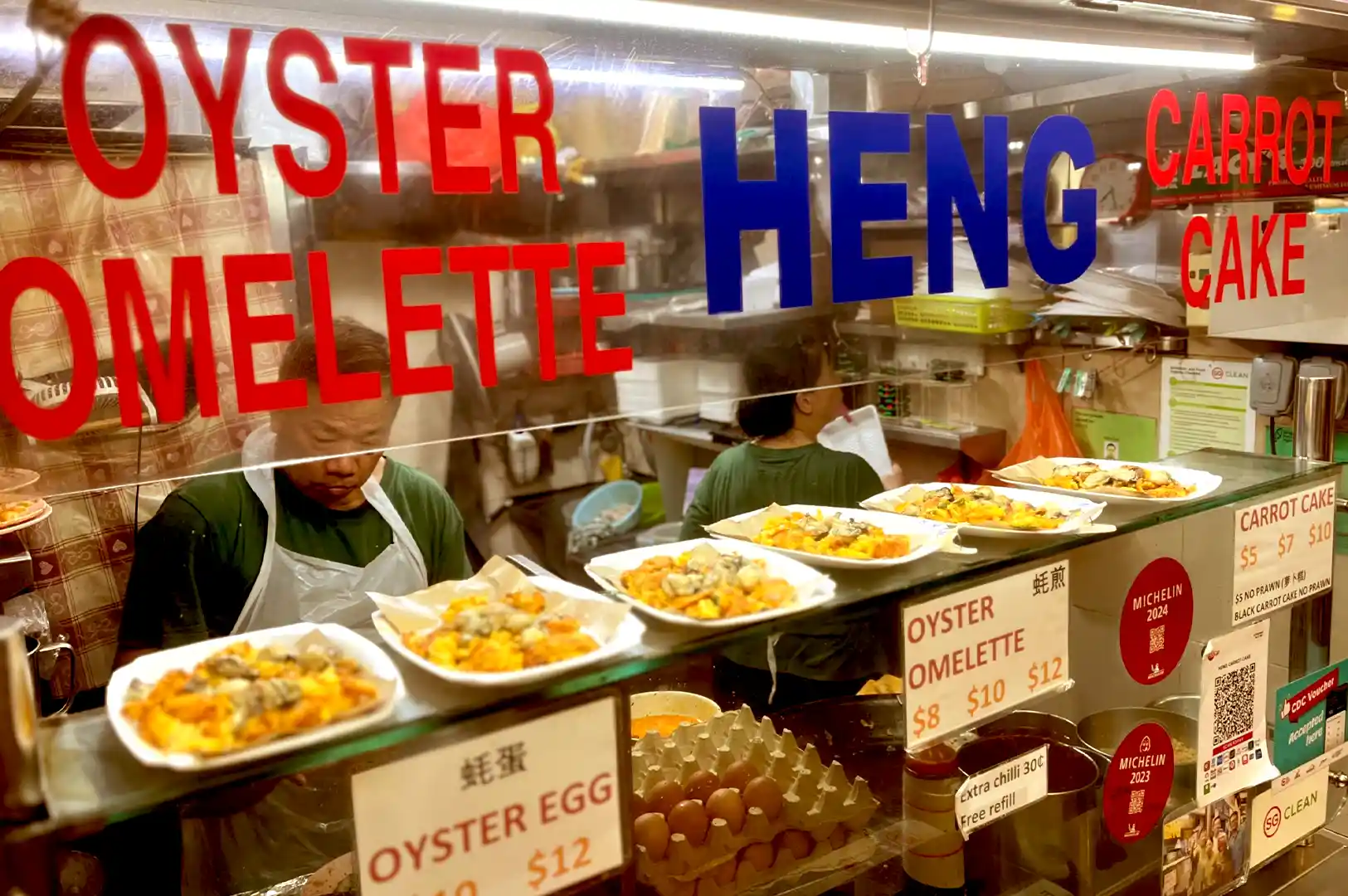
Maxwell Food Centre and Tiong Bahru Market organise movement differently, yet both rely on repetition to maintain flow. The photographs follow this pattern through entry points, seating arrangements, and the cycles that shape each day.
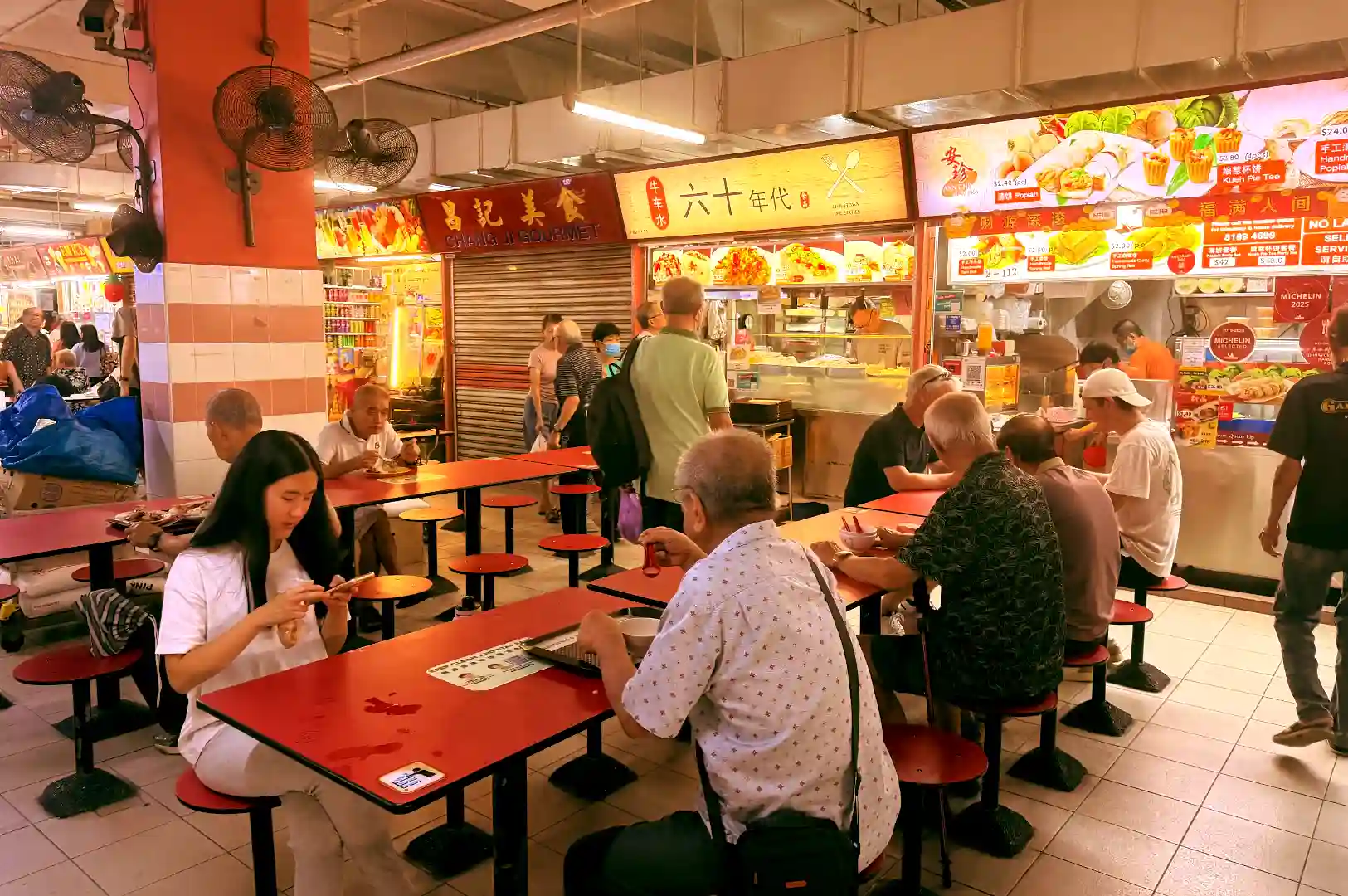
At Maxwell Food Centre, circulation begins along the perimeter before moving inward. Stalls define the edges while seating occupies the centre. Movement is distributed across multiple aisles, allowing ordering, collection, and dining to occur simultaneously without significant interruption.
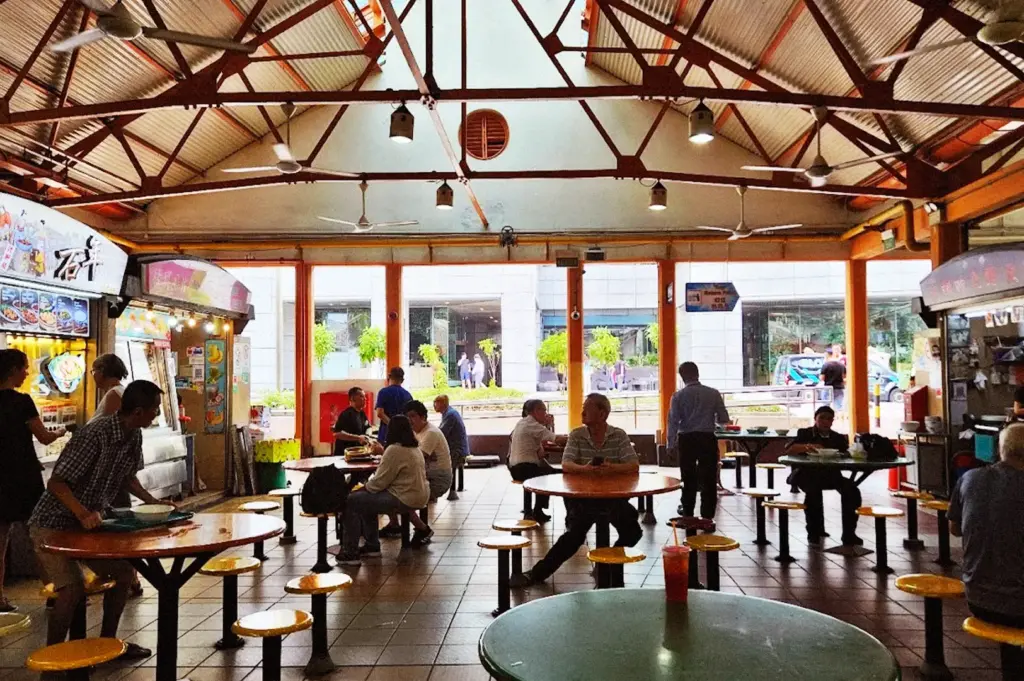
Ordering and seating remain distinct but connected.
Tables fill gradually rather than all at once. Trays arrive, meals begin, and surfaces return to use shortly after. The cycle repeats continuously throughout the day.
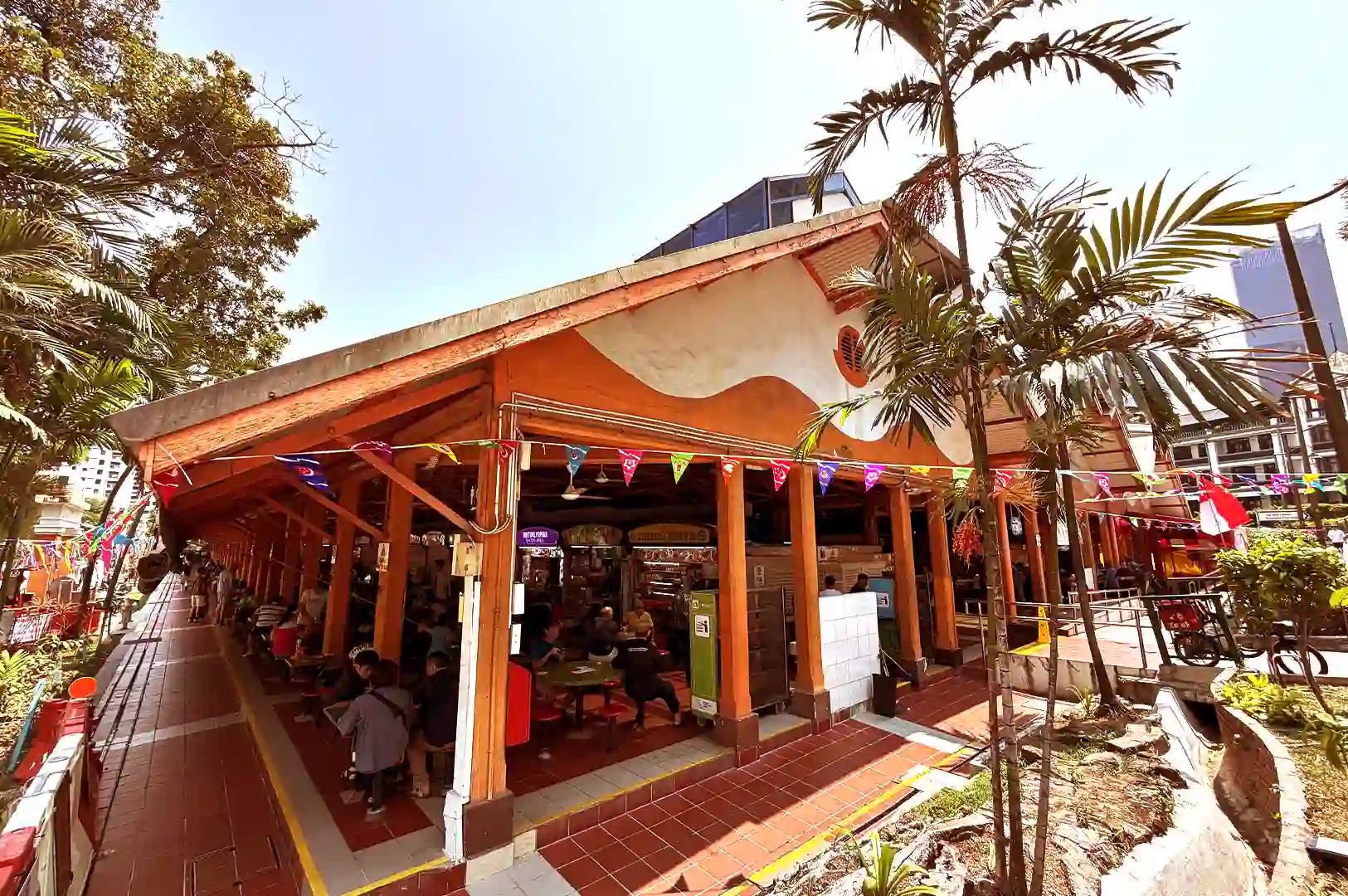
Tiong Bahru Market follows a different arrangement. The hawker centre sits above the wet market, creating a transition between levels before diners enter the main dining area. Stalls are positioned around the perimeter, while the central seating field remains visible from most points within the space.
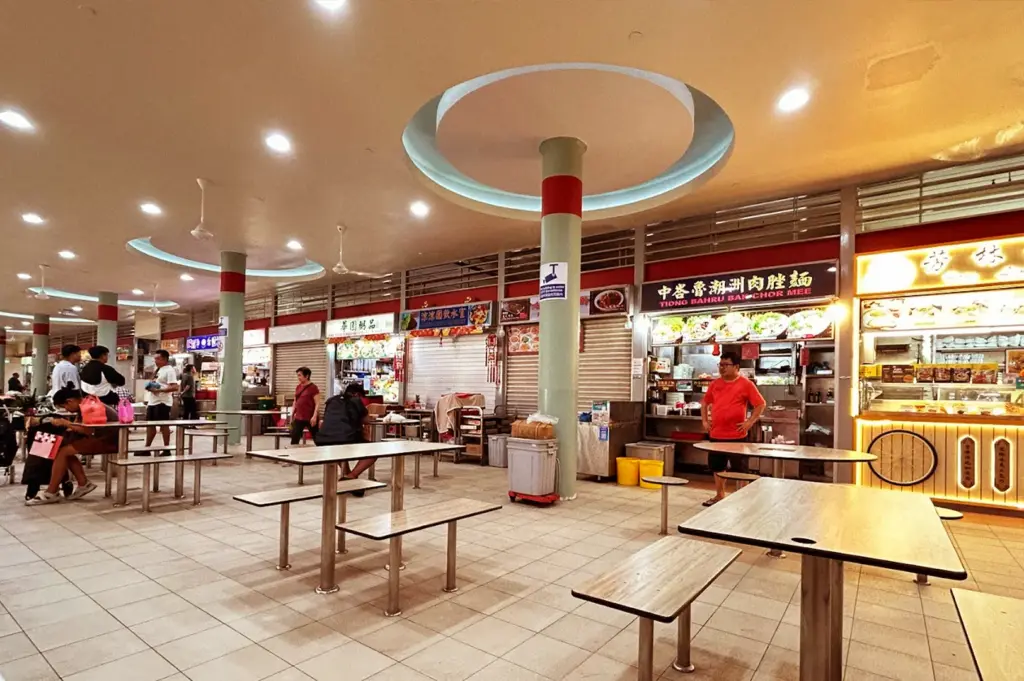
The layout separates movement from waiting.
This visibility allows movement to remain legible. Diners can observe available seating while queuing, reducing unnecessary circulation. Trays move between counters and tables in predictable routes. Cleaning cycles follow closely behind use.
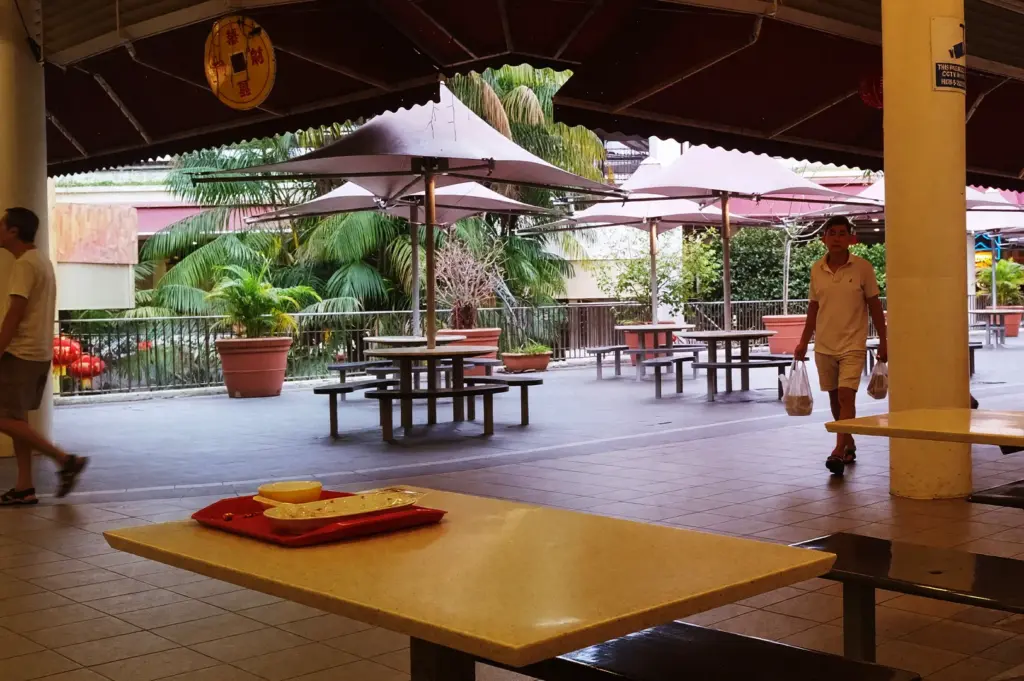
The next use begins after a brief reset.
Neither hawker centre depends on a single moment. Their structure emerges through repeated actions: arrivals, queues, meals, departures, and clearing. Across different layouts and scales, the system remains recognisable.
For another look at how movement settles into routine, continue with “Circulation and Pause: Tekka Centre Fish Ball Noodles”: