
I don’t wait for the steam to appear.
By the time you see it through the viewfinder, it’s already affecting the frame—softening edges, flattening contrast, obscuring what you thought you were about to capture. Adjusting then is always late.
So I prepare before anything rises.
The first thing I look at isn’t the food. It’s the setup. Where the heat source sits, how close the ingredients are to it, how often the lid comes on and off. Steam isn’t random. It follows a pattern, just like the rest of the workflow. If I understand that pattern, I can anticipate where it will build, how dense it will be, and how long it will linger.
Settings come next.
I expose slightly ahead of the scene—not for what I see, but for what I know is coming. If I wait until the steam fills the frame, I lose the texture of the food and the clarity of the hands. If I compensate too late, the image becomes something I’m trying to correct instead of something I’ve already accounted for.
Position matters as much as exposure.
Standing directly in front means taking the full impact of the heat and steam. It looks dramatic, but it compresses the frame. I shift slightly to the side, where the steam moves across instead of toward me. It keeps the layers readable—the foreground, the hands, the surface of the wok.
When the first plume rises, I don’t react.
I watch it move through the frame I’ve already set. How quickly it dissipates, where it gathers, how it interacts with the light. By the second or third cycle, I know exactly when the scene will clear enough to shoot.
That’s when I take the photo.
Not at the peak, but just after. When the steam begins to thin, when the structure returns. The hands are still in motion, but the frame becomes readable again.
If I’ve done it correctly, the adjustment is invisible.
The image doesn’t show the preparation behind it. It just holds together—light, texture, movement—without anything fighting for control.
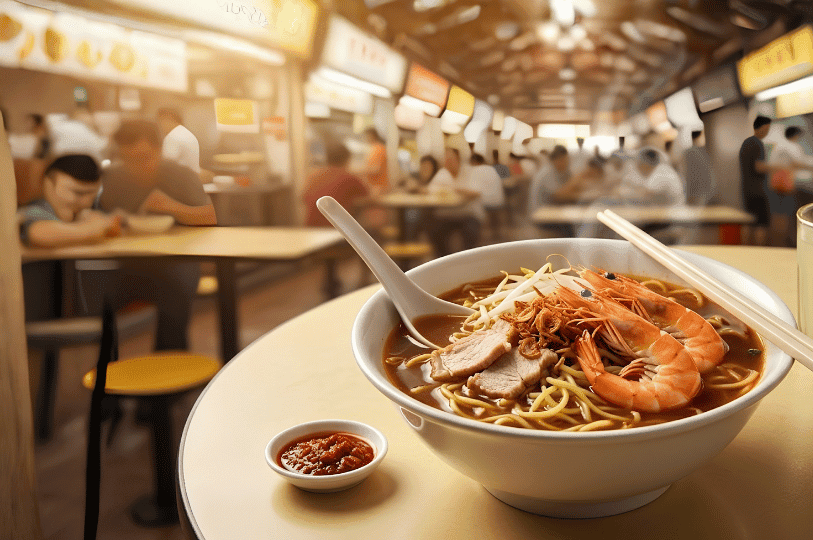
If you notice how steam behaves across different stalls, you’ll start to see how early adjustments shape the final frame. In Steam, First Light: Adam Road Prawn Mee, the conditions shift quickly, but the structure remains consistent when the setup accounts for it before the moment arrives.
I don’t adjust to what’s happening.
I adjust to what will happen, so that when it does, I don’t need to change anything at all.