
Movement rises before it settles.
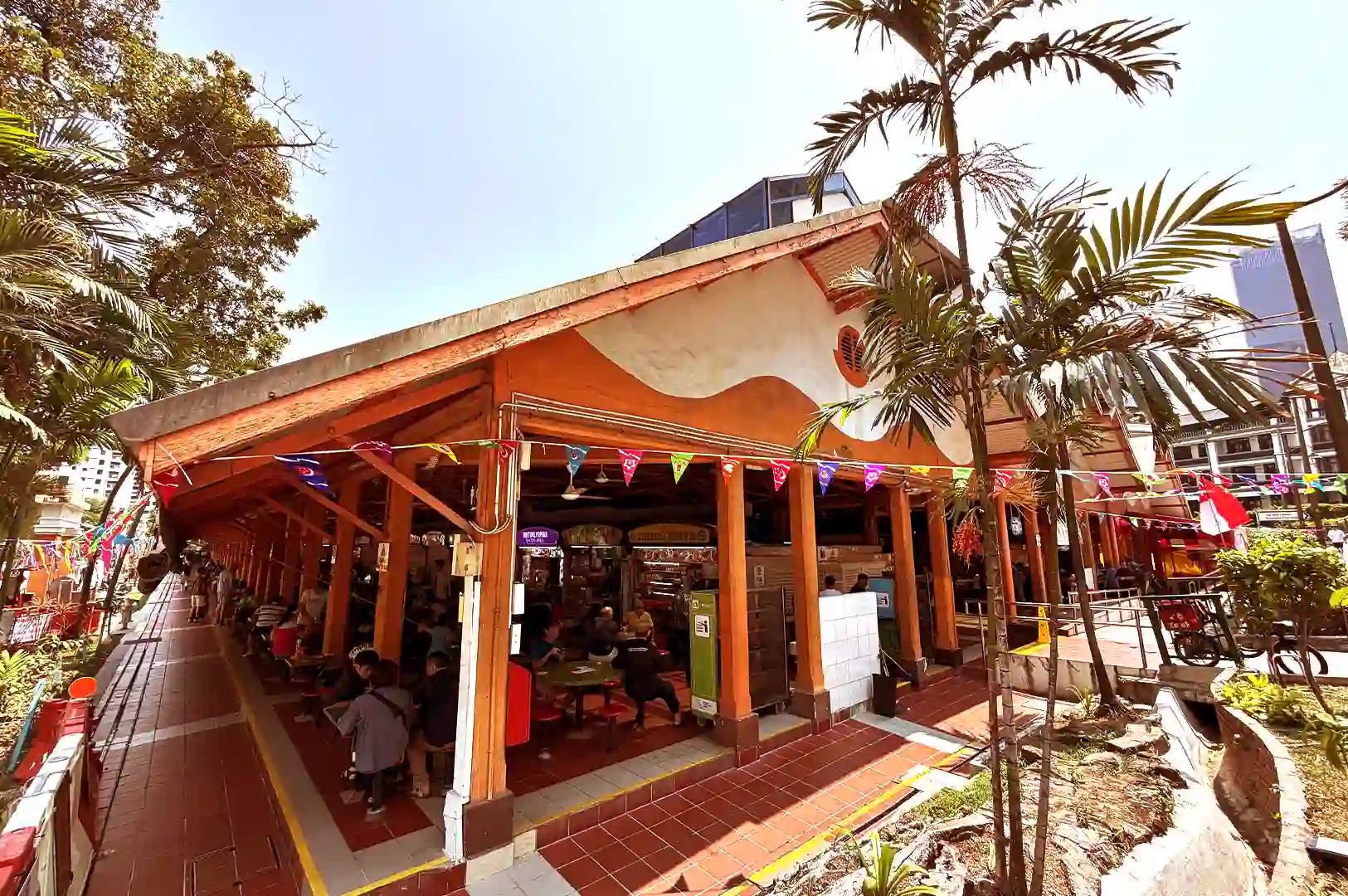
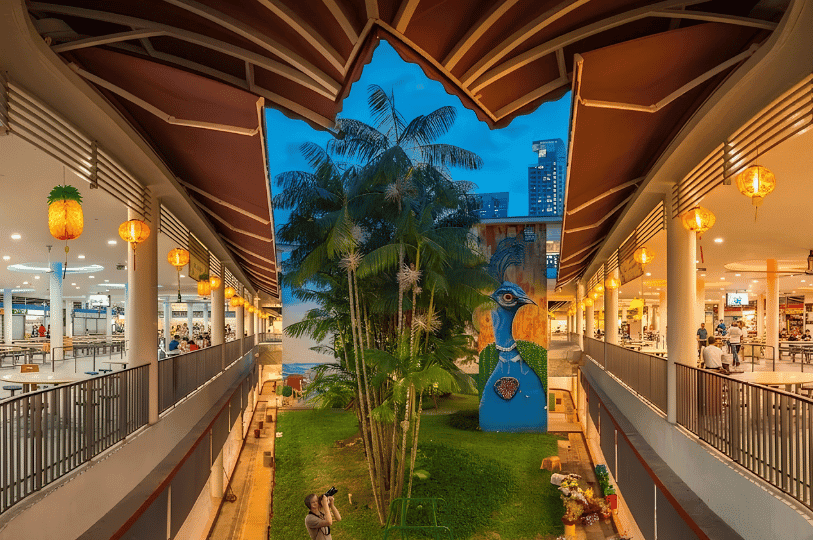
Tiong Bahru Market is structured across levels. The ground floor operates as a wet market, while the upper level holds the hawker centre. Movement is directed upward through escalators and staircases that concentrate entry points before dispersing into the main dining area.
The centre opens outward from a fixed core.
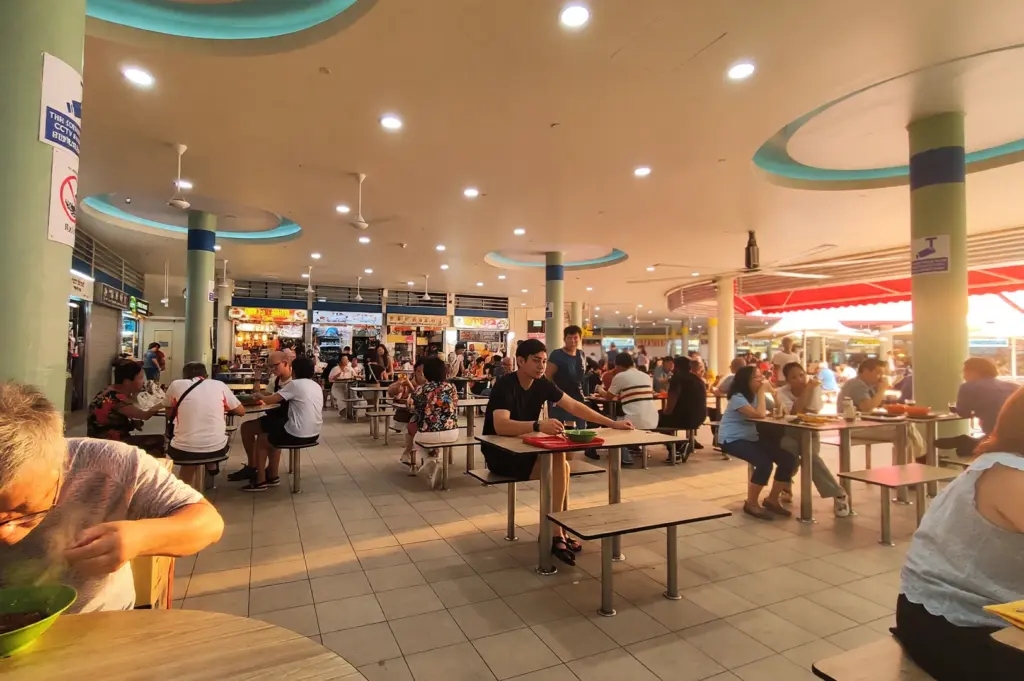
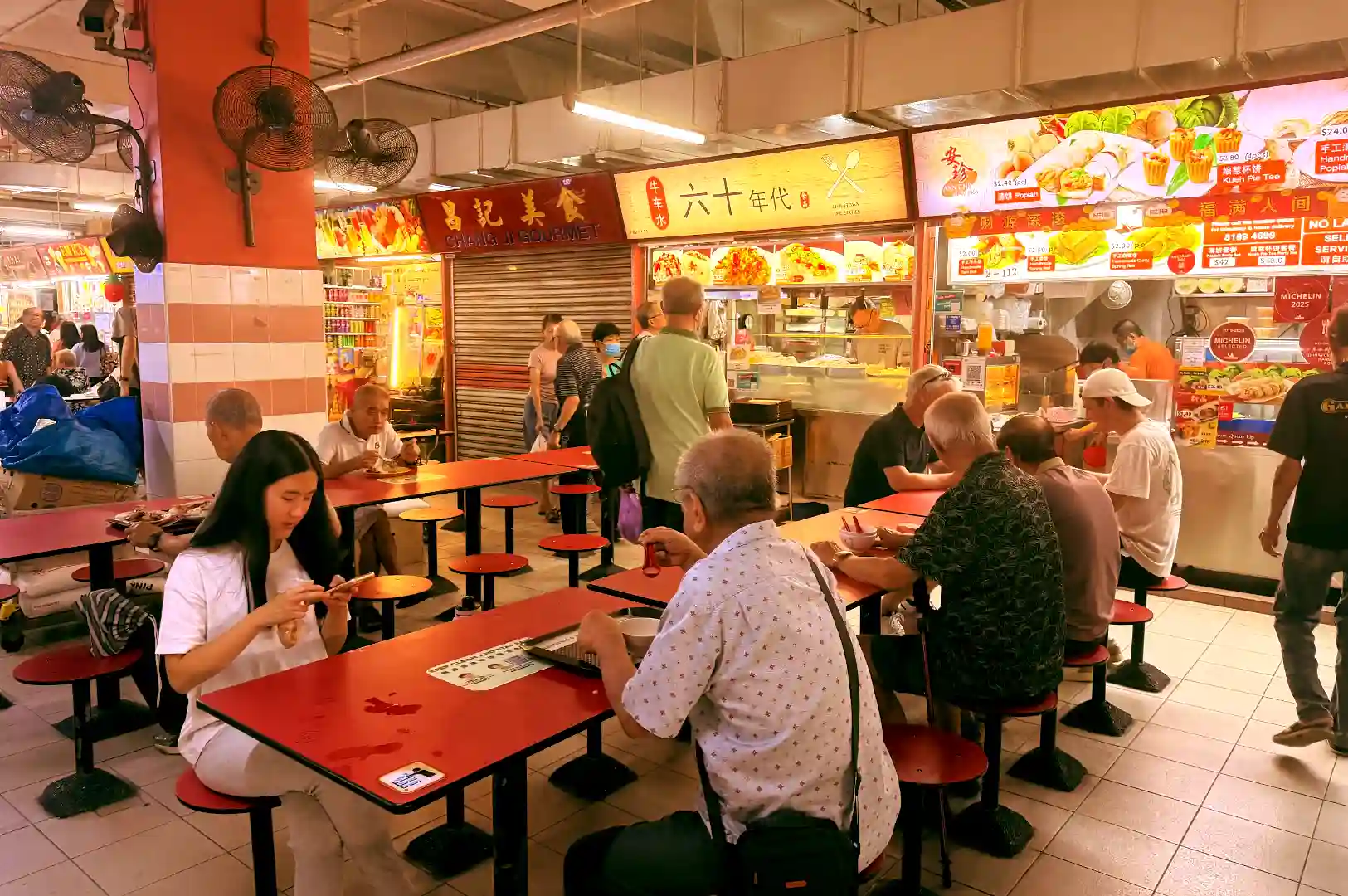
On the upper level, stalls are arranged along the perimeter in a curved formation. This creates a central seating field that remains visible from most angles. Circulation follows the outer edge for ordering, then shifts inward for seating. Queues form along stall fronts but rarely extend into the central space, maintaining a clear separation between movement and use.
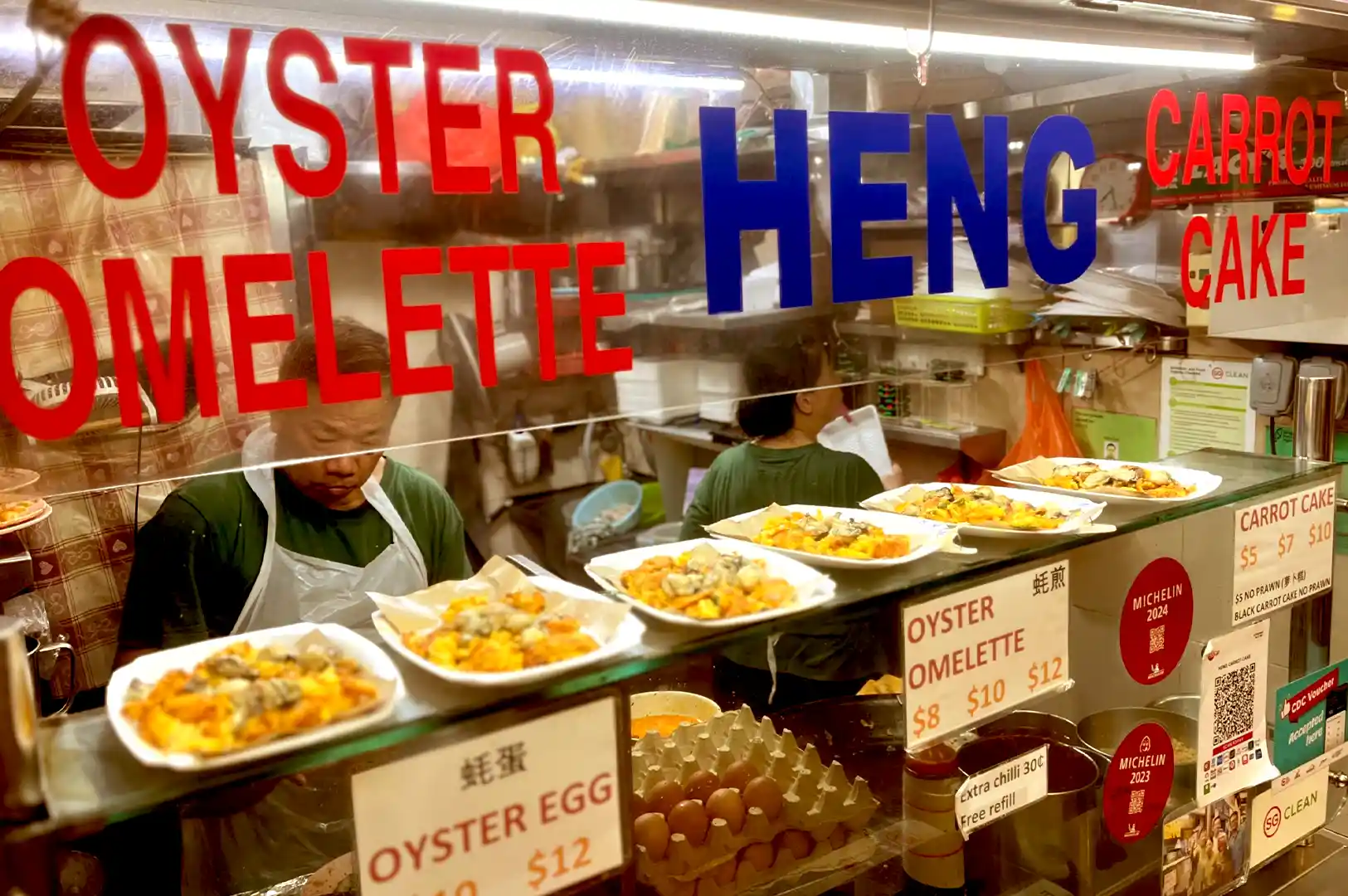
Preparation is contained within each stall’s boundary. Surfaces face outward, allowing transactions to occur without disrupting internal workflow. Tasks repeat in short cycles—prepare, plate, pass—before resetting for the next order. Dishes appear intermittently, integrated into the rhythm rather than standing apart.
Turnover moves through the centre without pause.
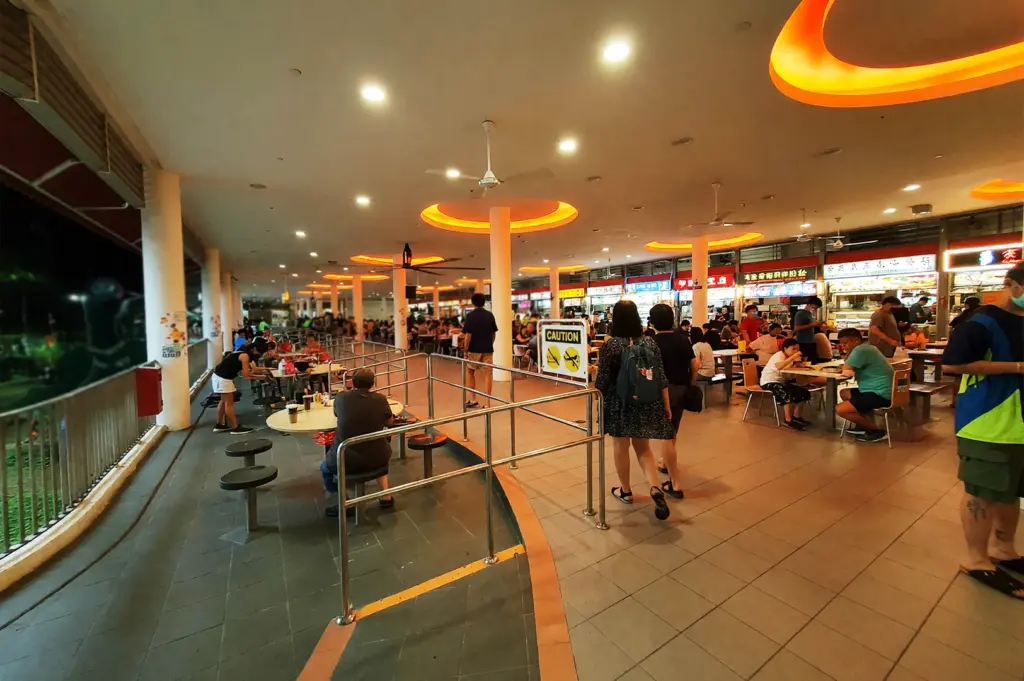
Seating is shared by default. Tables fill gradually, with diners adjusting to available spaces rather than waiting. Trays move consistently between stalls and tables, then back again through clearing stations. Cleaning follows closely behind use, keeping turnover continuous.
Lighting shifts throughout the day, filtered through the open sides of the structure. The environment remains stable, with changes driven by volume rather than layout.
Tiong Bahru Market maintains clarity through separation of function—ordering at the edge, dining at the centre—allowing both to operate simultaneously without interference.
Continue with: Maxwell, Seen Slowly: Five Stalls We Keep Returning To